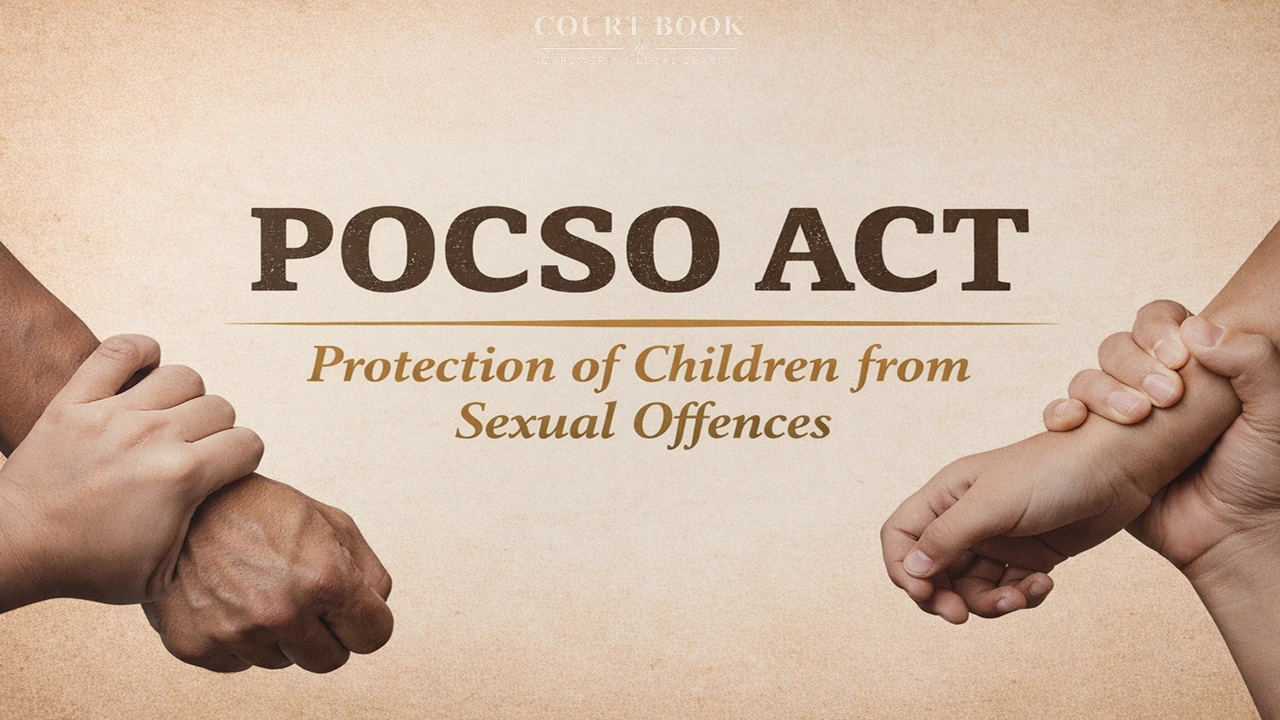
In a significant order, the Calcutta High Court has cancelled the bail granted to an accused civic volunteer charged with sexually assaulting a 14-year-old girl under the POCSO Act.
Justice Bivas Pattanayak, while delivering judgment in open court, observed that the trial court had failed to consider the seriousness of the allegations and the legal principles governing bail in such cases.
The case arose from an application filed by the victim’s mother seeking cancellation of bail granted by an Additional Sessions Judge in Contai.
Background of the Case
According to court records, the victim’s mother lodged a complaint on May 29, 2024, at Egra Police Station alleging sexual exploitation of her minor daughter by her English tutor, who was also a civic volunteer.
Read also:- Madras High Court Orders Action Against District Collector For Failing To Contest Government Land Suit
An FIR was registered under Section 376(3) of the IPC and Section 6 of the Protection of Children from Sexual Offences (POCSO) Act. The accused first sought anticipatory bail, which was rejected. After surrendering, his regular bail plea was also dismissed on July 10, 2024, with the trial court noting the gravity of the offence.
However, on July 20, 2024 - just ten days later - the same court granted bail after the chargesheet was filed. This prompted the victim’s family to approach the High Court seeking cancellation.
Senior Advocate Sabyasachi Banerjee, appearing for the petitioner, argued that the trial court had acted mechanically. He submitted that the seriousness of the allegations, the victim’s vulnerability, and the possibility of witness intimidation were ignored.
“The chargesheet alone cannot be a reason to dilute the gravity of the offence,” counsel contended.
Read also:- Kerala HC Hears Plea to Drop ‘Kerala’ from Film Title Amid Communal Harmony Concerns
It was also argued that the victim’s statement under Section 164 CrPC clearly implicated the accused in repeated sexual assault and blackmail. The girl had reportedly attempted suicide following the alleged abuse.
On the other hand, counsel for the accused argued that cancellation of bail is a harsh step and requires strong, supervening circumstances. He maintained that once bail is granted, it should not be cancelled lightly.
The High Court first addressed whether the petition was maintainable. Referring to Supreme Court precedents, the bench clarified that the High Court can independently examine whether a bail order suffers from serious infirmity.
“The concept of setting aside an unjustified or perverse order is distinct from cancellation on the ground of misconduct,” the bench observed.
Turning to the merits, the court examined the statement of the minor victim. The judge noted that the child had categorically accused her tutor of penetrative sexual assault and of taking objectionable photographs to blackmail her.
The court emphasized that offences under the POCSO Act are not private disputes but crimes against society. Referring to recent Supreme Court rulings, the bench observed:
“Commission of such offences against children should be viewed as heinous and serious. They cannot be taken lightly.”
Importantly, the High Court pointed out that the trial court had earlier rejected bail after noting incriminating material in the case diary. Yet, within ten days - and without any change in circumstances except filing of the chargesheet - bail was granted.
“The order under challenge does not reflect consideration of the nature and gravity of the offence,” the court noted.
The judge listed settled principles that must guide bail decisions, including:
• Prima facie case
• Nature and gravity of the charge
• Severity of punishment
• Likelihood of tampering with evidence
• Impact on witnesses and society
The High Court found that these parameters were not adequately addressed by the trial court.
On the argument relating to presumption under Section 29 of the POCSO Act, the bench clarified that such presumption is triggered once foundational facts are established and does not automatically operate from the moment of FIR registration.
After analyzing the materials and the reasoning in the impugned order, the High Court held that the trial court had granted bail on irrelevant considerations and without proper application of mind.
“For the reasons noted above, the impugned order granting bail is not sustainable in law,” the court held.
Accordingly, the bail granted on July 20, 2024, was cancelled.
The accused has been directed to surrender before the trial court within ten days, failing which coercive steps will be taken to commit him to custody.
With this direction, the criminal miscellaneous application stood disposed of.
Case Title:- XXXX vs. The State of West Bengal & Anr.
Case Number:- C.R.M. (M) 1069 of 2025
Date of Judgment:- 02.03.2026
Download Judgment