

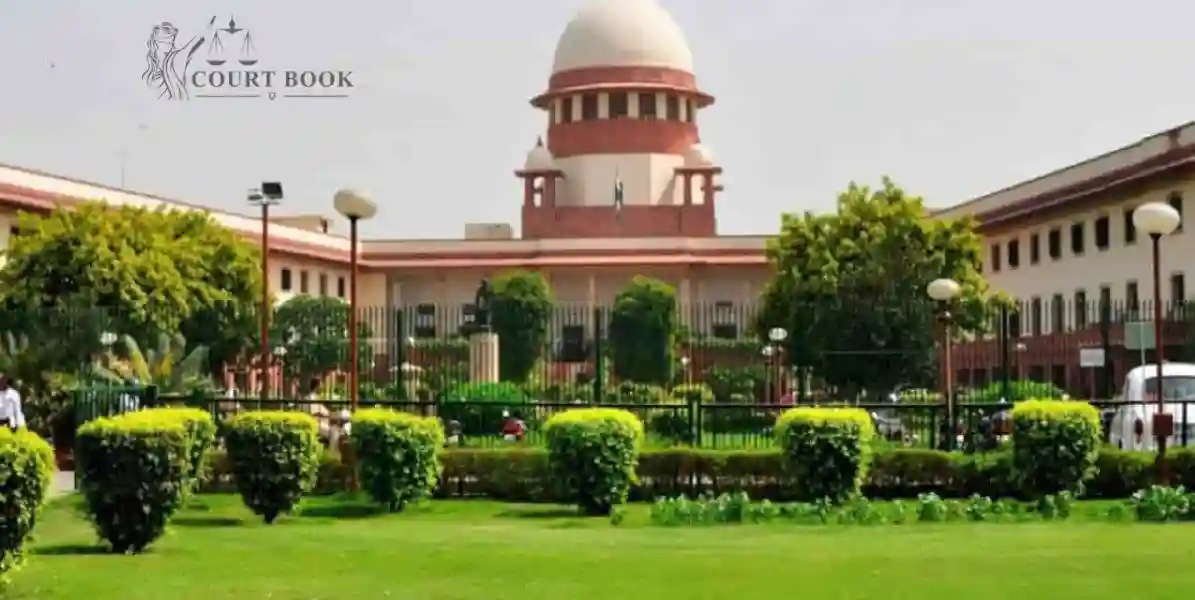
The Supreme Court has dismissed appeals filed by senior agricultural scientist Sadachari Singh Tomar, upholding the Indian Council of Agricultural Research (ICAR)’s decision to cut short his tenure as Assistant Director General (ADG-ARIS). The Court found no illegality or mala fide intent in the administrative action.
Background of the Case
The case arose from ICAR’s order dated January 31, 2001, which curtailed Tomar’s tenure as ADG-ARIS and reverted him to his previous role as Senior Scientist at the Central Institute of Agricultural Engineering, Bhopal.
Tomar had initially been appointed to the post in 1998 for a term of five years “or until further orders, whichever is earlier.” He later alleged that his tenure was cut short in retaliation for exposing irregularities in high-value procurement contracts and projects within ICAR.
Read also:- No Interference in Maintenance Order: Gujarat HC Upholds ₹50,000 Monthly Support to Ailing Wife
He challenged the decision before the Central Administrative Tribunal (CAT), which dismissed his plea. The Delhi High Court also upheld the CAT’s order and refused to review its decision, leading to the present appeals before the Supreme Court.
Court’s Observations
The Court rejected Tomar’s reliance on Article 311 of the Constitution, clarifying that ICAR is an autonomous body.
“The protection under Article 311 is not attracted,” the bench observed,
noting that ICAR employees are governed by its internal rules and not by civil service provisions.
The bench emphasized that the appellant did not have an enforceable right to serve the full five-year term.
It noted that the appointment order itself allowed ICAR to curtail the tenure earlier if required.“The authority had expressly reserved the power to curtail the tenure…,”
the Court stated, adding that judicial review in such matters is limited to examining arbitrariness or illegality.
The Court held that the reversion order was not punitive. It described the action as a routine administrative decision rather than a penalty.
“Transfer… is ordinarily an incidence of service and cannot be said to amount to punishment,” the judgment noted.
Tomar argued that adverse remarks in his Annual Assessment Reports (AARs) formed the basis of a stigmatic action.
Read also:- Calcutta High Court Closes PIL on ECI Memo After Withdrawal, Emphasises Fair Poll Process
However, the Court disagreed, holding that terms like “unsatisfactory” or “below average” do not amount to stigma.
“We do not feel the above order casts any stigma beyond an unexceptional assessment of unsuitability,” the bench observed.
Addressing the whistleblower claim, the Court maintained a cautious approach.
“Allegations of mala fides must be supported by clear, cogent and specific material,” it said, adding that such claims cannot be inferred merely from surrounding circumstances.
The Court found no evidence strong enough to establish that the decision was retaliatory in nature.
After examining the record and findings of the lower forums, the Supreme Court concluded that the administrative action was lawful and within the authority’s discretion.
“We are satisfied that there is no merit in these Appeals,” the bench held.
Accordingly, the appeals were dismissed, and all pending applications were disposed of.
Case Details:
Case Title: Sadachari Singh Tomar v. Union of India & Ors.
Case Number: Civil Appeal Nos. 9330–9331 of 2013
Judges: Justice Prashant Kumar Mishra and Justice Vipul M. Pancholi
Decision Date: April 28, 2026
Download Judgment

