

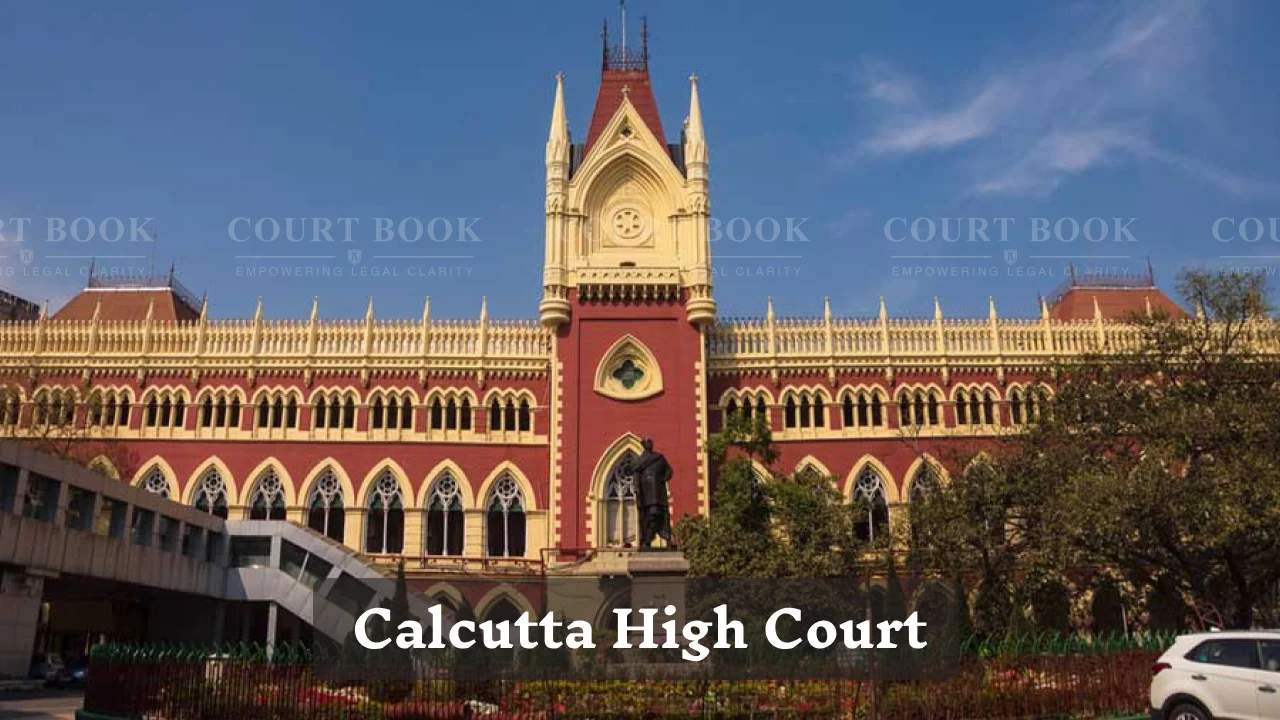
The Calcutta High Court has set aside the conviction of ten people accused of abetting the suicide of a young man in Nadia district, holding that the prosecution failed to prove its case beyond reasonable doubt. Justice Chaitali Chatterjee Das allowed the criminal appeal and ordered the immediate release of the appellants, bringing an end to a case that began more than a decade ago.
The court ruled that suspicion and inconsistent testimony cannot replace clear legal proof when a person is charged under Section 306 of the Indian Penal Code, which deals with abetment of suicide.
Background of the Case
The case arose from an incident in April 2010. The father of the deceased lodged a complaint alleging that several villagers repeatedly came to his house at night, accusing his son of stealing mobile phones and cash. According to the complaint, the accused persons allegedly abused and threatened the family, forcibly took the young man out of the house, and chased him while calling him a thief.
Early the next morning, the young man was found hanging from a tree near his house. Initially, a case of murder was registered, but after investigation, the police filed charges for abetment of suicide. In 2012, a sessions court convicted the accused under Section 306 read with Section 34 IPC and sentenced them to seven years’ imprisonment.
Challenging this conviction, the accused approached the High Court.
Arguments Before the High Court
Counsel for the appellants argued that the deceased was under mental stress due to allegations of theft and humiliation in the village. It was submitted that there was no clear act of instigation by the accused and that crucial witnesses, including neighbours, were never examined.
The defence also pointed out serious gaps in the investigation, including the absence of any seized material, contradictions in family members’ statements, and unexplained conduct of the family after the alleged midnight incident.
The State, on the other hand, argued that the threats and pressure exerted by the accused drove the victim to suicide and that the trial court had rightly relied on the family’s testimony.
Read also:-No Application Needed for Citizenship by Birth, Says Delhi High Court While Ordering Passport Issue
Court’s Observations
After going through the evidence in detail, the High Court found multiple inconsistencies in the prosecution’s story. Justice Das noted that the versions given by the father, mother, and brother of the deceased did not match on key points, including who first took the victim out of the house and how events unfolded that night.
The court found it significant that despite allegations of a large group storming the house at night, no neighbour came forward as a witness. “By no stretch of imagination can it be accepted that despite a huge mob gathering at midnight, no local person noticed or intervened,” the bench observed.
Medical evidence also weighed heavily with the court. The post-mortem report showed no external injuries and clearly recorded death due to ante-mortem hanging, indicating suicide rather than assault.
Referring to Supreme Court rulings, the court stressed that abetment requires a clear mental element and a direct act of instigation. Quoting settled law, the bench observed, “Without a positive act to instigate or intentionally aid the commission of suicide, conviction under Section 306 cannot be sustained.”
Final Decision
The High Court concluded that the prosecution failed to establish the essential ingredients of abetment of suicide. The possibility that the deceased acted under personal distress and humiliation could not be ruled out, and the accused were entitled to the benefit of doubt.
Allowing the appeal, the court set aside the 2012 conviction and sentence. It directed that all appellants be released from their bail bonds forthwith and ordered the trial court records to be sent back for compliance.
With this ruling, the long-standing criminal proceedings against the appellants finally came to a close.
Case Title: Pabitra Roy & Others vs State of West Bengal
Case No.: CRA 696 of 2012
Decision Date: 03 February 2026


