

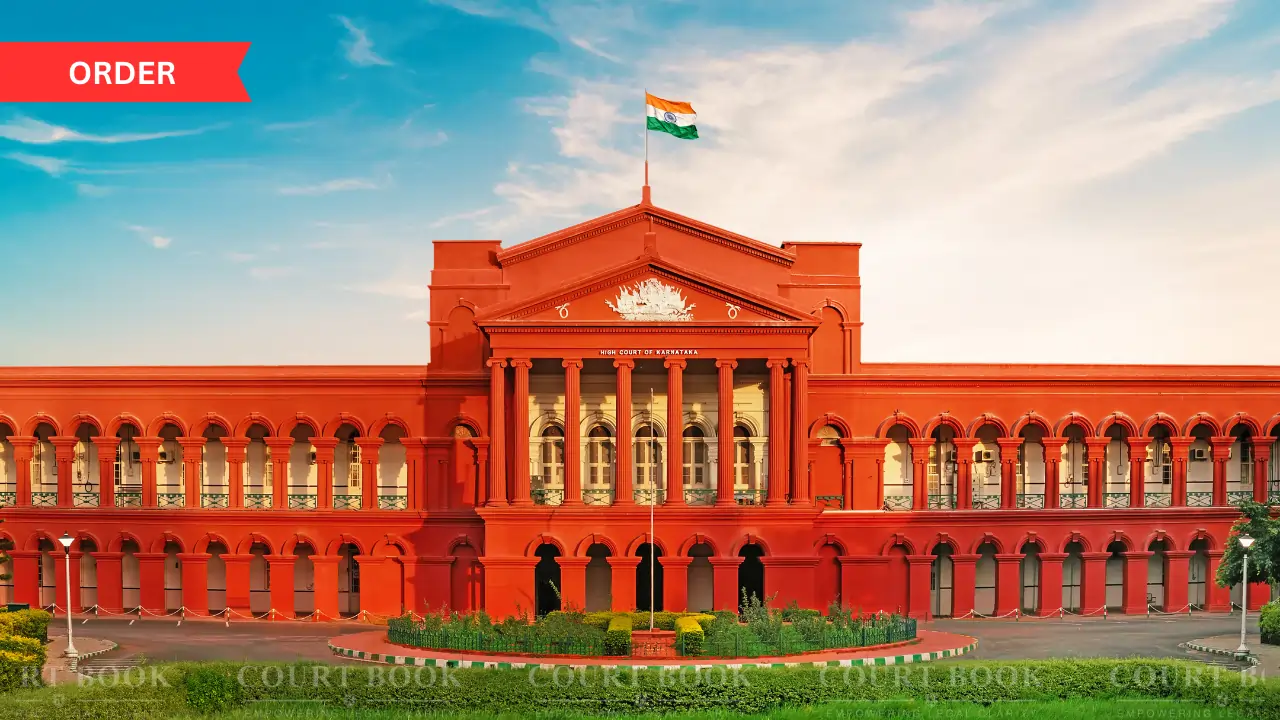
The Karnataka High Court on Monday stepped in to protect the right to free speech and peaceful assembly, setting aside police notices that barred two speakers from addressing Hindu Sammelana events in Belagavi. The court made it clear that restrictions on public meetings cannot be imposed casually or without clear reasons.
Justice Lalitha Kanneganti passed the order while hearing two connected writ petitions filed by Hindu Sammelana Samithi, an unregistered organisation, challenging police action taken just weeks before the scheduled events.
Read also:-Rajasthan HC Overturns CRPF Dismissal, Says Short Absence Can’t Be Called Desertion
Background of the Case
The organisers had planned two separate Hindu Sammelana programmes in Belagavi - one on February 6, 2026, near Sree Nagar Sai Baba Temple, and another on February 8, 2026, at Shahunagar.
For these events, the organisers sought police permission, informing authorities about the proposed speakers. One event was to be addressed by Mithun Chakravarthy Devidas Shet, also known as Chakravarthy Sulibeli, while the other featured Kumari Harika Manjunath.
However, on January 22, 2026, the Assistant Commissioner of Police issued notices prohibiting the participation of both speakers. The police cited registration of criminal cases against them and expressed apprehension of law and order problems if they were allowed to speak.
The organisers responded by stating that no cases were pending against the speakers or that proceedings had been stayed by the High Court. When the ban was not lifted, they moved the High Court.
What the Petitioners Argued
Senior counsel appearing for the organisers argued that the police notices were arbitrary and violated fundamental rights guaranteed under the Constitution.
He submitted that the orders were passed without granting an opportunity of hearing and were contrary to the Karnataka Police Act, 1963. The counsel also pointed out that both speakers had earlier addressed similar programmes without any untoward incident.
“The police cannot dictate who should or should not speak at a lawful public meeting,” the petitioners contended, stressing that mere apprehension without material evidence could not justify such restrictions.
State’s Stand Before the Court
The State, represented by the Additional Advocate General, defended the police action. He told the court that past experiences involving the speakers had compelled the authorities to act cautiously.
He also informed the court that the police were yet to pass final orders after receiving explanations from the organisers and that the intention was only to prevent possible disturbance to public order.
Read also:-Supreme Court Restores Membership Rights in Mumbai Housing Society Dispute Over Peddar Road Flat
Court’s Observations
After examining the record and relevant provisions of the Karnataka Police Act, the court noted that the law does allow the police to regulate public meetings, but only within reasonable limits.
Justice Kanneganti underlined that the right to freedom of speech and the right to assemble peacefully are protected under Articles 19(1)(a) and 19(1)(b) of the Constitution.
“The police cannot arbitrarily stop a person from speaking in a public meeting based on whims and fancies,” the court observed.
Referring to the Supreme Court’s ruling in Anuradha Bhasin vs Union of India, the judge said restrictions on speech must pass the test of proportionality and must be backed by reasons and material.
The court also noted that merely because cases were registered against the speakers, that alone could not justify a blanket prohibition-especially when they had previously participated in similar programmes without any disturbance.
Read also:-Choice of Life Partner Is Personal Liberty; Even Parents Cannot Interfere, Says Delhi High Court
Decision of the Court
Holding that the police notices were bereft of reasons and amounted to an unjustified curtailment of fundamental rights, the High Court quashed both notices dated January 22, 2026.
The court directed the police authorities to reconsider the organisers’ representations afresh, strictly in accordance with law and the provisions of the Karnataka Police Act, 1963.
With these directions, both writ petitions were disposed of.
Case Title: Hindu Sammelana Samithi vs Commissioner of Police, Belagavi
Case No.: WP No. 100782 of 2026 c/w WP No. 100783 of 2026
Decision Date: 3 February 2026


