

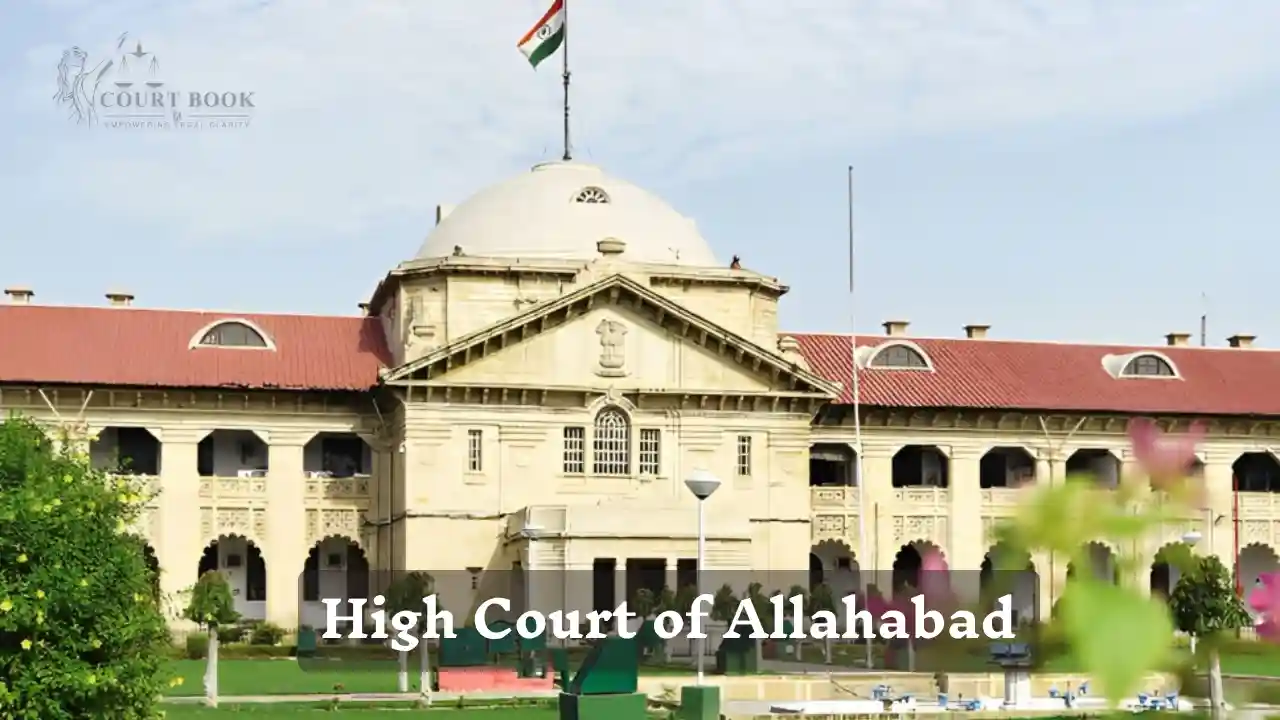
The Allahabad High Court has declined to entertain a second writ petition filed in a dispute over the appointment of a Mutawalli, while also flagging a serious administrative gap - the non-functioning of the Waqf Tribunal in Uttar Pradesh. The court reminded the petitioner that an alternative legal remedy was already available and urged the State to act swiftly in filling vacant tribunal posts.
Background of the Case
The case arose from a challenge to an order dated October 1, 2024, by which the appointment of Faisal Khan as Mutawalli was recalled. Aggrieved by this decision, Khan had earlier approached the High Court under Article 227 of the Constitution.
Read also:-Supreme Court Backs NCLAT in Gloster Trademark Dispute, Denies Title Claim to Resolution Applicant
However, during the earlier hearing in July 2025, the court noted that the Waqf Act, 1995 provides a specific remedy under Section 83. The law allows an aggrieved person to approach the High Court directly only if the Waqf Tribunal is not functional.
At that time, the Single Judge declined to entertain the petition and granted liberty to the petitioner to pursue the appropriate legal remedy, observing that an appeal before the High Court was permissible in such circumstances.
Despite this, the petitioner filed a second writ petition raising the same grievance.
Court’s Observations
A Division Bench comprising Justice Shekhar B. Saraf and Justice Manjive Shukla examined the matter and found no reason to reopen the issue.
The bench noted that the earlier order had clearly granted liberty to proceed in accordance with law and that filing another writ petition was not the proper course.
“The petitioner was already given liberty to pursue the remedy available in law. A second writ petition on the same issue cannot be entertained,” the court observed.
The judges also took note of a larger systemic issue - the continued vacancy in the Waqf Tribunal in Uttar Pradesh. Because of this, several cases are stuck without effective hearings.
Acknowledging the seriousness of the situation, the bench remarked that access to justice was being hampered due to the non-functioning tribunal.
Court’s Direction to the State
While dismissing the writ petition, the High Court made an important administrative observation. It requested the Uttar Pradesh government to take immediate steps to appoint members to the Waqf Tribunal so that pending disputes can be heard without delay.
“The State Government must look into the issue and make appointments to the Waqf Tribunal expeditiously, in accordance with law,” the bench said.
The Senior Registrar of the court was also directed to formally communicate this order to the State Government.
Read also:-Notice Issued Before Cognizance Set Aside by Gauhati High Court in Cheque Case
Final Decision
The court refused to entertain the second writ petition and disposed of the matter, reiterating that the petitioner must follow the legal remedy already indicated in the earlier order dated July 29, 2025.
With this, the case stood disposed of on January 19, 2026.
Case Title: Faisal Khan vs U.P. Sunni Central Waqf Board & Ors.
Case No.: Writ-C No. 12297 of 2025
Decision Date: January 19, 2026


