

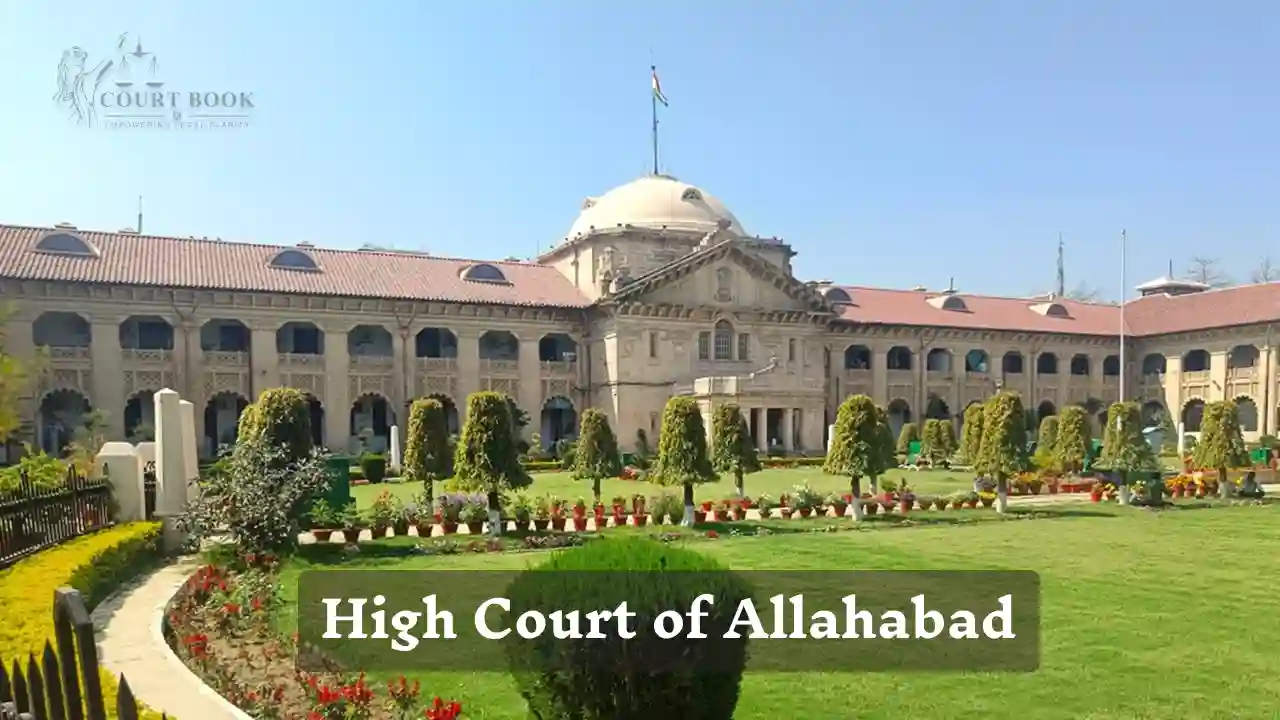
In a strong message to law enforcement, the Allahabad High Court has set aside the arrest and judicial remand of a man detained by the Gautam Budh Nagar police, holding that the arrest was carried out in complete violation of constitutional safeguards and statutory procedure. The court ordered his immediate release, observing that the police failed to disclose valid grounds of arrest as mandated by law.
Background of the Case
The habeas corpus petition was filed by Umang Rastogi and another, challenging the arrest and detention of the first petitioner in Case Crime No. 750 of 2025 registered at Bisrakh Police Station, Gautam Budh Nagar.
According to the petition, the petitioner’s father was allegedly picked up illegally by police from Delhi in November 2025 and kept in custody without due process. After the father approached the Delhi High Court, the police allegedly arrested the petitioner in retaliation on December 26, 2025, from Haldwani, Uttarakhand.
The petitioner claimed that:
• He was arrested without being informed of the grounds.
• No valid arrest memo was served.
• The Magistrate remanded him to custody without examining legal compliance.
• Mandatory safeguards under Article 22(1) of the Constitution and BNSS provisions were ignored.
Arguments Before the Court
The petitioner’s counsel argued that the arrest violated settled law laid down by the Supreme Court in Mihir Rajesh Shah, Pankaj Bansal, and Gautam Navlakha cases. It was contended that merely filling an arrest memo without explaining the grounds of arrest defeats the purpose of legal safeguards.
On the other hand, the State claimed the arrest was lawful and that the petitioner had criminal antecedents. The prosecution argued that the arrest memo complied with legal requirements and that habeas corpus was not maintainable once judicial custody had been ordered.
Court’s Observations
A Division Bench of Justice Siddharth and Justice Jai Krishna Upadhyay closely examined the arrest memo and found serious lapses.
Read also:-Supreme Court Steps In as ₹150 Crore Transactions Surface During Stalled Corporate Insolvency
The Court noted that:
• The arrest memo did not mention specific grounds for arrest.
• No material or evidence justifying arrest was recorded.
• Mandatory clauses under Section 47 and 48 of the Bharatiya Nagarik Suraksha Sanhita (BNSS) were ignored.
• The Magistrate failed to verify whether legal safeguards were followed.
The bench observed:
“The arrest memo is completely silent on the grounds of arrest. Merely informing the accused of the offence and sections is not compliance with law.”
The Court further stated that the purpose of introducing a standardized arrest memo was defeated by casual compliance.
Serious Lapses by Police Highlighted
The High Court expressed concern that despite a detailed circular issued by the Director General of Police in July 2025, police officers continued to ignore mandatory requirements.
It held that:
• Failure to disclose grounds of arrest violates Article 22(1).
• Non-compliance amounts to illegal detention.
• Such conduct reflects dereliction of duty.
The Bench remarked:
“Empty formality cannot substitute constitutional protection. Arrest without disclosure of grounds is illegal.”
Read also:-Delhi HC Allows Cash Transfer for School Uniforms, Clears Govt Policy Under RTE Act
Final Decision of the Court
Allowing the habeas corpus petition, the High Court:
• Quashed the remand order dated 27 December 2025.
• Declared the arrest illegal.
• Directed immediate release of the petitioner.
• Ordered departmental action against the erring police officer.
• Directed the DGP, Uttar Pradesh to ensure strict compliance with arrest procedures.
• Permitted police to proceed afresh only in accordance with law.
The Court concluded that any further violation of arrest norms would invite disciplinary action.
Case Title: Umang Rastogi & Anr. vs State of Uttar Pradesh
Case No.: Habeas Corpus Writ Petition No. 35 of 2026
Decision Date: January 22, 2026


