

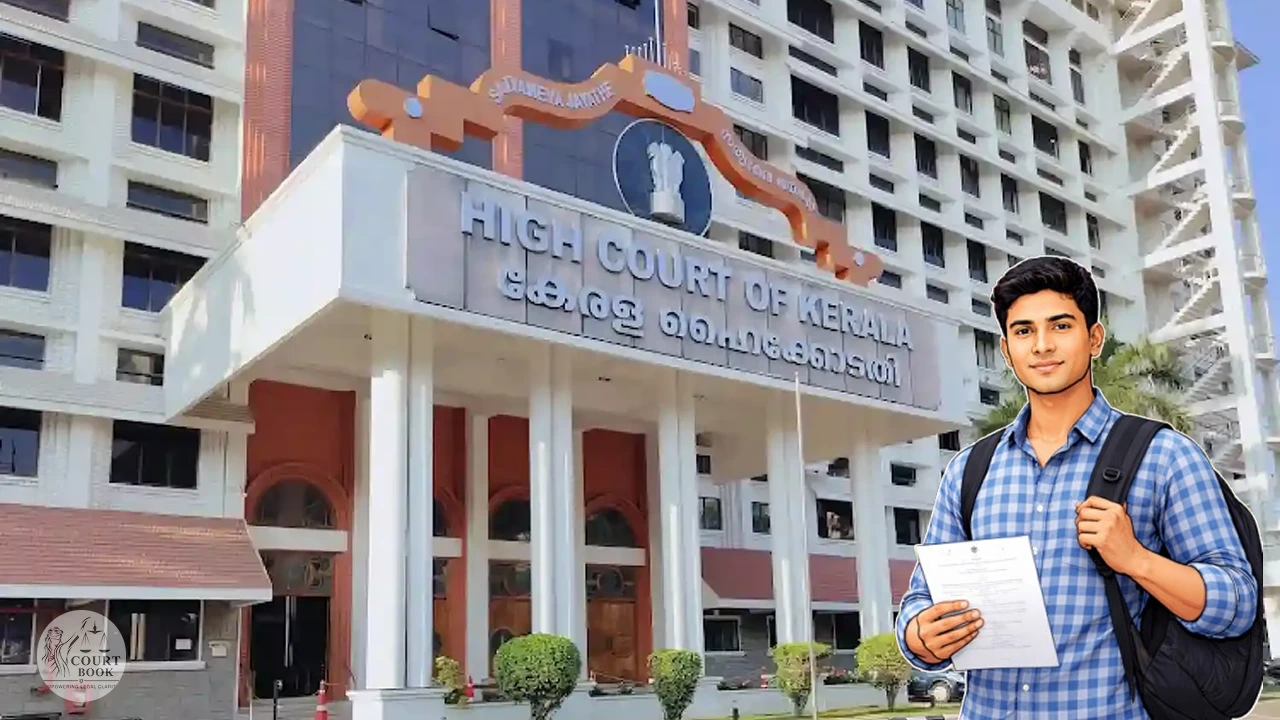
The Kerala High Court has stepped in to correct what it called an unjust denial of a domicile certificate to a 19-year-old student, holding that birth outside the State cannot, by itself, defeat a genuine claim of permanent residence in Kerala. The ruling came from Justice Bechu Kurian Thomas while hearing a writ petition filed by Sohan V.M., a Kozhikode resident who urgently needed the certificate to pursue recruitment in the Indian Army
Background of the Case
Sohan V.M. was born in Kolkata in 2006, where his parents were then residing. However, soon after his birth, the family shifted to their ancestral home at Naduvannur village in Kozhikode district. From early schooling to higher secondary education, Sohan studied entirely in Kerala.
Despite this, his application for a domicile certificate was rejected by the Tahsildar, citing that he was “born and brought up” in Kolkata. The rejection threatened to derail his application for the post of Agniveer in the Indian Army, for which a domicile certificate was mandatory.
Challenging this decision, Sohan approached the High Court, pointing to his Aadhaar card, ration card, school certificates, and his father’s death certificate, all showing permanent residence in Kerala.
The State government submitted that the Village Officer, after enquiry, had in fact recommended issuance of the certificate. However, the Tahsildar relied on the Kerala Land Revenue Manual, which was interpreted to mean that domicile certificates could be issued only to persons born and brought up in Kerala.
Read also:- Externment Affects Fundamental Rights, Says Kerala HC; Cuts Police-Imposed One-Year Ban to Six Months
This rigid reading, the petitioner argued, ignored his actual life, education, and social roots in the State.
Court’s Observations
Justice Bechu Kurian Thomas found a clear factual error in the rejection order. “The finding that the petitioner was brought up in Kolkata is factually incorrect,” the court noted, pointing out that all records showed his upbringing and education in Kerala
The judge went a step further to examine the meaning of “domicile.” Referring to Supreme Court rulings, including Dr. Pradeep Jain v. Union of India, the court explained that Indian law recognises only one domicile domicile in India and not state-wise domicile in the strict legal sense.
“The word ‘domicile’ in such certificates is used in a popular sense, meaning permanent residence and intention to reside indefinitely,” the bench observed.
Read also:- Kerala HC Rejects Doctors’ Plea Against Physiotherapists, Allows Use of ‘Dr’ Prefix
The court also relied on an earlier Kerala High Court decision which emphasised “social belongingness” - where a person has grown up, studied, and adapted socially rather than just place of birth.
Why Permanent Residence Mattered
In Sohan’s case, the court noted that:
• His entire schooling was completed in Kerala.
• His Aadhaar and ration card showed a Kozhikode address.
• His father died in Kerala, and his mother continues to reside there.
• His ancestral roots were also linked to the State.
“There is nothing to indicate that the petitioner has any intention to reside in Kolkata,” the judge remarked, adding that denying the certificate would amount to “absolute injustice”.
Read also:- Religious Faith Cannot Block Public Roads: Madras High Court Orders Removal of Chennai Roadside Shrine
Decision
Allowing the writ petition, the High Court set aside the rejection order and directed the Tahsildar to issue the domicile certificate to Sohan V.M. within two days, considering the urgency linked to his Army recruitment.
The judgment closes the matter by affirming that genuine permanent residence and social integration, not mere place of birth, must guide decisions on domicile certificates.
Case Title: Sohan V.M. v. State of Kerala & Others
Case Number: W.P.(C) No. 1781 of 2026
Date of Judgment: 19 January 2026
Advocates:
• For Petitioner: Adv. Adithya Rajeev, Adv. S. Parvathy
• For State: Smt. Amminikutty K., Senior Government Pleader
Download Judgment

