

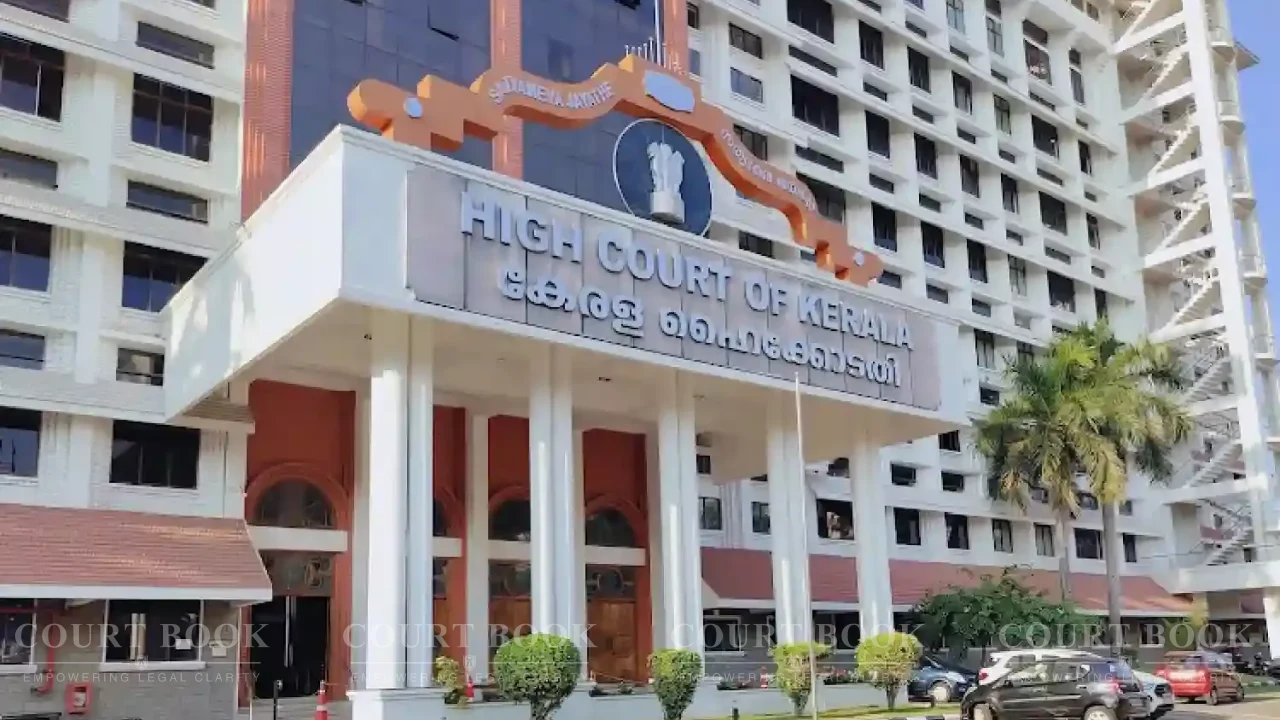
The Kerala High Court has reduced the externment period imposed on a Thrissur resident, holding that police authorities cannot mechanically impose the maximum one-year ban without clearly explaining why such a long restriction is necessary. The court stressed that externment orders directly affect a citizen’s fundamental right to free movement and must reflect proper application of mind.
Background of the Case
The case arose from an externment order dated July 31, 2025, issued against Vijith, a 37-year-old resident of Thrissur district. Acting under the Kerala Anti-Social Activities (Prevention) Act, 2007, the Deputy Inspector General of Police barred him from entering the limits of Thrissur Revenue District for one year.
Read also:- Kerala HC Rejects Doctors’ Plea Against Physiotherapists, Allows Use of ‘Dr’ Prefix
Police initiated the action after classifying Vijith as a “known rowdy,” citing his alleged involvement in three criminal cases. The most recent case, registered at Koratty Police Station in April 2025, involved allegations under multiple provisions of the Bharatiya Nyaya Sanhita. Following a proposal by the District Police Chief, Vijith was issued a show-cause notice and was heard in person before the externment order was passed.
Challenging the decision, Vijith approached the High Court, arguing that the order was passed casually and without reasons, particularly for imposing the maximum permissible period of externment.
Read also:- Religious Faith Cannot Block Public Roads: Madras High Court Orders Removal of Chennai Roadside Shrine
Court Observation
A Division Bench comprising Justice A.K. Jayasankaran Nambiar and Justice Jobin Sebastian examined the records and found no procedural lapse in the initiation of proceedings. The court noted that there was no undue delay and that statutory safeguards under the Act had been followed.
However, the bench focused on the crucial issue of duration. It observed that externment orders have serious consequences, including preventing a person from entering their own home and living with family.
“The order must reflect the necessity of imposing the maximum period,” the court observed, adding that authorities are required to justify why the harshest restriction is warranted in a given case.
Read also:- Delhi Court Acquits Medha Patkar in 2006 TV Defamation Case Filed by V.K. Saxena
Relying on a 2023 Supreme Court ruling, the bench reiterated that when the maximum duration of externment is imposed, the authority must record its subjective satisfaction based on material evidence. Absence of such reasoning, the court said, amounts to an unreasonable restriction on fundamental rights.
Decision
Finding that the police order did not disclose any reasons for imposing a one-year externment, the High Court partially allowed the writ petition. It modified the impugned order and reduced the externment period from one year to six months from the date of receipt of the original order.
The court made it clear that while police authorities do have the power to impose externment, such power must be exercised cautiously and with clear justification, especially when fundamental rights are at stake.
Case Title: Vijith v. State of Kerala & Others
Case Number: WP(Crl.) No. 43 of 2026
Date of Decision: 19 January 2026
Download Judgment

