

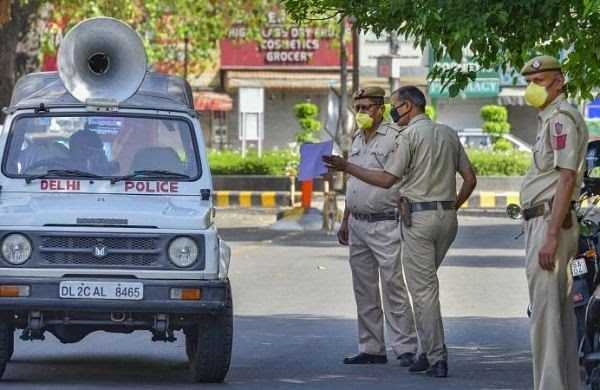
The Supreme Court of India has ruled that authorities cannot dismiss a government employee without a departmental inquiry merely on the assumption that witnesses might be threatened. In a significant decision, the Court set aside the dismissal of a Delhi Police constable, holding that the disciplinary authority failed to show any real material to justify invoking the extraordinary power under Article 311(2)(b) of the Constitution.
Background of the Case
The case arose after Constable Manohar Lal of the Delhi Police was dismissed from service on July 18, 2017, by the Deputy Commissioner of Police. The dismissal was ordered without conducting a departmental inquiry by invoking the second proviso to Article 311(2)(b) of the Constitution, which allows such action when holding an inquiry is “not reasonably practicable.”
Read also:-Chhattisgarh High Court Quashes Criminal Complaint Against Judges, Says Allegations Based
The decision relied on a preliminary inquiry conducted by an Assistant Commissioner of Police, which suggested that the complainant and witnesses could face intimidation if a departmental inquiry was held. Based on this reasoning, the department concluded that a regular inquiry might lead to tampering with evidence or influence over witnesses.
Manohar Lal challenged the dismissal before the Central Administrative Tribunal (CAT), which upheld the departmental action. The Delhi High Court also refused to interfere with the order, accepting the reasoning given by the police authorities.
The matter eventually reached the Supreme Court through a civil appeal.
Court’s Observations
The Supreme Court examined the constitutional framework governing dismissal of government employees. It noted that Article 311(2) guarantees a government servant the right to a departmental inquiry before dismissal or removal from service, except in limited exceptional circumstances.
Read also:-Supreme Court Grants Anticipatory Bail To Folk Singer Neha Singh Rathore In FIR Over Posts On PM
The bench emphasized that the power to bypass an inquiry under Article 311(2)(b) must be used sparingly and only when there is clear material showing that holding an inquiry is not reasonably practicable.
“The disciplinary authority is not expected to dispense with a departmental inquiry lightly or arbitrarily,” the Court observed while referring to earlier precedents.
After reviewing the preliminary inquiry report relied upon by the department, the Court found that none of the witness statements actually indicated that the complainant or witnesses had been threatened, intimidated, or influenced by the constable.
The judges also noted a crucial fact: the dismissal order was passed while the constable was already in judicial custody in the criminal case. In such circumstances, the authorities failed to show how he could realistically threaten witnesses from jail.
“The belief or presumption recorded by the disciplinary authority is not sufficient to dispense with the regular procedure,” the Court said.
The Court concluded that the disciplinary authority acted on assumptions rather than concrete evidence and failed to properly apply the law governing Article 311.
Read also:-Kerala High Court Quashes Ombudsman Proceedings Against Village Officer, Says He Is Not
Court’s Decision
Setting aside the earlier rulings of the CAT and the Delhi High Court, the Supreme Court quashed the dismissal order issued by the Deputy Commissioner of Police.
The Court directed that Manohar Lal be reinstated in service with continuity of service and other consequential benefits. However, considering that he was facing a criminal case, the Court limited his back wages to 50 percent for the period between dismissal and reinstatement.
Case Title: Manohar Lal vs Commissioner of Police & Others
Case No.: Civil Appeal No. 13860 of 2024
Decision Date: 12 March 2026
Download Judgment

