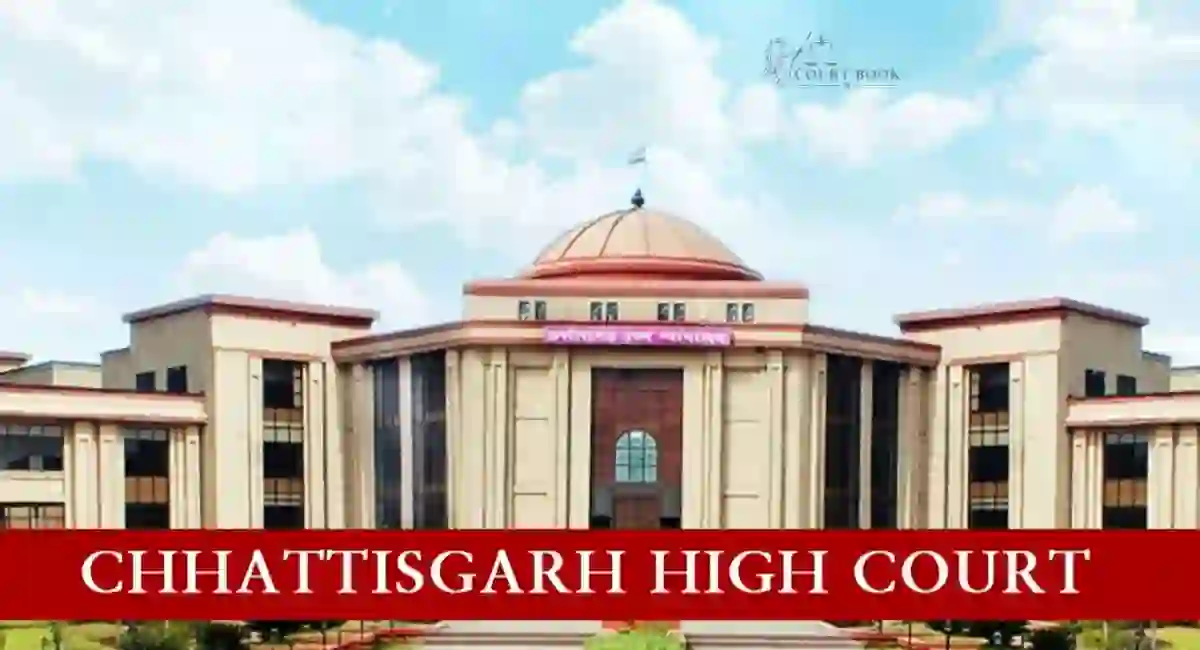
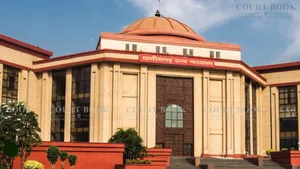
The Chhattisgarh High Court has quashed a criminal complaint that sought to implicate a former Chief Justice, a sitting High Court judge, and several members of the Higher Judicial Service in an alleged conspiracy case.
A division bench led by Chief Justice Ramesh Sinha held that the complaint was founded only on suspicion and lacked any concrete allegations linking the judicial officers to the alleged offence. The court said allowing such proceedings to continue would amount to an abuse of the criminal justice process.
Background of the Case
The matter arose from a criminal complaint filed on March 26, 2016 before the Additional Chief Judicial Magistrate (ACJM), Raipur by Smt. Pratibha Gwal. The complaint named several individuals, including a former Chief Justice of the Chhattisgarh High Court, a sitting High Court judge, and other judicial officers.
The complaint was linked to an incident dated October 31, 2015 at the Arang Toll Plaza on National Highway-6. According to the complaint, Prabhakar Gwal-who was then posted as Chief Judicial Magistrate in Sukma-was allegedly abused and misbehaved with during the incident. An FIR had already been registered regarding the toll plaza incident.
However, the complainant alleged that the police failed to file a chargesheet in the FIR due to a conspiracy involving police officials and members of the judiciary.
Following the filing of the complaint, the Magistrate fixed the matter for recording preliminary evidence under Section 200 of the Code of Criminal Procedure.
Arguments Before the Court
Senior Advocate Dr. N.K. Shukla, appearing for the High Court administration, argued that the complaint was a clear abuse of the legal process.
He submitted that the allegations were vague and entirely based on an “apprehension” that the chargesheet had not been filed due to a conspiracy. According to him, the complaint did not specify any overt act or agreement that could establish the offence of criminal conspiracy.
He further argued that criminal law cannot be triggered on mere suspicion or conjecture, especially when allegations are made against constitutional authorities and judicial officers.
Counsel for the complainant, however, opposed the petition and contended that the complaint was at an initial stage. She argued that the Magistrate had only fixed the case for preliminary evidence and that the High Court should not interfere before the evidence was recorded.
It was also argued that the complaint raised serious allegations of misuse of authority and administrative actions against the complainant’s husband, which required judicial examination.
Read also:-Allahabad High Court: RTI Applicant Can Know Marks of Other Candidates but Not Get Their
Court’s Observations
After examining the complaint and the case record, the High Court found that the allegations against the judges and judicial officers lacked any factual basis.
The bench observed that the complaint was primarily based on suspicion rather than specific facts.
“The entire edifice of allegations… is founded on mere apprehension and suspicion,” the bench noted.
The court pointed out that the complaint did not mention any meeting of minds, agreement, or specific act that could establish the offence of criminal conspiracy under Section 120-B of the Indian Penal Code.
It also observed that the offences cited in the complaint-such as those under Sections 294, 323, 506, 186, and 353 IPC-related only to the alleged toll plaza incident and had no connection with the judicial officers named in the complaint.
The bench emphasized that criminal proceedings cannot be allowed to continue when the allegations are vague, improbable, and unsupported by material facts.
Read also:-Supreme Court Seeks Expert Input to Define ‘Aravalli Hills and Ranges’, Orders Status Quo on
Decision of the Court
The High Court held that allowing the complaint to proceed against the judges and judicial officers would amount to a misuse of the criminal justice system.
“The allegations contained in the complaint, even if taken at their face value… fail to disclose the essential ingredients of the offences alleged,” the court observed.
Accordingly, the court allowed the writ petition and quashed the criminal complaint filed before the Additional Chief Judicial Magistrate, Raipur, insofar as it related to Respondent Nos. 11 to 19 in the trial court proceedings.
The order dated March 26, 2016 fixing the case for recording preliminary evidence against those respondents was also set aside to that extent.
However, the bench clarified that its order would apply only to those respondents and should not be treated as an opinion on the merits of the case against other accused persons.
Case Title: High Court of Chhattisgarh Through Registrar General vs State of Chhattisgarh & Others
Case Number: WPCR No. 88 of 2016
Decision Date: 28 February 2026









-300x169.webp)