

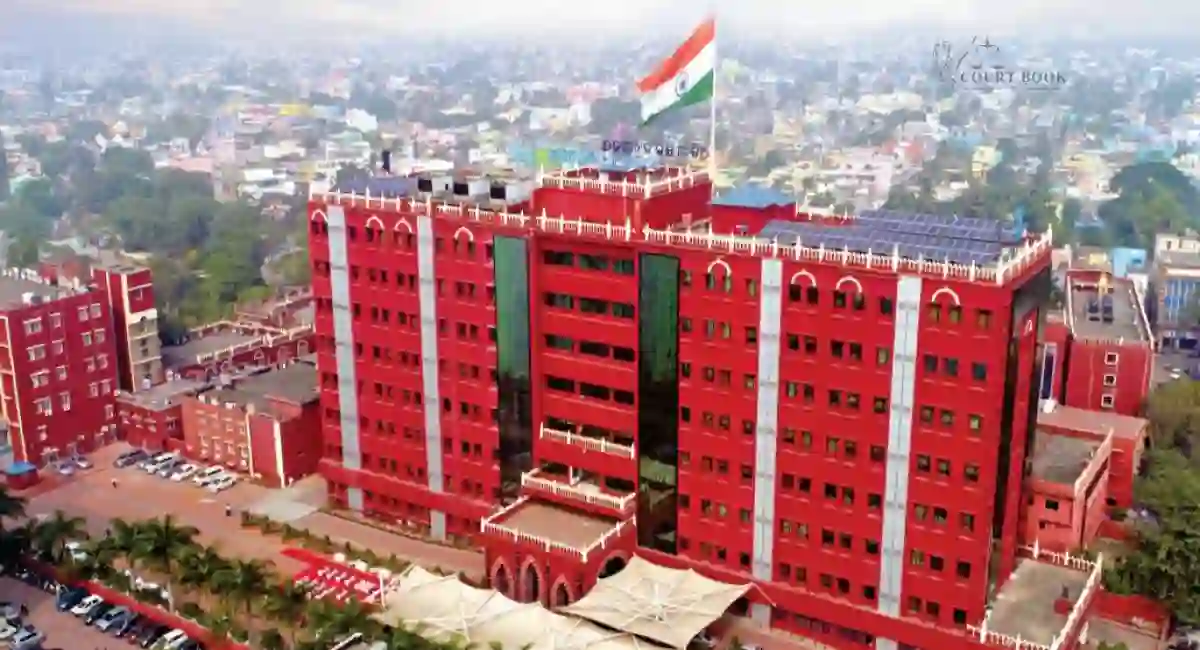
In a significant relief to a Sambalpur-based company, the Orissa High Court has allowed M/s Green Energy Resources to apply for restoration of its lapsed patent, noting that the delay was caused by the negligence of its authorised agent and overlapped with the Covid-19 pandemic period.
Justice B.P. Routray passed the order on February 12, 2026, while hearing a writ petition filed under Articles 226 and 227 of the Constitution.
Read also:-Gujarat HC Clears Way for Police Recruit, Says Minor, Quashed FIR Can’t Block Appointment
Background of the Case
The petitioner, M/s Green Energy Resources, had been granted Patent No. 343974 on September 22, 2017. The invention relates to “a novel method for detoxification of spent potlining (SPL) by controlled head treatment.”
The patent remained valid until September 22, 2021. However, it ceased to have effect after the company failed to deposit the required renewal fees under Section 60(1) of the Patents Act, 1970.
Under the law, if renewal fees are not paid, a patent lapses. But the Act also allows the patentee to seek restoration within 18 months from the date of lapse, provided the delay is properly explained.
The company approached the High Court after it found that the statutory period for restoration had expired and the online portal no longer allowed it to file an application.
What the Petitioner Told the Court
Appearing for the company, counsel argued that the failure to pay the renewal fee was solely due to the negligence of the authorised patent agent. The company believed the fees were being paid on time.
It was only in June 2024, the court was told, that the petitioner discovered the patent had already lapsed in September 2021.
The petitioner also pointed out that the date of expiry fell during the Covid-19 pandemic. Physical access to the office of the Controller of Patents was difficult during that period, making verification and follow-up challenging.
Stand of the Union of India
The Senior Panel Counsel for the Controller of Patents disputed the claim that an earlier application for restoration had been filed but acknowledged that there was no option to submit a hard copy once the online window closed.
The core question before the court was whether, at such a belated stage, the petitioner could be permitted to apply for restoration of a patent that had expired in September 2021.
Read also:-Supreme Court Clears Siddhartha Reddy in Actress Pratyusha Death Case, Says No Proof of Abetment
Court’s Observations
Justice Routray referred to decisions of the Delhi High Court that dealt with similar situations.
Quoting from earlier rulings, the court noted that courts have taken a liberal view where the fault lies with a patent agent and not the applicant.
The bench observed that “errors or negligence on the part of the patent agent without any contributory negligence on the part of the applicant” have been treated sympathetically because the consequence of a patent lapse is severe - the inventor loses exclusive rights over the invention.
The court also relied on Supreme Court directions extending limitation periods during the Covid-19 pandemic in Suo Motu Writ Petition (Civil) No. 3 of 2020, which granted relief where limitation expired between March 15, 2020 and February 28, 2022.
Justice Routray noted that the petitioner’s patent expired on September 22, 2021 - squarely within the pandemic period.
“In the given facts of the present case,” the court recorded, the non-payment of renewal fee due to the fault of the authorised agent was convincing from the pleadings. It further observed that the expiry date fell within the Covid-19 pandemic period and the benefit of the Supreme Court’s extension orders was available to the petitioner .
The court found no difficulty in directing the authority to consider an application for restoration.
Read also:-Supreme Court Clears Siddhartha Reddy in Actress Pratyusha Death Case, Says No Proof of Abetment
The Decision
Allowing the writ petition, the Orissa High Court permitted the petitioner to file an application for restoration within 30 days from the date of the order.
The court directed that, if such an application is filed, the concerned authority shall consider it in accordance with law within two months from the date of application.
Case Title: M/s Green Energy Resources, Sambalpur v. Union of India & Others
Case No.: W.P.(C) No. 19128 of 2024
Decision Date: February 12, 2026


