

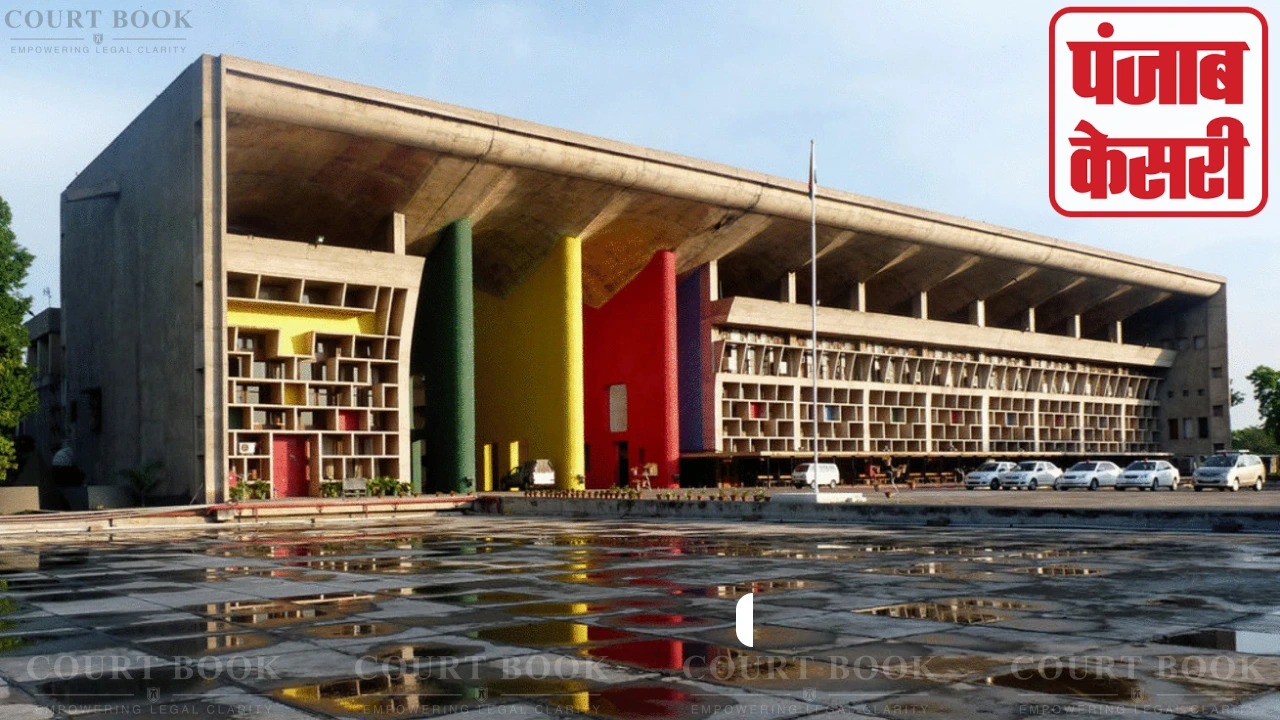
In a significant order concerning building violations and municipal powers, the Punjab and Haryana High Court refused to entertain a writ petition filed by Chopra Hotels Private Limited against a demolition order issued by local authorities in Jalandhar.
Justice Ramesh Kumari held that the company must approach the District Judge under the statutory remedy provided in law, rather than directly invoking the High Court’s writ jurisdiction.
The order was pronounced on February 10, 2026.
Read also:-Bombay HC Disposes Unmarried Woman’s Abortion Plea, Cites Supreme Court Ruling on MTP Rights
Background of the Case
Chopra Hotels Private Limited had approached the High Court challenging two key decisions of the municipal authorities - one dated November 6, 2025, refusing relaxation from demolition of allegedly unauthorized construction, and another dated February 6, 2026, directing demolition.
The company also challenged the sealing of its hotel building located on Police Line Road in Jalandhar and sought access to carry out rectification work. In the alternative, it requested six months’ time to correct the deviations.
Senior counsel appearing for the petitioner argued that the demolition action was motivated by political vendetta. It was submitted that the company is associated with newspapers such as Hind Samachar and Punjab Kesari, and that the action was taken because the publications allegedly did not align with government policies.
The petitioner relied on the Supreme Court’s judgment in Directions in the Matter of Demolition of Structures (2025) 5 SCC 1, arguing that procedural safeguards laid down in that case were not followed.
Read also:-Calcutta High Court Refuses to Quash Forgery Case Linked to 1963 Land Deed, Orders Police Prob
Court’s Observations
At the outset, the State raised a preliminary objection. The Additional Advocate General argued that the petition was not maintainable in view of Section 269 of the Punjab Municipal Corporation Act, 1976.
Section 269 provides a clear appeal mechanism against demolition orders. It states that any person aggrieved by a demolition order passed by the Commissioner may appeal to the Court of the District Judge within the period specified in the order.
After hearing both sides, Justice Kumari examined the statutory framework closely. The Court noted that the construction at the hotel premises was admittedly not as per the approved site plan.
The judgment records that the front setback was 15.37% (4052.54 sq. ft.) against the approved 20.03% (5280.25 sq. ft.), and the level had been extended by about 4.5 feet. In addition, a 16 ft x 27 ft room had been constructed in the rear setback area, allegedly in violation of building bye-laws.
The Court observed that if construction is not in accordance with the approved plan, “any action taken by the statutory authority cannot be termed as a result of political vendetta.”
On the petitioner’s reliance on the Supreme Court ruling regarding demolition safeguards, the Court clarified that those directions were issued in the context of demolitions of structures belonging to individuals facing criminal charges. The present case, it noted, involved a statutory demolition order under municipal law.
Read also:-Bombay High Court Flags Flawed Tree-Felling Notices, Closes Pune Coconut Trees Case
Justice Kumari emphasized that Section 269 clearly provides a remedy before the District Judge. The law also states that no other court shall entertain proceedings to restrain the Commissioner from acting under this provision.
“The appeal lies against the orders… to the Court of District Judge of the city where the premises are situated,” the Court observed, adding that the petitioner had chosen to approach the High Court directly instead of availing this remedy.
The Decision
Upholding the preliminary objection raised by the State, the High Court declined to examine the case on merits.
The Court disposed of the petition, directing the petitioner to avail the alternate statutory remedy under Section 269 of the Punjab Municipal Corporation Act, 1976.
Read also:-Karnataka High Court Quashes Cheque Bounce Conviction After Finding Serious Gaps in Trial
Importantly, the judge clarified that no opinion on merits was being expressed. Any observations made in the order, the Court said, were only for deciding the issue of maintainability and would not affect proceedings before any competent authority.
With that, the writ petition stood disposed of.
Case Title: Chopra Hotels Private Limited v. State of Punjab and Another
Case No.: CWP-4023-2026 (O&M)
Decision Date: February 10, 2026


