

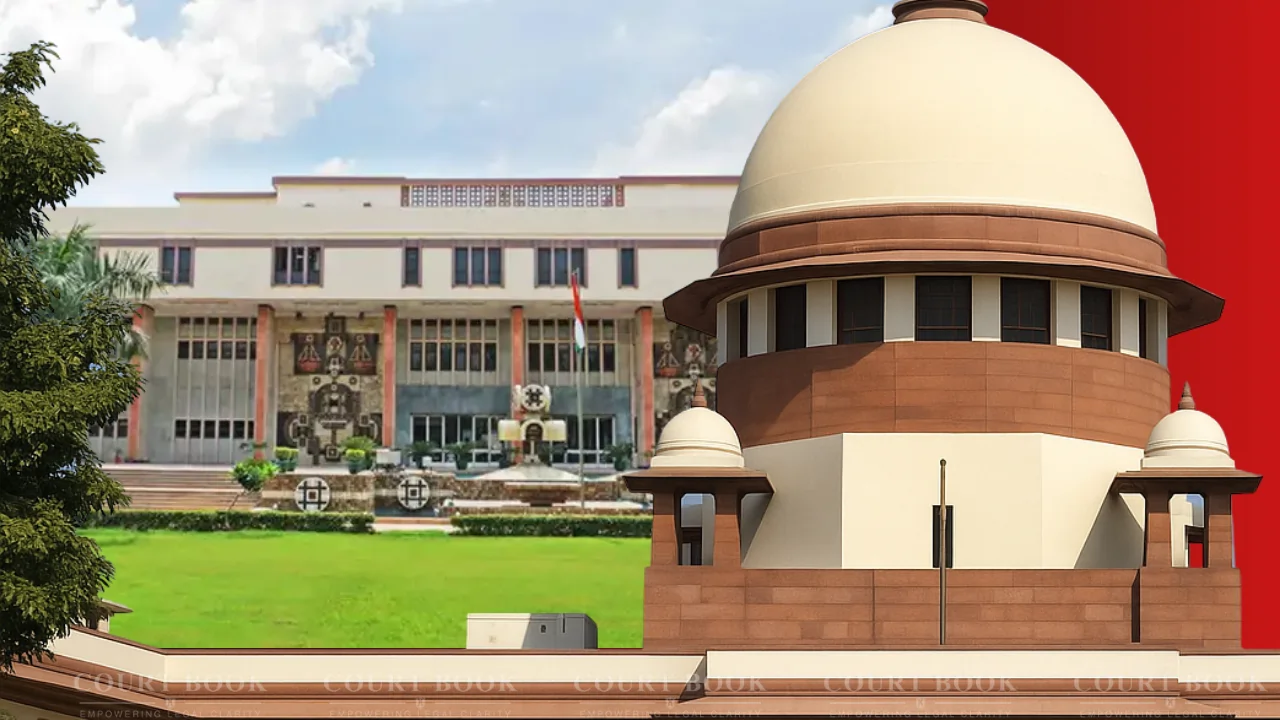
The Supreme Court on Tuesday (21 January 2026) raised serious concerns over courts linking bail relief to monetary deposits, observing that such practices risk derailing the criminal justice system. While hearing an appeal filed by businessman Rakesh Jain, the apex court directed the Delhi High Court to decide his regular bail plea on merits instead of keeping it pending due to non-payment of a disputed amount.
Background of the Case
The case stems from an FIR registered in 2019 by the Economic Offences Wing, Delhi, alleging diversion of government subsidy funds amounting to around ₹4.10 crore. The subsidy was sanctioned to a company named M/s Pragat Akshay Urja Limited, where Rakesh Jain was one of the directors.
Read Also:-Supreme Court Seeks CBI, ED Status Reports in Alleged ₹1.5 Lakh Crore Bank Fraud Linked to Anil
Jain was arrested in December 2019 under Sections 409 and 120B of the IPC. Soon after, the company deposited over ₹2.17 crore, and based on an assurance that the remaining amount would be paid later, the Delhi High Court granted him interim bail in April 2020.
However, the main bail application remained pending for years. In July 2025, the High Court refused to extend the interim bail, citing failure to deposit the remaining amount. This order led Jain to approach the Supreme Court.
What the Supreme Court Examined
The bench of Justice Manoj Misra and Justice Manmohan examined whether a court can indefinitely postpone a bail decision merely because an accused failed to honour a financial undertaking.
During the hearing, Jain’s counsel argued that bail cannot be linked to payment of money, especially when the investigation is complete and the accused has already spent considerable time in custody.
They relied on a recent Supreme Court ruling which had clearly held that courts should not demand deposits or undertakings as a condition for bail.
Court’s Observations
The Supreme Court made it clear that the High Court’s approach was flawed.
“The practice of insisting on deposits or undertakings for grant of bail has the potential to distort the criminal justice system,” the bench observed.
The judges noted that:
• The allegations were primarily against the company, not the director personally.
• There is no automatic presumption of guilt against a director under Section 409 IPC.
• More than 50% of the alleged amount had already been deposited.
• Investigation was complete and the case was triable by a Magistrate.
Read Also:-Bombay High Court Dismisses Plea Against PSU Banks’ Right to Reject Candidates for Past Misconduct
The court also referred to its earlier ruling in Gajanan Dattatray Gore v. State of Maharashtra, where it had strongly discouraged courts from using financial conditions as a tool for granting or denying bail.
At the same time, the bench clarified that a person agreeing to a condition cannot later challenge it - but that principle cannot justify delaying a bail decision indefinitely.
Final Decision
Setting aside the High Court’s approach, the Supreme Court directed:
• The Delhi High Court must decide Rakesh Jain’s regular bail application on merits.
• The decision must be taken within three weeks from receipt of the order.
• Till then, the interim protection granted earlier will continue.
• Jain will remain on bail subject to existing conditions.
“The appropriate course was to decide the bail application on its own merits rather than prolonging interim relief,” the bench stated.
With this, the appeal was disposed of.
Case Title: Rakesh Jain vs State
Case No.: Criminal Appeal No. 378 of 2026
Decision Date: 21 January 2026


