

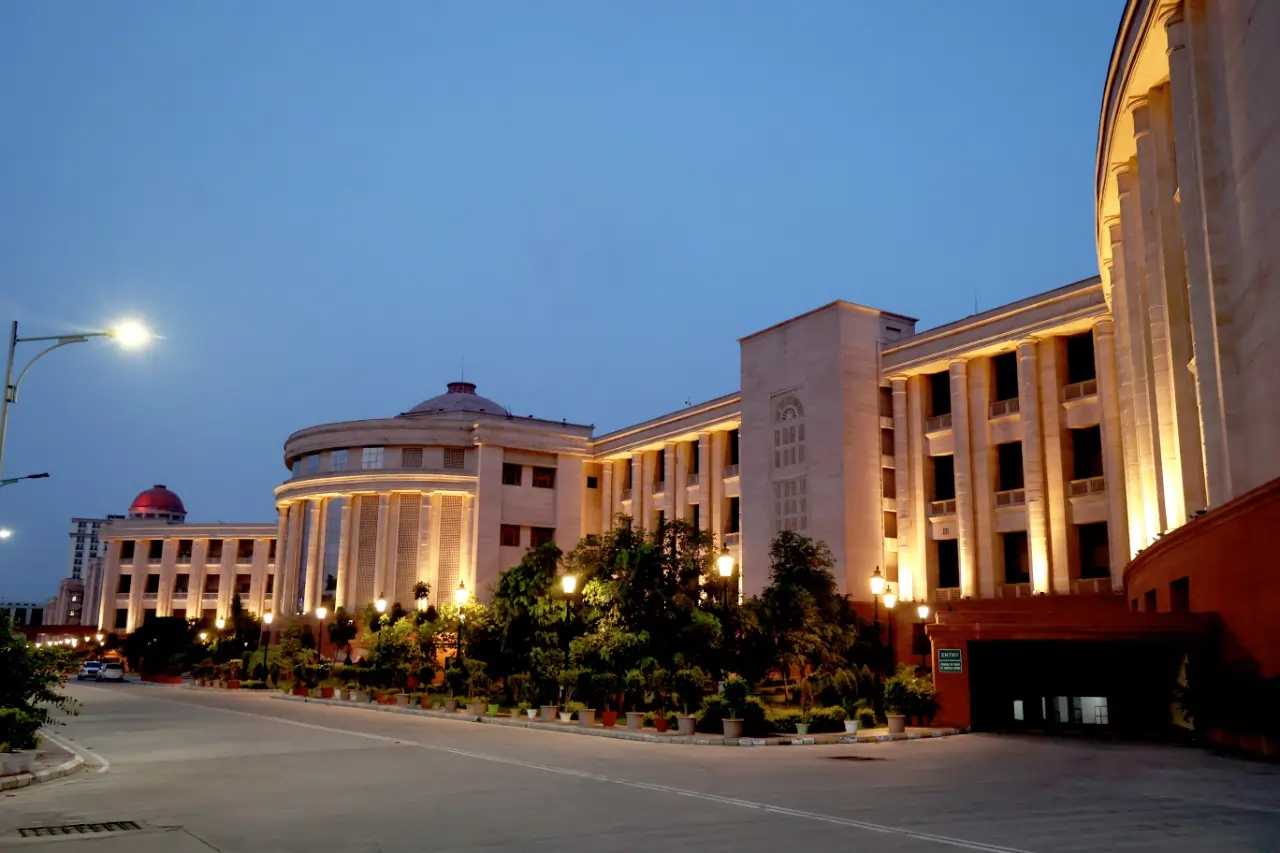
Sitting in Court No. 1 at the Lucknow Bench, the Allahabad High Court on Monday closed a long-pending public interest case seeking a complete ban on caste-based political rallies across the country. The Bench made it clear that while caste-based mobilisation is a serious concern, courts cannot create new prohibitions where the law already provides a framework.
Background of the Case
The case was filed by advocate Moti Lal Yadav in 2013 as a public interest litigation. Appearing in person, he urged the court to direct the Election Commission of India to ban caste rallies such as Brahmin, Yadav or Vaish sammelans organised by political parties.
Read also:-Supreme Court Revives Cheque Bounce Complaint, Says Justice Demands Restoration of Dismissed Case
The petitioner also sought a direction to bar political parties or candidates from contesting elections if they divided voters on the basis of caste or religion, and further asked for cancellation of party registrations found guilty of such practices.
What the Court Examined
The Bench, comprising Justice Rajan Roy and Justice Abdhesh Kumar Chaudhary, revisited the powers of the Election Commission under Article 324 of the Constitution and the Representation of the People Act, 1951.
The judges noted that once elections are notified, the Model Code of Conduct (MCC) comes into force. The MCC clearly prohibits appeals to caste or communal feelings and bars activities that promote hatred or tension among communities.
“The court observed that the Election Commission already has the authority to act against such conduct during the election period,” the order records.
The judges also referred to Paragraph 16A of the Election Symbols (Reservation and Allotment) Order, 1968, which allows the Commission to suspend or withdraw recognition of political parties for violating the MCC, after due process.
Read also:-Late Arbitration Award Can Survive: Supreme Court Clarifies Power to Extend Arbitrator’s Mandate
Criminal Consequences and Election Law
During the hearing, senior counsel for the Election Commission informed the court that violations of the MCC may also attract criminal action. In such cases, FIRs are lodged through officials under the Commission’s supervision.
The Bench further pointed out that appealing for votes on caste or religious grounds amounts to a “corrupt practice” under Section 123(3) of the Representation of the People Act. However, such violations can only be examined through election petitions after elections, not through a general ban.
What About Non-Election Periods?
A key part of the discussion focused on caste-based rallies held when elections are not underway. The court took note of a Government Order issued by the Uttar Pradesh government on 21 September 2025.
Paragraph 3(8) of that order imposes a ban on politically motivated caste-based rallies, stating that such events fuel social division and go against public order and national unity.
Referring to this, the Bench said, “The provision for banning caste-based political rallies is already very much in place, whether during elections or otherwise. What remains is effective implementation.”
Limits of Judicial Power
On the plea to bar parties or candidates from contesting elections altogether, the court was firm. It said there is no existing law that permits such a blanket ban merely on allegations of divisive conduct. Disqualification under Section 8A of the Act can happen only after a finding of corrupt practice.
Similarly, the Bench rejected the demand to cancel party registrations. Citing Supreme Court precedent, the judges reiterated that the Election Commission does not have the power to de-register political parties, except in rare cases such as fraud at the time of registration.
“The court noted that these are matters squarely within the domain of Parliament,” the order said, advising the petitioner to raise such concerns with lawmakers.
Court’s Decision
In conclusion, the High Court declined to grant any of the three main reliefs sought in the PIL. It disposed of the petition while expressing hope that existing laws and government orders would be implemented “in letter and spirit” by the authorities.
With those observations, the petition was closed on January 19, 2026.
Case Title: Moti Lal Yadav v. Chief Election Commissioner of India & Ors.
Case No.: PIL No. 5889 of 2013
Decision Date: 19 January 2026


