

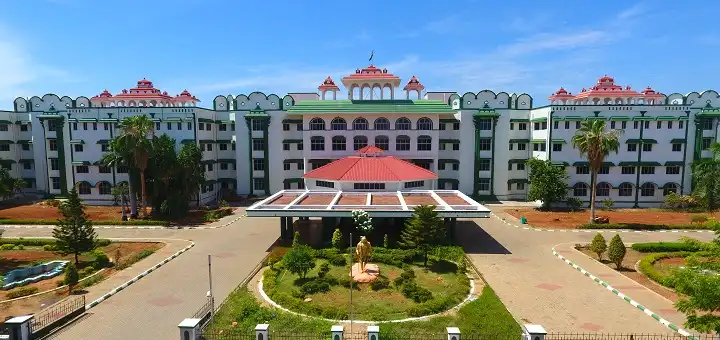
In a significant ruling impacting temple administration across Tamil Nadu, the Madurai Bench of the Madras High Court has set aside the State government’s ₹40-crore “Iconic Project” for Sri Kallazhagar Temple, Azhagarkoil. The court held that the government overstepped its authority by sanctioning massive construction works without lawful approval from the temple’s trustees and in violation of statutory safeguards.
The judgment was delivered by a Division Bench of Justice Anita Sumanth and Justice C. Kumarappan on January 23, 2026, in two connected writ petitions challenging the legality of the project.
Read Also:-Kerala High Court Quashes Suicide Abetment Case, Says Angry Words Alone Don’t Prove Criminal
Background of the Case
The dispute arose from a Government Order dated March 8, 2024, and a subsequent work order dated October 11, 2024, approving civil works worth nearly ₹40 crore at the historic Kallazhagar Temple in Madurai.
The project-part of the State’s “Iconic Temple Development Scheme”-included:
• Construction of guest houses and dormitories
• Shops and dining halls
• Parking facilities
• Sewage treatment plant
• Archakas’ quarters
• Renovation of temple structures
Petitioners challenged the move, arguing that:
• Temple funds were being diverted without legal authority
• No proper approval was taken from the Board of Trustees
• The project violated the Tamil Nadu Hindu Religious and Charitable Endowments (HR&CE) Act
• The State treated temple property like government land
Read Also:-Delhi High Court Rejects Sameer Wankhede’s Defamation Suit Against Netflix Show ‘Ba*ds
Key Arguments Before the Court
Petitioners’ Stand
The petitioners contended that:
• Temple funds can only be used strictly as per the HR&CE Act
• The government cannot impose development projects on temples
• The Board of Trustees had no real role in approving the works
• The Executive Officer had exceeded his authority
• The temple’s accumulated surplus was being misused
They also pointed out that the project originated from a government announcement, not from the temple administration.
Government’s Defence
The State argued that:
• The project aimed at improving facilities for devotees
• The work was part of a broader heritage development plan
• Expenditure was permissible under the Act
• Judicial interference in administrative matters should be minimal
The government also said that tenders had already been issued and work had begun.
Read Also:-UGC's 2026 Anti-Discrimination Rules Face Protest by Lawyers Near Allahabad High Court
Court’s Observations
The High Court delivered a sharp critique of the government’s approach.
1. Temple Is Not Government Property
The Bench made it clear that temples are not extensions of the State:
“The State cannot treat temple properties as its own or use temple funds for projects conceived by the government,” the court observed.
It held that only the temple’s Board of Trustees has the authority to decide how temple money is spent.
2. Violation of HR&CE Act
The court found that:
• The temple falls under Section 47(iii) of the HR&CE Act
• Such temples must be administered by a Board of Trustees, not by officials
• The project was planned when no valid Board was in place
• A “Fit Person” or Executive Officer cannot replace trustees permanently
The Bench noted that this directly violated the statutory scheme.
3. Illegal Use of Temple Funds
The judges noted that:
• No proper budgetary approval was obtained
• The project relied on accumulated surplus without statutory sanction
• Mandatory financial priorities under Section 86 were ignored
The court stated:
“There is no material to show that the trustees applied their mind to the necessity or legality of the expenditure.”
4. Government Overreach
The court was particularly critical of the “Iconic Project” concept.
It observed that:
• Development of temples must originate from temple needs, not political announcements
• The government cannot impose a one-size-fits-all model
• Religious institutions cannot be treated as commercial infrastructure
The Bench remarked:
“Temples are places of faith, not development projects for administrative experimentation.”
Read Also:-Supreme Court Sets Aside Odisha Land Dispute Orders, Says Section 47 CPC Misused After Decree
Final Decision of the Court
The Madras High Court:
• Quashed the Government Order dated March 8, 2024
• Set aside the work order dated October 11, 2024
• Declared the entire project legally unsustainable
• Held that the State acted beyond its authority
• Reaffirmed that temple funds must be managed only by trustees as per law
The court concluded that the government had no legal right to sanction or execute the project, and that all actions taken pursuant to the impugned orders were invalid.
Case Title: A.V.B. Prabhu v. Secretary to Government & Ors.
Case Numbers: W.P.(MD) Nos. 23501 & 22596 of 2025
Decision Date: 23 January 2026


