

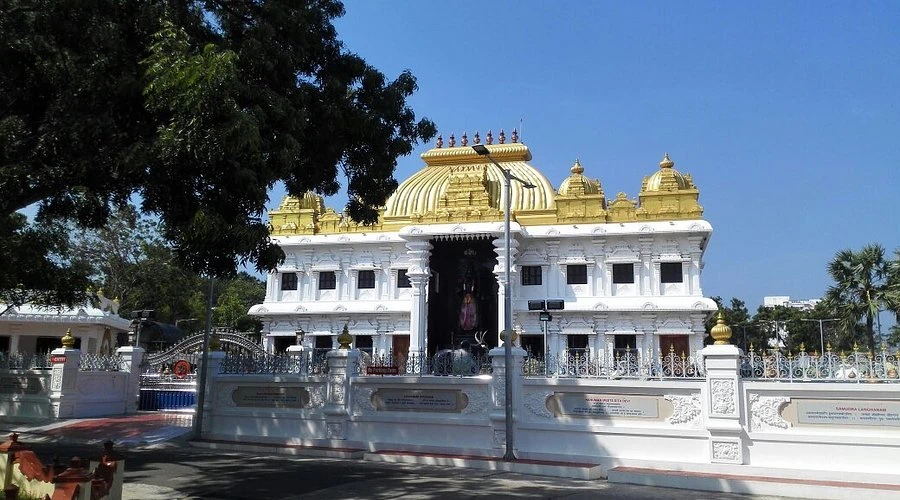
In a significant ruling on property rights, the Supreme Court of India has restored a 99-year lease in favour of Vivekananda Kendra, overturning the Orissa High Court decision that had dismissed the organisation’s civil suit.
The Bench of Justice Pankaj Mithal and Justice S.V.N. Bhatti held that the 1998 document executed in favour of the Kendra was a valid lease deed not a mere licence and that its unilateral cancellation was illegal.
Read also:-Calcutta High Court Enhances Accident Compensation to ₹6 Lakh for Court Employee
Background of the Case
The dispute relates to a small parcel of land measuring 0.070 decimals at Baripada town in Odisha. The property originally belonged to Late Anima Bose, who had executed a registered deed dated March 23, 1998, in favour of Vivekananda Kendra for a term of 99 years at an annual rent of ₹1,000.
According to the Kendra, it established a centre on the land and carried out spiritual and service activities. However, in December 2003, Anima Bose executed a deed cancelling the lease and later issued a notice asking the Kendra to vacate the premises.
The Kendra refused, asserting its right to continue for 99 years under the registered lease. In 2005, it alleged that its possession was forcibly disturbed. The property was subsequently sold in January 2006 to Pradeep Kumar Agarwalla and Ratandeep Agarwalla.
The Kendra filed a civil suit seeking a declaration that the lease was valid, the cancellation deed void, and the sale deed ineffective.
Read also:-Karnataka High Court Reinstates KSRTC Guard, Says No Termination Without Proper Inquiry and Fair
Trial Court and High Court Findings
The Trial Court decreed the suit in 2018, holding that a registered lease could not be unilaterally cancelled and that the purchasers had bought the property during the pendency of litigation. The First Appellate Court confirmed this decision.
However, the High Court, in second appeal, reversed the findings. It held that the 1998 document was not a lease but merely a licence to run a centre. Once it treated the document as a licence, the Kendra’s claim as a lessee failed, and the suit was dismissed.
Read also:-Calcutta High Court Orders Cancellation of OBC Certificate of Gram Panchayat Pradhan
Supreme Court’s Observations
The Supreme Court said the real issue was simple: was the 1998 document a lease or a licence?
Referring to earlier decisions including Associated Hotels of India Ltd. v. R.N. Kapoor, the Bench explained that a lease transfers an interest in property and grants possession for a specified time, while a licence merely permits use without transferring any legal interest.
“The decisive consideration,” the Court noted, “is the intention of the parties, to be gathered from the document as a whole.”
Examining the language of the deed, the Court pointed out that it clearly used terms such as “demise,” fixed a 99-year term, specified annual rent, and allowed alterations and construction. These were strong indicators of a lease.
The Bench observed that courts must first rely on the plain words of a document. “If the words in a contract are clear, there is very little the courts must do in construction,” the judgment stated.
The High Court, according to the Supreme Court, wrongly relied on later conduct and surrounding circumstances when the intention was already clear from the text.
It further clarified that the lessor’s occupation of a portion of the building did not change the nature of the agreement, as exclusive possession must be examined with respect to the demised portion.
Read also:-Calcutta High Court Partly Allows Discharge Plea in 498A Case, Drops Attempt to Homicide Charge
Decision
Holding that the 1998 document was indeed a lease deed, the Supreme Court declared the unilateral cancellation illegal.
The Bench set aside the High Court’s judgment and restored the decrees of the Trial Court and the First Appellate Court in favour of Vivekananda Kendra.
The civil appeal was allowed. No order as to costs.
Case Title: The General Secretary, Vivekananda Kendra v. Pradeep Kumar Agarwalla & Ors.
Case No.: Civil Appeal arising out of SLP (C) No. 9558 of 2023
Decision Date: February 26, 2026
Download Judgment

