

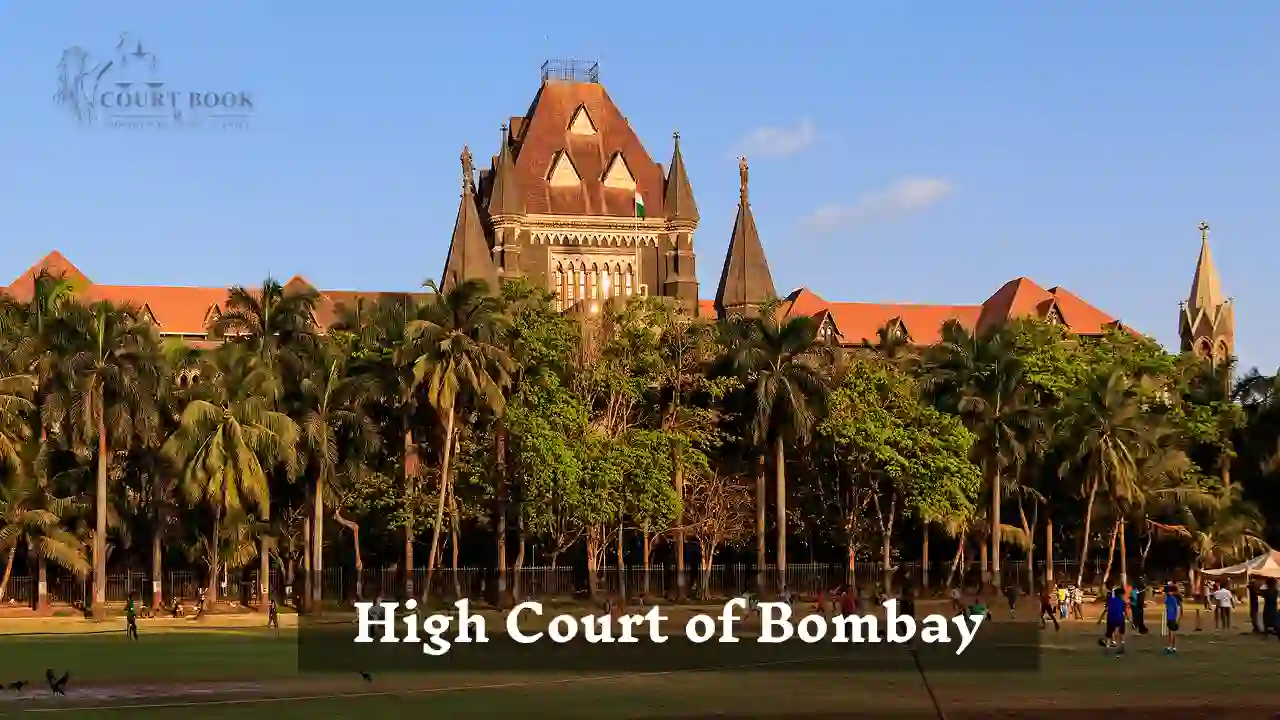
The Aurangabad Bench of the Bombay High Court has refused to extend the benefit of 35% Non-Practicing Allowance (NPA) to two retired government doctors from an earlier date, holding that the State is entitled to fix a cut-off date while implementing financial policies.
In a detailed judgment delivered on January 6, 2026, a Division Bench of Justices Vibha Kankanwadi and Hiten S. Venegavkar dismissed two writ petitions filed by retired medical officers who sought revision of their pensions by including 35% NPA from January 1, 2016.
Read also:-Bombay High Court Allows Single Mother to Change Daughter’s Name, Caste in School Records
Background of the Case
The petitions were filed by Dr. Jayant Kotkar and Dr. Rajendra Ahirrao, both retired medical officers who had served under the Zilla Parishad setup in Maharashtra. They retired in mid-2018 after reaching the age of superannuation.
It was undisputed that the doctors were granted the benefits of the 7th Pay Commission for pay fixation during service and for revising their pension after retirement. However, the dispute centered on Non-Practicing Allowance (NPA) - an additional allowance paid to government doctors who are barred from private practice.
In October 2024, the State government issued a resolution granting 35% NPA to medical officers. But the benefit was made effective from January 1, 2019.
The petitioners argued that since the 7th Pay Commission was implemented from January 1, 2016, the NPA should also be counted from that date for pension calculation. They challenged the government’s decision to fix January 1, 2019, as the effective date, calling it discriminatory and unconstitutional.
Read also:-Rajasthan High Court Refuses Relief to New Nursing Colleges, Says Counselling Cannot Be Reopened
Petitioners’ Arguments
Appearing for the doctors, counsel argued that once the State accepted the 7th Pay Commission from January 1, 2016, all medical officers retiring after that date formed a single class.
“The denial of NPA for the period between 2016 and 2018 amounts to hostile discrimination,” the petitioners contended, invoking Article 14 of the Constitution, which guarantees equality before law.
They also pointed out that a similarly placed colleague who retired in 2019 had received pension revision including 35% NPA. According to them, the only difference was the retirement date - which they argued should not determine entitlement.
The doctors further sought interest on the alleged unpaid pension component.
Read also:-Jharkhand HC Seeks Answers on 437 Custodial Deaths, Orders Home Secretary to Clarify Judicial
State’s Stand
The State government, represented by the Additional Government Pleader, strongly opposed the petitions.
It argued that fixing an effective date for implementing financial benefits is a policy decision. The October 14, 2024 Government Resolution clearly stated that 35% NPA would be applicable from January 1, 2019, and not earlier.
The State submitted that retirees before the cut-off date form a distinct category from those retiring after it. Therefore, there was no violation of equality.
Relying on previous Supreme Court judgments and a Division Bench ruling in Dr. M.M. Swami Sirsikar v. State of Maharashtra, the State argued that financial considerations are valid grounds for fixing a cut-off date.
Read also:-Karnataka High Court Cuts Jail Term in ATM Cloning Case, Enhances Fine to ₹2 Lakh Each
Court’s Observations
Justice Hiten S. Venegavkar, who authored the judgment, framed the key issue: whether the cut-off date of January 1, 2019, was so arbitrary that it required judicial interference.
The Bench made it clear that the petitioners were not merely challenging an order - they were effectively asking the Court to rewrite a government policy by substituting one date for another.
“Such a relief,” the Court observed, “would amount to restructuring a policy decision and imposing a retrospective financial liability upon the State.”
The judges emphasized that courts can examine illegality or arbitrariness but cannot act as appellate authorities over fiscal choices of the government.
Referring to Supreme Court precedents, the Bench noted that financial constraints are a legitimate basis for fixing a cut-off date. The creation of two groups - those before and those after a specified date - does not automatically violate Article 14.
The Court found strong parallels with earlier rulings where similar challenges to cut-off dates in NPA matters were rejected.
“Once an operative date is fixed, those retiring on or after that date form a class distinct from those retiring earlier,” the Bench said.
The judges also clarified that acceptance of a Pay Commission from a particular date does not constitutionally mandate that every allowance must follow from the same date.
Read also:-Allahabad High Court Quashes FIR Against Students for Offering Namaz at Restricted Site in Sant Kabir
The Decision
After examining the arguments, the Court held that the petitioners had failed to demonstrate that the January 1, 2019 cut-off was arbitrary or unconstitutional.
The classification between medical officers who retired before and after that date was held to be legally permissible.
The Bench concluded that the petitioners had no accrued or vested right to claim retrospective extension of 35% NPA for pension computation.
Both writ petitions were dismissed. The rule was discharged, and there was no order as to costs.
Case Title: Dr. Jayant Kotkar v. State of Maharashtra & Ors. (With connected petition)
Case No.: Writ Petition No. 56 of 2026 & Writ Petition No. 65 of 2026
Decision Date: January 6, 2026


