

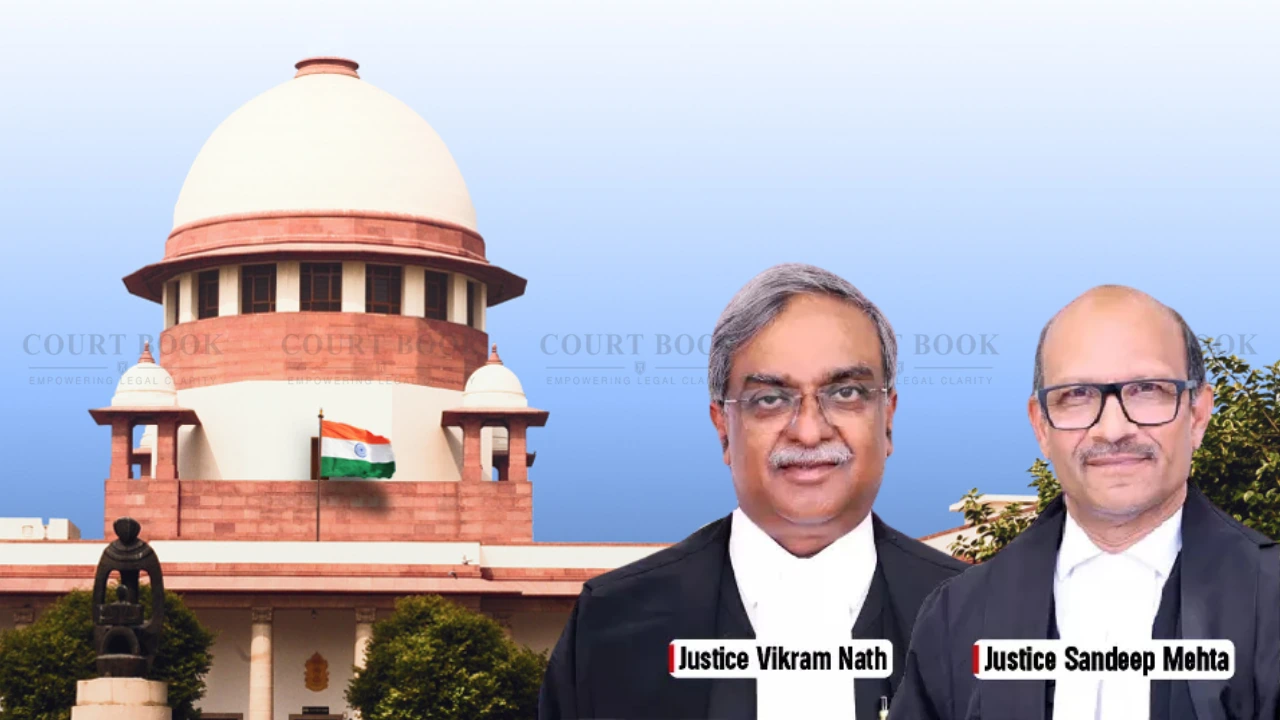
The Supreme Court of India reaffirmed that courts must stay away from ongoing Panchayat elections, setting aside an interim order of the Uttarakhand High Court that had allowed a disqualified candidate to re-enter the electoral race. The ruling reinforces the constitutional bar on judicial interference once the election process has begun.
Background of the Case
The dispute arose from Panchayat elections in Uttarakhand’s Pithoragarh district. Following a revised election notification issued in June 2025, Narendra Singh Deopa filed his nomination for the post of Zila Panchayat Member from Bharhgaon constituency.
An objection was raised by rival candidate Sandeep Singh Bora, alleging that Deopa had failed to make mandatory disclosures in his nomination papers. Acting on this complaint, the Returning Officer cancelled Deopa’s candidature on July 9, 2025.
Read also:- Maintenance Is Support, Not Income Sharing : Rajasthan High Court Rejects Wife’s Plea for Enhancement
Deopa challenged the rejection before a Single Judge of the Uttarakhand High Court. However, the court refused to entertain the plea, holding that once elections are underway, such disputes can only be examined through an election petition. On the same day, Bora was declared elected unopposed, as the remaining candidates stood disqualified.
Despite this, Deopa filed an intra-court appeal. A Division Bench of the High Court stayed the Single Judge’s order and directed election authorities to allot a symbol to Deopa, allowing him to contest the election.
This interim relief was granted without impleading Bora, who had already been declared elected. Aggrieved by the sudden reversal, Bora approached the Supreme Court.
The key question before the apex court was whether the High Court could intervene in an ongoing Panchayat election despite the constitutional bar under Article 243-O, especially when state law provides a specific remedy through an election petition.
The court also examined whether rejection of a nomination could be challenged through a writ petition instead of the statutory election process.
Court’s Observations
A Bench led by Justice Vikram Nath and Justice Sandeep Mehta took a firm view against judicial interference at the election stage.
“The Constitution clearly mandates that no election to a Panchayat shall be called in question except by way of an election petition,” the bench observed, referring to Article 243-O.
Read also:- Supreme Court Rejects Arbitration Where Partnership Deed Is Alleged Forged, Sets Aside High Court Order
The court explained that Uttarakhand’s Panchayati Raj Act, 2016 provides a complete legal framework for addressing grievances such as improper rejection of nominations. Section 131H of the Act specifically allows candidates to challenge such actions after the election through an election petition.
Rejecting the High Court’s reasoning, the bench said that allowing writ petitions during elections would defeat the purpose of constitutional and statutory safeguards designed to ensure smooth electoral processes.
“The election process cannot be lightly interrupted at the behest of individual grievances,” the court remarked, adding that public interest demands continuity and certainty in elections.
Read also:- Punjab & Haryana High Court Denies Bail to Advocate Accused of Seeking ₹30 Lakh to Influence Divorce Case
The Supreme Court found multiple errors in the High Court’s interim order. First, it violated the express constitutional embargo against court interference. Second, it disrupted an election that had already reached finality with an unopposed declaration. Third, it passed adverse directions without hearing the elected candidate, directly affecting his rights.
The bench noted that even if a nomination is wrongly rejected, the law requires the aggrieved candidate to wait until the election concludes and then pursue the remedy of an election petition.
Final Decision
Allowing the appeal, the Supreme Court set aside the Uttarakhand High Court’s interim order dated July 18, 2025. The writ appeal filed by the disqualified candidate was dismissed, and the unopposed election of Sandeep Singh Bora as Zila Panchayat Member was restored.
With this, the court brought the litigation to a close, reiterating that election disputes must follow the route laid down by law and not bypass the statutory process.
Case Title: Sandeep Singh Bora v. Narendra Singh Deopa & Others
Download Judgment

