

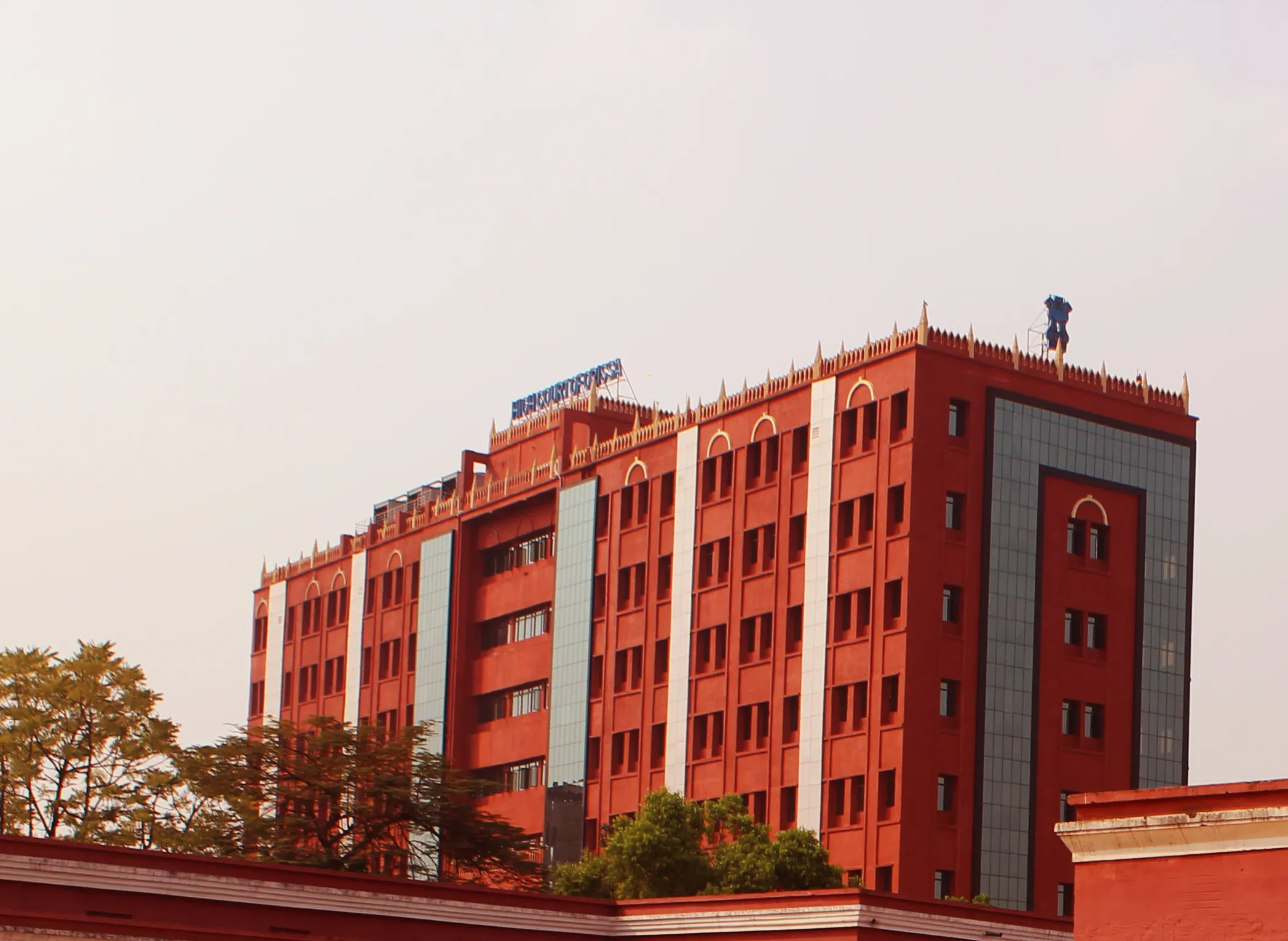
The Orissa High Court has refused to interfere with a Central Administrative Tribunal (CAT) order that allowed a senior scientist to count nearly two decades of service for pension and retirement benefits. The court ruled that the Union Government wrongly denied the benefit by ignoring the concept of technical resignation, a principle well recognised in service law.
The judgment was delivered on January 9, 2026, by a Division Bench comprising Justice Dixit Krishna Shripad and Justice Sibo Sankar Mishra.
Read Also:-Kerala High Court Quashes Suicide Abetment Case, Says Angry Words Alone Don’t Prove Criminal
Background of the Case
The case arose from a petition filed by the Union of India and others challenging a CAT order passed in favour of Dr. Manoj Kumar Das, a scientist associated with the National Institute of Malaria Research (NIMR).
Dr. Das had joined the IDVC Project under NIMR in 1988 as a Technical Officer. Over the years, he served in various capacities, including Research Scientist and Senior Research Scientist, all through proper selection processes.
In March 2007, he was selected for a regular post of Senior Research Officer under the same organisation. Before joining, he submitted a technical resignation and reported for duty the very next day.
However, when his retirement benefits were calculated, the government refused to count his earlier service of nearly 19 years, claiming that his resignation broke continuity of service.
Aggrieved, Dr. Das approached the Central Administrative Tribunal, which ruled in his favour in January 2025. The Union Government then moved the Orissa High Court challenging that decision.
Read Also:-Delhi High Court Rejects Sameer Wankhede’s Defamation Suit Against Netflix Show ‘Ba*ds
The Centre argued that:
• Dr. Das’s resignation was not a valid “technical resignation”.
• The resignation was never formally accepted.
• His previous service under the project could not be treated as qualifying service for pension.
• The CAT had ignored earlier judgments, including a Madras High Court ruling.
The government maintained that since the resignation was not accepted in writing, his past service stood forfeited.
What the Court Observed
The High Court rejected the government’s arguments after examining records and service rules in detail.
The bench noted that:
• Dr. Das resigned on March 15, 2007, clearly mentioning it as a technical resignation.
• He joined the new post on March 16, 2007, without any break.
• Both resignation and joining letters were addressed to the same authority.
• The posting, workplace, and duties remained effectively the same.
Read Also:-UGC's 2026 Anti-Discrimination Rules Face Protest by Lawyers Near Allahabad High Court
“The resignation and joining were separated by less than 24 hours. The conduct of the department shows clear acceptance,” the court observed.
The judges also referred to Rule 13 and Rule 26 of the CCS (Pension) Rules, 1972, which allow counting of past service if a government employee joins another post through proper channel without break.
“The rule is meant to protect employees who move within government service, not punish them,” the bench noted.
On Technical Resignation
The court drew a clear distinction between:
• Ordinary resignation, which breaks service continuity; and
• Technical resignation, where service continues for pension purposes.
It held that technical resignation does not sever the employer-employee relationship, especially when the employee joins another government post immediately.
Quoting settled law, the bench said:
“Service jurisprudence recognises technical resignation as a continuation of service, not its termination.”
Why the Court Rejected the Government’s Appeal
The court found multiple reasons to dismiss the petition:
• Dr. Das served continuously for 19 years through valid appointments.
• His resignation was procedural, not substantive.
• The government never formally rejected the resignation.
• The same office, post, and employer continued.
• Pension rules clearly support counting such service.
• The Tribunal’s decision was legally sound and reasoned.
The bench also noted Dr. Das’s long and unblemished service, including postings in difficult areas like the Nicobar Islands during the 2004 tsunami period.
Read Also:-Supreme Court Sets Aside Odisha Land Dispute Orders, Says Section 47 CPC Misused After Decree
Final Decision
Dismissing the Union Government’s petition, the High Court held:
“The Tribunal’s order does not suffer from any legal infirmity. The petition is devoid of merit and stands dismissed.”
The court directed the authorities to implement the Tribunal’s order within 60 days, without forcing further litigation.
Case Title: Union of India & Others v. Dr. Manoj Kumar Das
Case Number: W.P.(C) No. 27890 of 2025
Decision Date: 9 January 2026
Download Judgment

