

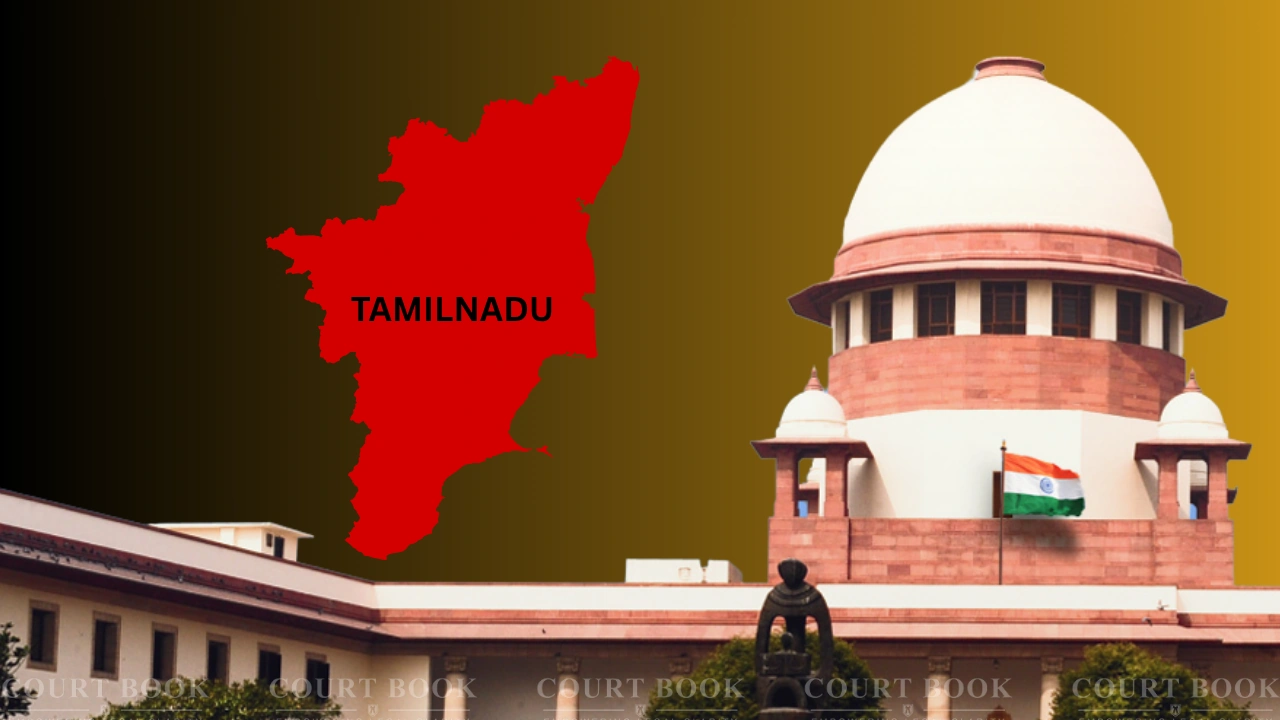
In a strong message against lenient sentencing in serious crimes, the Supreme Court of India on Tuesday restored a three-year jail term for two men convicted of attempting to murder a villager in Tamil Nadu. The court held that monetary compensation cannot replace imprisonment in grave offences.
The bench of Justices Rajesh Bindal and Vijay Bishnoi set aside a Madras High Court order that had reduced the sentence to the period already undergone - about two months - while enhancing the fine.
“The punishment must reflect the gravity of the crime,” the bench observed in open court, adding that undue sympathy to convicts risks eroding public faith in the justice system.
Background of the Case
The case dates back to June 6, 2009, when a man was attacked in Sivagangai district following prior enmity. According to the prosecution, two accused arrived armed with knives and stabbed the victim multiple times - on the chest, ribs, abdomen and hand. Medical evidence later confirmed that the injuries were serious and could have been life-threatening without immediate treatment.
The trial court convicted the two men under Sections 307 (attempt to murder), 326 (causing grievous hurt with dangerous weapons) and 324 (causing hurt) of the Indian Penal Code. They were sentenced to three years of rigorous imprisonment and fined ₹5,000 each.
The conviction and sentence were upheld by the appellate court in 2016.
However, in 2020, the Madurai Bench of the Madras High Court modified the sentence in a criminal revision. While maintaining the conviction, the High Court reduced the imprisonment to the period already undergone and enhanced the fine to ₹50,000 each. The enhanced amount was directed to be paid as compensation to the victim’s wife, Parameshwari, who had been impleaded after the victim died in an unrelated incident.
The victim’s wife challenged this reduction before the Supreme Court.
Arguments Before the Supreme Court
Counsel for the appellant argued that reducing a three-year sentence to two months in a serious assault case was “illegal and misplaced.” He relied on earlier Supreme Court rulings which state that mere passage of time cannot be a ground for reducing punishment in grave offences.
The State also supported the appeal. The Additional Advocate General submitted that the High Court had failed to give proper reasons for such a drastic reduction and had shown “undue sympathy.”
On the other hand, counsel for the convicts told the court that over ten years had passed since the incident, the accused had no criminal history, and they were willing to pay ₹1 lakh in compensation.
Read also:-Supreme Court Clears Siddhartha Reddy in Actress Pratyusha Death Case, Says No Proof of Abetment
Court’s Observations
The Supreme Court was clearly unimpressed by the High Court’s reasoning.
“We are constrained to observe that the High Court acted in complete defiance of settled principles of sentencing,” the bench noted.
The judges emphasised that sentencing must be proportionate to the seriousness of the offence. In this case, the victim had suffered four stab injuries, described by the doctor as potentially life-threatening.
The bench also made an important clarification on compensation. Referring to provisions that allow courts to award monetary relief to victims, it said such compensation is additional - not a substitute for punishment.
“Compensation is restitutory in nature; it cannot replace a custodial sentence in grave offences,” the court observed.
The judges warned against a growing trend where higher courts reduce prison terms while increasing fines. “Such practices may send a wrong signal that serious crimes can be absolved by paying money,” the bench said.
The court reiterated that punishment serves not only to reform offenders but also to deter crime and maintain public confidence in law.
Read also:-Madras High Court Orders Removal of Shops from Kanyakumari Temple Mandapam, Slams HR&CE
Decision
Setting aside the High Court’s 2020 order, the Supreme Court restored the original three-year rigorous imprisonment awarded by the trial court and affirmed by the appellate court.
The court directed the two convicts to surrender before the trial court within four weeks and serve the remaining sentence after adjusting the period already undergone.
If they fail to surrender within the stipulated time, the trial court has been asked to take appropriate legal steps to secure their custody.
With these directions, the appeal filed by the victim’s wife was allowed.
Case Title: Parameshwari vs State of Tamil Nadu & Ors.
Case No.: Criminal Appeal arising out of SLP (Crl.) No. 7495 of 2021
Decision Date: February 17, 2026
Download Judgment

