

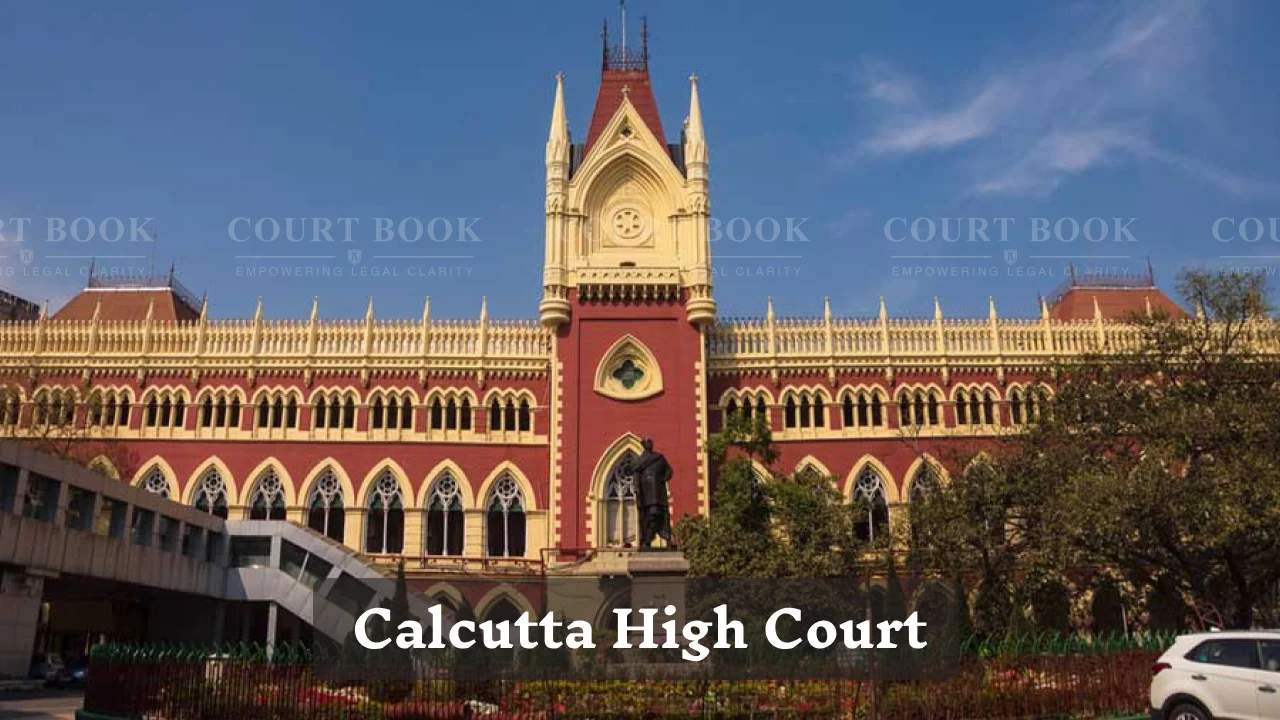
The Calcutta High Court’s circuit bench at Port Blair has set aside a trial court order that had discharged four in-laws in a heartbreaking case involving the death of a young woman and her toddler in Andaman. Justice Apurba Sinha Ray ruled that there is enough material at this stage to proceed against them, restoring charges linked to cruelty and dowry death and sending the case back for trial.
The case traces back to July 8, 2021. Bhawna, a young mother, was found dead in her rented home in Andaman, and her one-and-a-half-year-old daughter was also found dead. The door was locked from inside and later broken open. A neighbour first reported the incident as a murder against unknown persons. Days later, Bhawna’s father filed a separate complaint, accusing her husband and in-laws of cruelty and dowry-related harassment.
Police investigated and filed charge sheets under provisions dealing with cruelty to a married woman and dowry death. The husband and four relatives—his parents, brother, and sister—were sent up for trial. In July 2024, however, the Sessions Court discharged the four in-laws, saying there was not enough material to frame charges against them and that only the husband should face trial. That order was challenged by Bhawna’s father before the High Court.
Counsel for the father told the court that witness statements recorded by police showed a long pattern of pressure and demands. He pointed to allegations that Bhawna was taunted over the gender of her unborn child, that money was demanded, and that she was pushed out of her matrimonial home when the demand was not met. “At this stage, the court only has to see whether there is a prima facie case,” he argued, adding that the trial court ignored key statements.
On the other side, the in-laws said they were not even in Andaman at the time and that the couple had been living there alone for years. Their counsel described the dispute as ordinary marital wear and tear and stressed that the first report did not name them. He also pointed to material suggesting that the husband took steps to perform the last rites, arguing this did not fit the picture of a family that had driven Bhawna to her death.
Justice Ray examined the record and found that the trial court’s view was too narrow. The judge noted that several relatives of the deceased had spoken about repeated demands for money, including a demand of ₹5 lakh linked to the birth of a girl child, and about pressure and taunts over the child’s gender. The statements also spoke of Bhawna being sent back to her parental home and later being taken back after some money was arranged.
“At the stage of framing charges, the court is not supposed to weigh the evidence,” the judge observed, adding that the only question is whether the materials show a case that needs to be tried. The order pointed out that cruelty cannot be boxed into a single definition and that the pattern described by witnesses—especially the focus on the child’s gender and repeated money demands—was serious enough to be tested in a full trial.
The court also addressed the argument about Bhawna’s conduct on the day of the incident. Whether her actions were the result of personal cruelty or of pressure and compulsion, the judge said, is “a matter of evidence” and cannot be decided at this early stage. In a poignant note, the judgment reflected on how the death of a very young girl still reminds society of the distance it has to travel on gender equality.
Concluding that the Sessions Court failed to properly consider the witness statements, the High Court set aside the discharge order. It directed the four in-laws—Vinay Sharma, Praveen Kumari, Aman Sharma, and Shashi Kala—to appear before the Sessions Judge at Port Blair, surrender, and seek bail as per law. The trial court has been asked to proceed with framing charges under the appropriate sections and continue the case. The revision petition filed by Bhawna’s father was allowed, and the matter will now move forward to trial.
Case Title: Jagjit Kumar vs State & Others
Case No.: CRR 54 of 2024
Judgment: 6 February 2026.
Download Judgment

