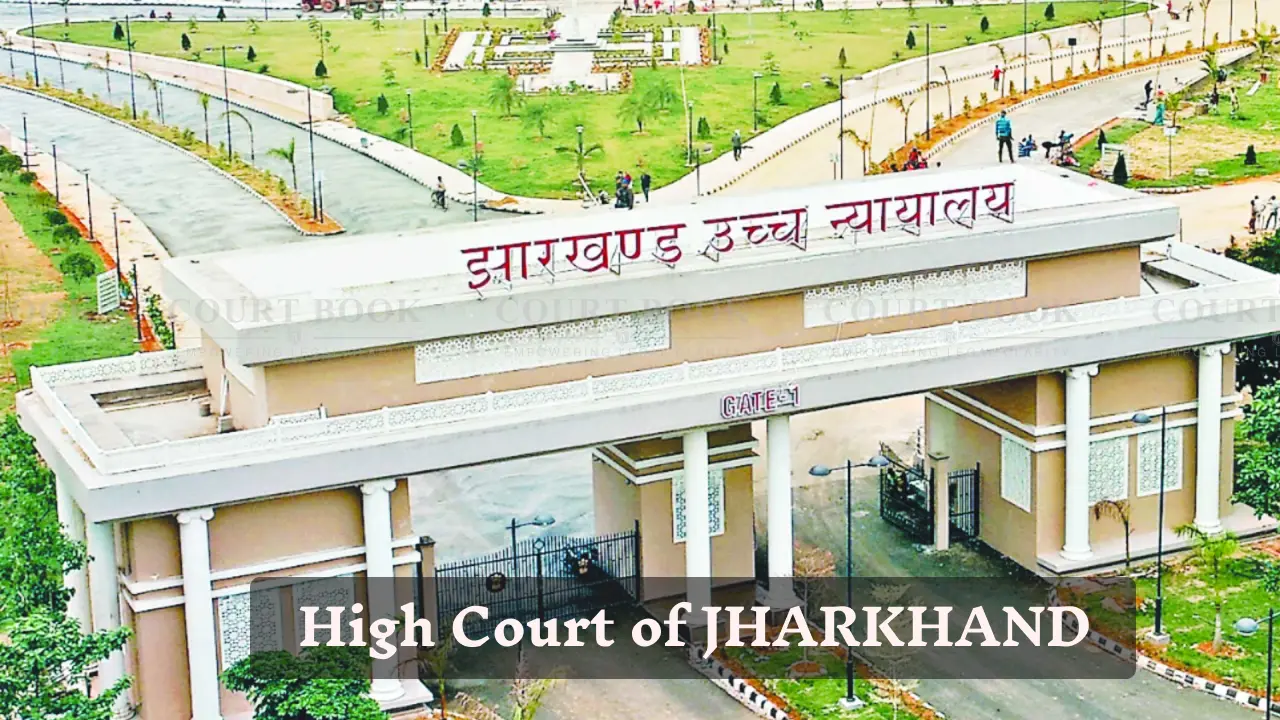
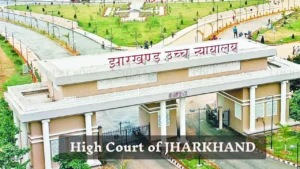
After nearly fourteen years of continuous monitoring, the Jharkhand High Court on Friday brought down the curtain on a long-running public interest litigation concerning biomedical waste management across the State.
But the closure came with a clear message: the law exists, the infrastructure exists - now it must work.
Read also:-Calcutta High Court Partly Allows Discharge Plea in 498A Case, Drops Attempt to Homicide Charge
A Division Bench led by Chief Justice M.S. Sonak issued a comprehensive set of coordination and enforcement directions to ensure strict implementation of the Bio-Medical Waste Management Rules, 2016.
Background of the Case
The petition was filed in 2012 by Jharkhand Human Rights Conference (JHRC), raising concerns about improper handling and open dumping of biomedical waste in cities like Ranchi, Dhanbad and Jamshedpur.
The plea highlighted that infectious medical waste - including syringes, pathological waste and other hazardous materials - was being disposed of in public spaces. Over time, the Court expanded the scope of the case statewide after reports and photographic evidence showed systemic lapses.
The Bench noted that biomedical waste is not ordinary garbage. It may contain disease-spreading pathogens and toxic substances that contaminate air, water and soil if not handled scientifically.
Read also:-Karnataka High Court Reinstates KSRTC Guard, Says No Termination Without Proper Inquiry and Fair
Court’s Observations
The Court traced the legal journey from the 1998 Rules to the more comprehensive 2016 framework, which introduced stricter standards like barcoding of waste bags and mandatory pre-treatment of infectious material.
Despite these reforms, the Bench observed that enforcement often remained weak due to “administrative lethargy” and poor coordination between departments.
“The mere existence of statutory provisions does not automatically translate into effective compliance,” the Bench observed during the hearing.
Referring to constitutional principles, the Court reiterated that safe waste management is linked to the right to life under Article 21 of the Constitution. Improper disposal directly threatens public health and environmental safety.
The judges also noted that courts cannot run administrations forever. Judicial monitoring becomes necessary when authorities fail, but primary responsibility must ultimately return to statutory bodies.
Read also:-Calcutta High Court Orders Cancellation of OBC Certificate of Gram Panchayat Pradhan
Improvements Recorded During Monitoring
During the course of the case, the Court recorded significant progress:
• The number of operational Common Bio-Medical Waste Treatment Facilities increased from one to six across districts including Ramgarh, Lohardaga, Dhanbad, Pakur and Deoghar.
• An additional facility is under construction at Giridih.
• Training and awareness programs improved segregation practices at hospitals and clinics.
• A structured waste collection mechanism was implemented at RIMS, Ranchi.
The Court said these developments showed that sustained judicial oversight had strengthened institutional accountability.
Key Directions Issued
While disposing of the PIL, the Court issued broad coordination and enforcement directions without creating new legal obligations.
Among the major directions:
• The State must appoint a State-Level Nodal Officer within 30 days for coordination.
• The Jharkhand State Pollution Control Board (JSPCB) must maintain updated district-wise inventories of healthcare facilities and treatment plants.
• All healthcare facilities must hold valid authorization and be linked to approved treatment facilities.
• Barcoding and digital traceability systems must be fully implemented.
• Surprise inspections and strict action - including closure or prosecution - must follow violations.
• A public digital dashboard showing compliance status must be developed.
The Court clarified that these directions reinforce existing legal duties under the 2016 Rules and the Environment (Protection) Act.
Read also:-Calcutta High Court Enhances Accident Compensation to ₹6 Lakh for Court Employee
Final Decision
The Bench concluded that Jharkhand now has a “sufficiently robust institutional framework” for biomedical waste management.
Judicial intervention, the Court said, was necessary due to administrative inaction in earlier years. However, continued supervision was no longer warranted since statutory mechanisms are now operational.
With these observations and detailed directions, the Public Interest Litigation was disposed of. All pending applications were also closed. No costs were imposed.
Case Title: Jharkhand Human Rights Conference v. State of Jharkhand & Ors.
Case No.: W.P. (PIL) No. 1385 of 2012
Decision Date: 26 February 2026







-300x169.webp)