

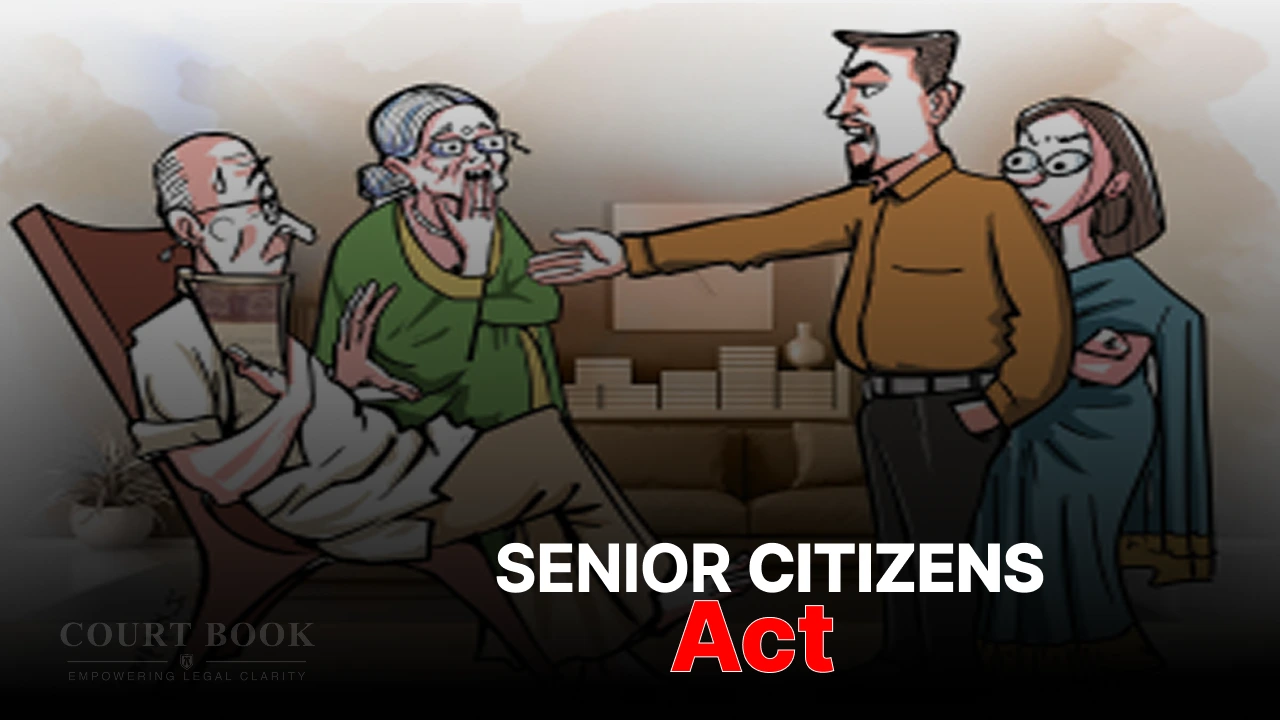
The Chhattisgarh High Court has refused to interfere with orders cancelling a gift deed executed by elderly parents in favour of their nephew, holding that the duty to care for senior citizens can exist even without a written condition in the document.
The court dismissed a writ petition filed by the nephew and his wife, thereby clearing the way for restoration of the property to the aged couple who are now living in an old-age home.
The case came up before the High Court after two lower authorities the Maintenance Tribunal and the Appellate Tribunal had declared the gift deed void under the Maintenance and Welfare of Parents and Senior Citizens Act, 2007. The petitioners argued that the deed was unconditional and could not be cancelled.
Background of the Case
The dispute revolves around a house in Kanchan Vihar, Bilaspur. In 2016, an 80-plus-year-old retired government employee and his wife gifted the property to their nephew, citing love and affection.
Read also:- Supreme Court Faults Bail-for-Deposit Practice, Directs Delhi HC to Decide Rakesh Jain’s Bail on Merits
According to the parents, the gift was made with the understanding that the nephew would look after them in their old age. Over time, relations soured. The couple alleged harassment, denial of basic facilities like electricity and food, and eventually claimed they were forced out of their own home.
They approached the Maintenance Tribunal, which cancelled the gift deed and directed the nephew to vacate the house. The Appellate Tribunal upheld that decision.
Before the High Court, the petitioners contended that the gift deed contained no clause requiring them to maintain the donors. They relied on property law principles, arguing that an unconditional gift cannot be revoked.
Read also:- Karnataka High Court Grants Bail to Man Accused in Stadium Lynching Case Over “Pakistan Zindabad” Slogan
On the other hand, the elderly couple argued that the gift was clearly based on trust and an expectation of lifelong care, which had been breached. They cited Supreme Court rulings to say that such conditions need not always be written down.
Court Observation
A bench led by Justice Narendra Kumar Vyas noted that the Maintenance Act is a beneficial law meant to protect vulnerable senior citizens.
“The existence of a condition to maintain the donor need not always be expressly written in the gift deed,” the bench observed, adding that tribunals are entitled to look at conduct, circumstances, and relationships between the parties.
Read also:- J&K High Court Rejects Insurance Company’s Appeal Over 2014 Flood Damage Claim
The court found sufficient material to show that the nephew failed to take care of the elderly couple and that the gift was executed because of earlier care and assurances. This, the judge said, amounted to an implied condition under Section 23 of the Act.
Final Order
Concluding that there was no illegality or perversity in the earlier orders, the High Court dismissed the writ petition and vacated the interim protection earlier granted to the nephew.
The ruling reinforces that gift deeds executed by senior citizens can be cancelled if the donee neglects or mistreats them, even when the obligation to provide care is not expressly written into the document.
Case Title: Ramkishna Pandey & Anr. v. State of Chhattisgarh & Ors.
Case Number: Writ Petition (Civil) No. 87 of 2025
Judgment Delivered On: 20 January 2026


