

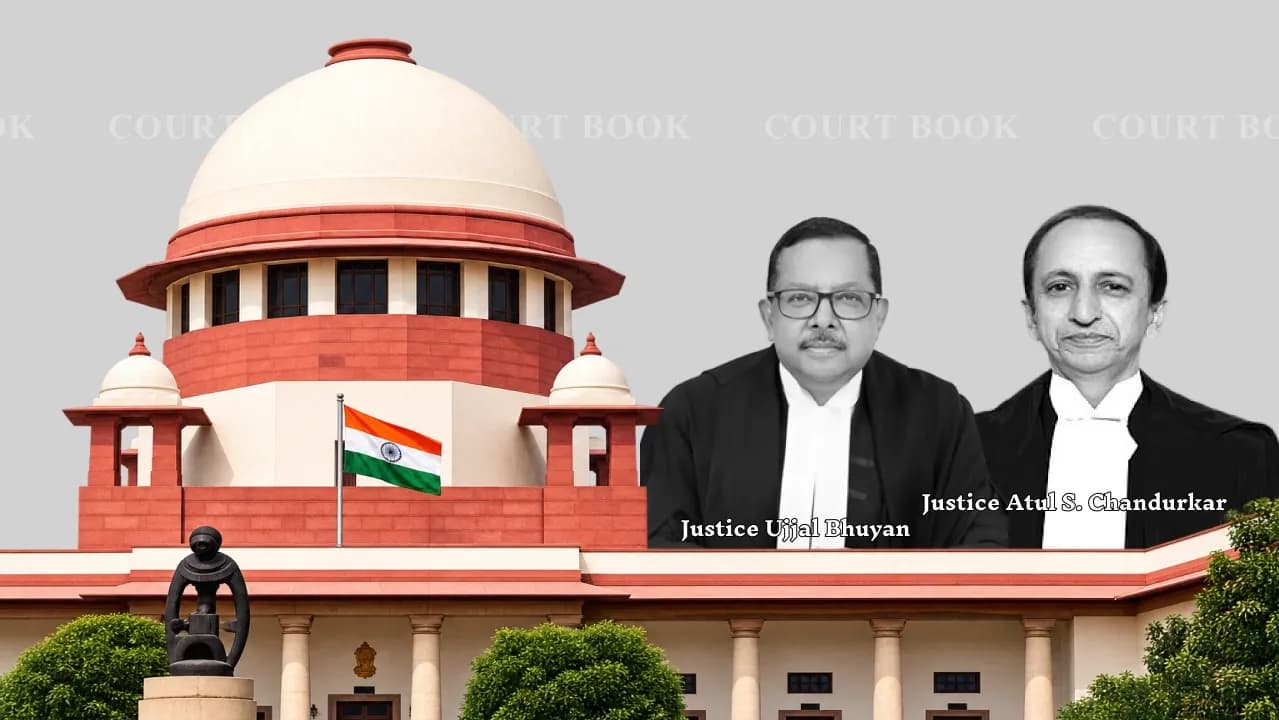
The Supreme Court of India has held that a High Court cannot extend an arbitrator’s mandate under Section 29A of the Arbitration and Conciliation Act, 1996, merely because it appointed the arbitrator under Section 11. The Court clarified that the power to extend the mandate rests with the court defined under Section 2(1)(e) of the Act. The judgment was delivered by Justices Ujjal Bhuyan and Atul S. Chandurkar on October 28, 2026.
Background
The dispute arose between South Bihar Power Distribution Company Ltd. and India Power Corporation Ltd., along with its special purpose vehicle, over a distribution franchise agreement executed on December 31, 2013.
The agreement provided for a three-member arbitral tribunal. However, with the parties’ consent, the Patna High Court appointed a sole arbitrator in 2018. A replacement arbitrator was appointed in March 2021 after the first arbitrator could not continue.
When the proceedings remained incomplete even after the agreed extension, the respondents approached the High Court seeking additional time. On September 15, 2023, the High Court extended the arbitrator’s mandate by four months and rejected the power company’s request for a three-member tribunal.


The power company challenged that decision before the Supreme Court.
The Supreme Court examined whether the High Court could exercise jurisdiction under Section 29A simply because it had appointed the arbitrator under Section 11.
Relying on earlier decisions, including Jagdeep Chowgule v. Sheela Chowgule and C. Velusamy v. K. Indhera, the Court explained that the authority to appoint an arbitrator and the authority to extend the arbitrator’s mandate are legally distinct. Under Section 29A, the competent court is the principal civil court of original jurisdiction in the district, or a High Court exercising ordinary original civil jurisdiction.
The Court observed:
“The conclusion reached by the High Court that the jurisdiction to extend the period of time has to be exercised by the High Court under Section 29A of the 1996 Act is not correct and is accordingly set aside.”
However, the Supreme Court upheld the High Court’s findings on the other two issues. It agreed that the power company had waived its objection to the sole arbitrator by consenting to the appointment and participating in the proceedings without raising its objection within the prescribed time. It also upheld the finding that insolvency proceedings did not prevent the corporate debtor from pursuing its own recovery claim through arbitration.
The Supreme Court set aside the High Court’s decision concerning its jurisdiction to extend the arbitrator’s mandate. However, the District Commercial Court, Patna, had independently granted a further six-month extension on March 23, 2026.
Consequently, the Supreme Court lifted its earlier restriction preventing the arbitrator from delivering the award and directed:
“The learned arbitrator shall now conclude the arbitral proceedings by passing the award within a period of 6(six) weeks from today.”
Both civil appeals were dismissed, and the Court made no order as to costs.



