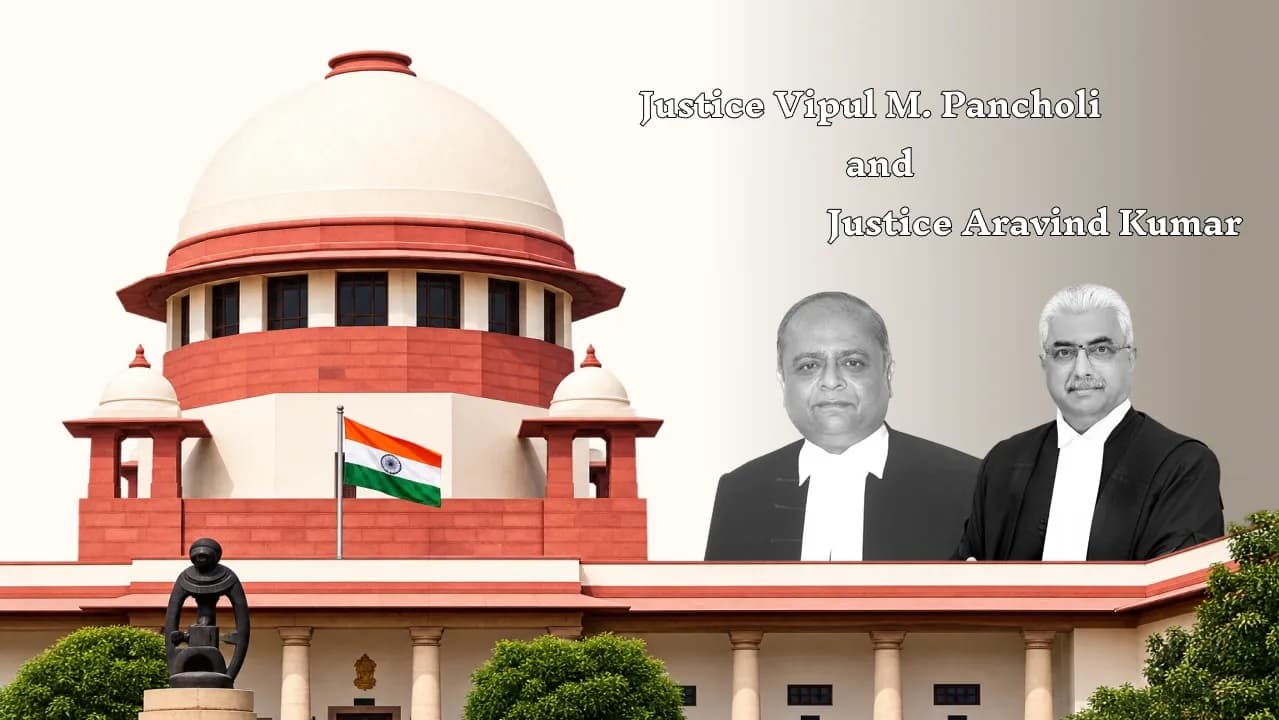
A Bench of Justice Aravind Kumar and Justice Vipul M. Pancholi, in its judgment dated September 3, 2026, declined to interfere with the finding that the caste claim was invalid. However, considering the employee’s more than three decades of service, the Court exercised its powers under Article 142 of the Constitution to protect his pension and other retiral benefits.
Background of the Case
The appellant, Shirish Pandharinath Patil, had been issued a caste certificate in 1984 identifying him as belonging to the “Tokre Koli” Scheduled Tribe. Relying on the certificate, he secured appointment as a Junior Engineer (Civil) with the Municipal Corporation of Greater Mumbai in 1994 and was later promoted in 1999.
After his caste claim was referred for verification in 2008, the Police Vigilance Cell examined old family records. These records described his paternal ancestors as “Koli”, “Hindu Koli” and “Hindu Suryawanshi Koli”.
Following the proceedings, the Scrutiny Committee invalidated his caste certificate on July 27, 2020. The Bombay High Court subsequently upheld that decision on September 15, 2020.
Supreme Court’s Observation
Before the Supreme Court, the appellant also sought protection of his retirement and pensionary benefits. He stated that he had retired on June 30, 2025, after serving for more than three decades, and that no child or other family member had obtained any benefit on the basis of the disputed certificate.
The Supreme Court found no error in the Scrutiny Committee’s conclusion or the High Court’s decision on the caste claim.
The Court, however, considered the length of service and the circumstances of the case while deciding whether limited relief should be granted.
“However, having considered the facts and circumstances of the case and noting that the appellant entered service with respondent No. 3 in the year 1994 and continued in service until the date of his retirement on 30.06.2025, which is for more than three decades, we consider it appropriate to ensure that the appellant is not deprived of his retiral and pensionary benefits.”
Article 142 Invoked for Pension Protection
The Bench referred to earlier Supreme Court decisions recognising that, in exceptional circumstances, Article 142 can be used to do complete justice, including in cases involving invalidated caste or tribe certificates.
The Court therefore protected the service rendered by the appellant from October 21, 1994, to June 30, 2025, but only for calculating and releasing his retiral and pensionary benefits.
Decision
The Supreme Court clarified that this protection does not validate or recognise the appellant’s claim of belonging to the “Tokre Koli” Scheduled Tribe.
“Neither the appellant nor any member of his family shall be entitled to claim any future benefit on the basis of the invalidated caste certificate.”
The appeal was accordingly allowed to the limited extent of protecting the appellant’s retiral and pensionary benefits. The Court directed that these benefits be processed and released within six months from the date of the judgment.
Case Details
- Case Title: Shirish Pandharinath Patil v. The State of Maharashtra & Ors.
- Case Number: Civil Appeal No. of 2026 (@ SLP (C) No. 12938 of 2020)
- Judges: Justice Aravind Kumar and Justice Vipul M. Pancholi
- Decision Date: September 3, 2026