

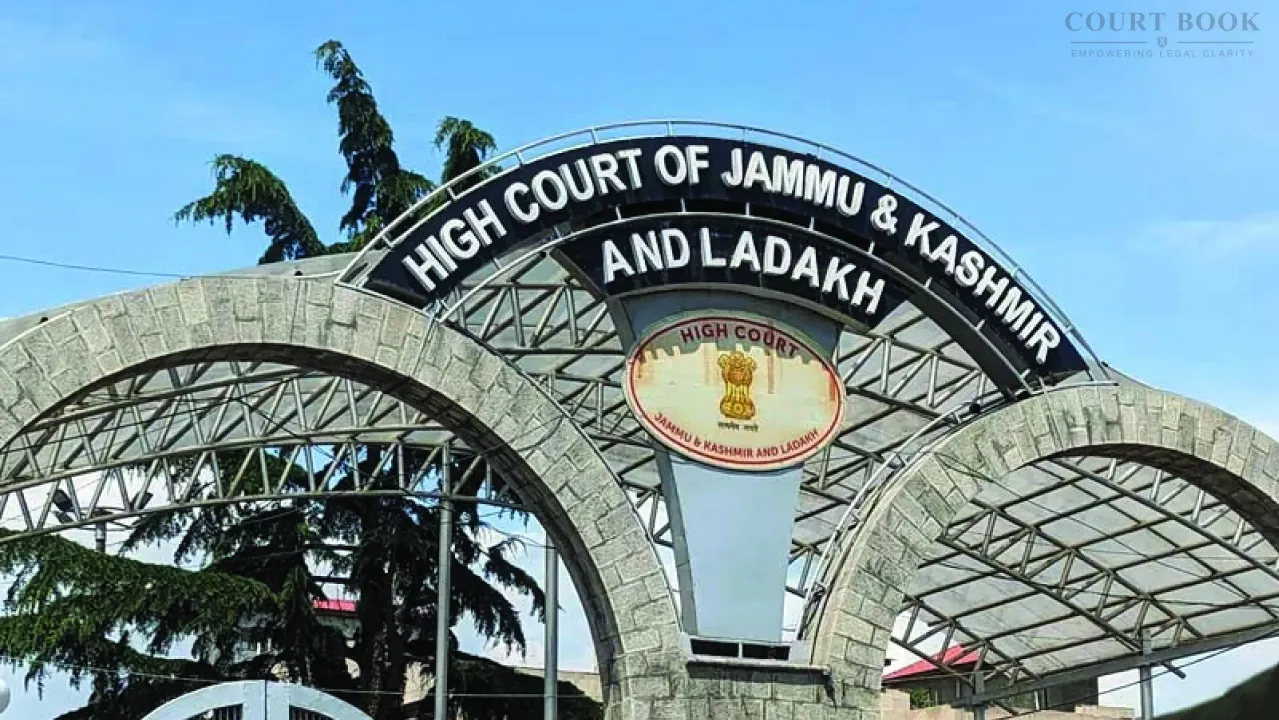
The High Court of Jammu & Kashmir and Ladakh has restored a civil second appeal that had technically abated after the death of one of the respondents, emphasizing that courts should lean in favour of deciding disputes on their merits rather than shutting them out on procedural grounds.
Justice Sanjeev Kumar passed the order while allowing applications filed by the appellants seeking condonation of delay, setting aside of abatement, and substitution of the deceased respondent’s legal heirs. The Court also criticized the manner in which information regarding the respondent’s death was conveyed during the proceedings.
Background of the Case
The dispute arose in a pending Civil Second Appeal filed in 2013. During the pendency of the matter, respondent No. 7, Mohd. Ashraf, died on 21 March 2020.
The surviving respondents later sought dismissal of the appeal, arguing that the appellants had failed to bring the deceased respondent’s legal heirs on record within the period prescribed under law. According to them, the appeal had automatically abated and could not continue.
The appellants, however, contended that they became aware of the respondent’s death only after receiving an application filed by the other respondents in October 2025. They argued that no proper intimation of the death had ever been given to the Court or to them as required under the Code of Civil Procedure.
Justice Kumar examined the provisions of Order XXII of the Code of Civil Procedure dealing with substitution of legal representatives after the death of a party.
The Court noted that the counsel representing the deceased respondent had not complied with Rule 10-A of Order XXII, which requires a lawyer to inform the Court when a client dies so that notice can be issued to the opposite side.
The bench observed,
“The object behind introducing Rule 10-A in Order XXII CPC was to avoid unnecessary disputes of fact in relation to the death of a party.”
Referring to an earlier application in which the word “dead” had merely been mentioned against the respondent’s name in a small font, the Court found that such a reference could not be treated as proper compliance with the legal requirement of informing the Court about the death.
The Court remarked that mentioning the word “dead” without providing the date of death was insufficient and did not satisfy the obligation cast upon counsel under the procedural rules.
The Court held that even if the appellants were assumed to have gained knowledge of the death in October 2025, the delay in seeking restoration of the appeal was only 12 days.
Justice Kumar stressed that the expression “sufficient cause” under the Limitation Act should receive a liberal interpretation, particularly in matters involving abatement of proceedings.
“The primary function of a Court is to adjudicate the dispute between the parties and to advance substantial justice,” the Court observed, adding that limitation rules are intended to prevent delay and not to destroy substantive rights.
Allowing the applications, the High Court condoned the delay in filing the pleas for setting aside abatement and for bringing the legal heirs of the deceased respondent on record. The abatement of the appeal was set aside, the legal representatives were substituted, and the appeal was directed to proceed further after issuance of notice to the newly added respondents.
Case Details:
Case Title: Maqbool Buhroo and Others v. Ahad Buhroo and Others
Case Number: CSA No. 08/2013
Judge: Justice Sanjeev Kumar
Decision Date: 29 May 2026


