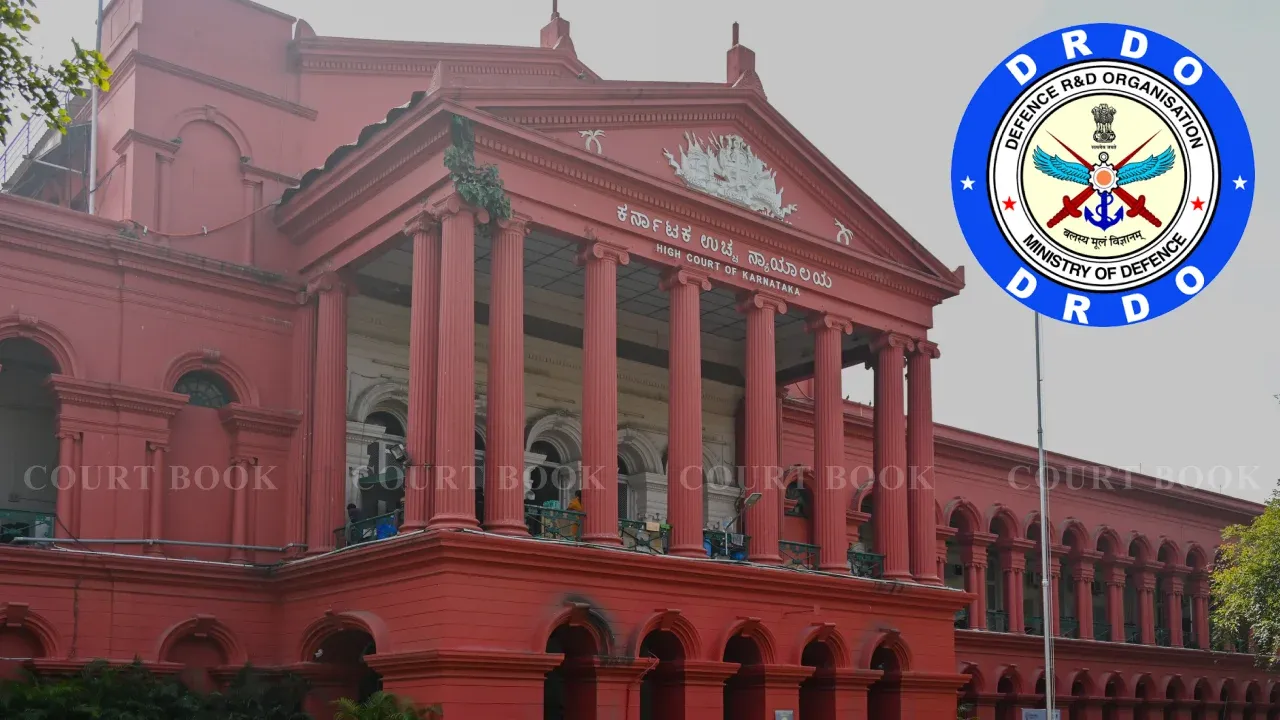
Bengaluru: The Karnataka High Court has set aside a 2014 single-judge order that had quashed land acquisition proceedings initiated for the Centre for Artificial Intelligence and Robotics (CAIR), a DRDO facility in Bengaluru. A division bench comprising Justice D K Singh and Justice H Shanthi Bhushan allowed three connected writ appeals filed by the Union of India and DRDO, effectively reviving the acquisition of disputed land parcels in Benniganahalli village.
Background
The dispute traces back decades. Land in Sy.No.107/1, 108/2, 108/5B, 108/9 and 109/1 at Benniganahalli village, K R Puram Hobli, was originally targeted for acquisition way back in 1987 for defence purposes. That process dragged through multiple rounds of litigation, de-notifications, and even reached the Supreme Court before ending in a compromise. Since the award for a small remaining portion of land was never passed in time, a fresh notification was issued in 2005, followed by a final declaration under Section 6(1) of the Land Acquisition Act in 2010.
The affected landowners challenged this declaration, arguing they weren't given a fair hearing during the Section 5-A enquiry and that alternative land was available. A single judge agreed with them in 2014 and quashed the entire acquisition. DRDO and the Union of India appealed against that order.
The bench held that while the right to object under Section 5-A is an important safeguard, it cannot be applied so rigidly that it defeats a genuine public purpose — especially one connected to national defence. The court noted that the writ petitioners themselves hadn't even participated in the original enquiry, and no real prejudice had been shown.
The judges were categorical about the weight national security concerns should carry. The bench observed:
"National security is paramount and must always take precedence over individual interests or personal rights. While personal rights are undoubtedly precious, they cannot be asserted in a manner that compromises the safety and security of the nation."
The court also emphasised the growing importance of CAIR's work, noting that in an era of cyber threats and evolving technology, institutions engaged in artificial intelligence and robotics research are vital to national defence preparedness.
On the procedural objections, the bench found that notices were issued, objections were filed, and an enquiry did take place even if not exhaustively documented. It held that courts must not sit in appeal over the government's subjective satisfaction on urgency, relying on earlier Supreme Court precedents including Rajasthan Housing Board v. Shri Kishan and Hamid Ali Khan v. State of U.P.
The High Court allowed all three writ appeals - WA No. 2121/2015, 2122/2015 and 2123/2015 - setting aside the single judge's 2014 order and dismissing the original writ petitions. The court, however, clarified that landowners' rights to lawful compensation remain protected.
A related cross-objection was also rejected, the court noting it had been filed after an unexplained delay running into thousands of days, which appeared aimed at further stalling the defence project.



-300x169.webp)