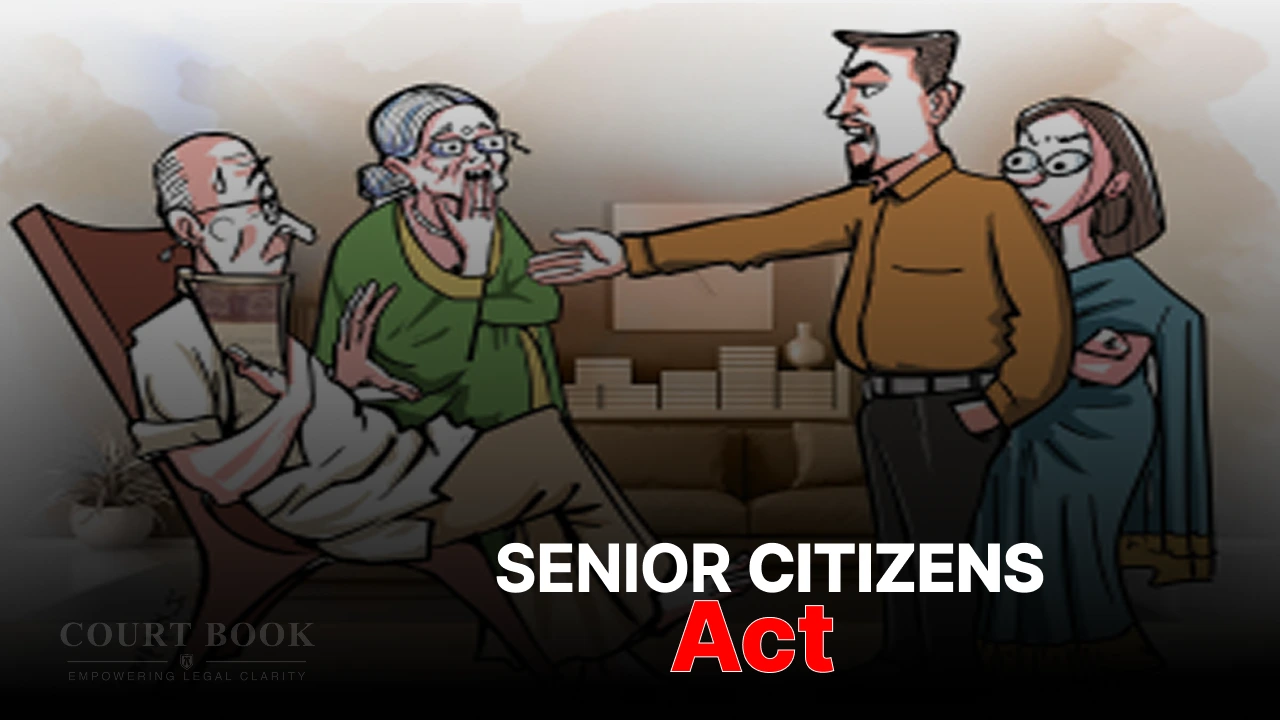
The Karnataka High Court has upheld the eviction of a son and his family from the residential premises occupied by his 82-year-old mother, holding that authorities can take protective measures under the Maintenance and Welfare of Parents and Senior Citizens Act, 2007 when continued occupation of the house becomes a source of harassment.
Justice Suraj Govindaraj passed the order on August 6, 2026, in Writ Petition No. 5248 of 2025. The Court dismissed the petition challenging concurrent orders of the Assistant Commissioner and Deputy Commissioner directing the petitioner’s eviction.
Background of the Case
Dr. M.S. Mahesh approached the High Court against an order passed by the Assistant Commissioner, Mysuru, acting under the Senior Citizens Act. His mother, Smt. Subhadramma, had approached the authority alleging harassment at the residential premises and sought her son’s eviction.
The Assistant Commissioner allowed her application on August 12, 2024 and directed the petitioner and his family to vacate. The Deputy Commissioner subsequently dismissed the petitioner’s appeal on February 4, 2025 and affirmed the eviction order.
The petitioner disputed the allegations and claimed rights over the property based on a Will executed by his father. He also relied on several documents, including identity records and bank documents, to contend that he and his family had been residing at the property for years.
A civil suit concerning rights in the property, O.S. No. 1236 of 2023, was also pending.
The High Court distinguished the present proceedings from cases concerning cancellation of property transfers under Section 23 of the Senior Citizens Act. It held that the present matter concerned protection of the senior citizen under Section 22, particularly her right to live peacefully in her home.
The Court noted that eviction is not an automatic consequence in every senior-citizen dispute. The authority must consider whether eviction is necessary and whether less severe measures could protect the senior citizen. However, where continued harassment makes removal necessary, eviction can be ordered.
" The right to life that the law guarantees to every person is not a right to a bare animal existence. For a senior citizen it carries with it the right to live with dignity, and that includes the right to reside peacefully in her own home without fear, harassment or humiliation."
The Court also considered the mother’s statement made through video conferencing. She told the Court that she had independently filed the complaint because she found it difficult to live with her son and daughter-in-law and stated that they were constantly harassing her.
The Court further found that the petitioner’s documents did not establish his present and continuous residence at the property. It concluded that the authorities had a serious case before them and that removing the source of the alleged harassment was necessary for the mother’s protection.
The High Court dismissed the writ petition and directed the Assistant Commissioner to implement the eviction orders within 60 days from receipt of the Court’s order.
The Court clarified that its observations regarding ownership and the competing Wills were only prima facie and would not determine the pending civil proceedings concerning the property.
Case Details:
- Case Title: Dr. M.S. Mahesh v. The Deputy Commissioner, Mysuru District & Others
- Case Number: W.P. No. 5248 of 2025 (GM-RES)
- Judge: Justice Suraj Govindaraj
- Decision Date: August 6, 2026










-300x169.webp)