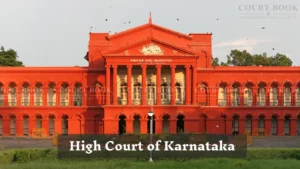
The Karnataka High Court at Dharwad has quashed an official memorandum constituting an 11-member ad-hoc committee to manage a Waqf institution in Mudalagi, holding that the State Waqf Board could not bypass the procedure prescribed under the Karnataka Waqf Rules, 2017.
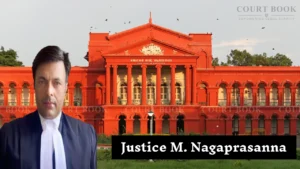
Justice Sachin Shankar Magadum delivered the order on August 19, 2026, in Writ Petition No. 101523 of 2026. The Court also held that the writ petition was maintainable despite the availability of a remedy before the Waqf Tribunal because the challenge concerned the legality of the Board's own exercise of statutory power.
Background of the Case
The petition was filed by Bazme Tohid Tanzeem Committee, Mudalagi, through its President and Secretary, challenging the Karnataka State Board of Auqaf's decision to constitute an ad-hoc committee for 11 months. The impugned Official Memorandum was dated February 12, 2026.
The petitioners argued that the Board had repeatedly appointed an Administrator or ad-hoc committee despite earlier directions of the High Court and without following Rule 54 of the Karnataka Waqf Rules, 2017.
The previous managing committee's tenure had expired on June 12, 2023. The Court noted that earlier proceedings had already resulted in directions requiring the Board to reconsider the matter in accordance with law.
Court Examines Waqf Tribunal Objection
The Board opposed the writ petition, arguing that the petitioners had an alternative remedy before the Waqf Tribunal under Section 83 of the Waqf Act, 1995.
The High Court rejected the objection. It held that the dispute did not concern the character of the Waqf property, its title or any other matter specifically requiring adjudication by the Tribunal.
"The mere fact that the subject matter relates to a Wakf or Wakf property is not, by itself, sufficient to oust the jurisdiction of the High Court," the Court observed.
The Court further held that the availability of an alternative remedy does not completely prevent the High Court from exercising its constitutional jurisdiction where the legality of the statutory authority's action itself is questioned.
Rule 54 Required the Board to Follow a Specific Process
The Court then examined Rule 54 of the Karnataka Waqf Rules, 2017. It noted that the Rule provides a specific mechanism for constituting a succeeding managing committee.
Most importantly, where a succeeding committee is not constituted, Rule 54(5) provides that management and supervision automatically vest in the concerned District Waqf Officer, who must take steps to constitute the succeeding committee within three months.
The Court found that the Board instead approved an 11-member ad-hoc committee after the proposal was recommended as a "special case" by the Minister for Waqf.
"The expression 'necessary' cannot be construed as conferring an independent and unrestricted power to disregard a specific statutory Rule. A general enabling provision cannot be invoked to defeat an express procedure prescribed by Rules framed under the very enactment," the Court said.
Court's Decision
The High Court held that the Board's decision to constitute the ad-hoc committee for 11 months bypassed the mechanism prescribed under Rule 54. It consequently quashed the Official Memorandum dated February 12, 2026.
The Court directed the District Waqf Officer, Chikodi, to take charge of the institution, supervise a General Body Meeting and undertake the process for formulating a scheme in accordance with Form-42 and Rule 48. The exercise was directed to be completed within four months.
The writ petition was accordingly allowed, and the impugned memorandum was quashed and set aside.
Case Details:
Case Title: Bazme Tohid Tanzeem Committee, Mudalagi & Another v. Chief Executive Officer, Karnataka State Board of Auqaf & Others
Case Number: Writ Petition No. 101523 of 2026 (GM-WAKF)
Judge: Justice Sachin Shankar Magadum
Decision Date: August 19, 2026






-300x169.webp)