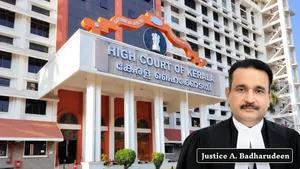
The student approached the High Court after she was denied registration for an examination scheduled to begin on March 9, 2026. She claimed that the college had made errors in recording and calculating her attendance and that certain attendance entries had been omitted.
In March 2026, the High Court had permitted her provisional registration for the examination and allowed her to approach the Board of Adjudication for Student Grievances (BASG).
The BASG later examined the attendance records and rejected her appeal. The student then returned to the High Court, alleging that the college authorities had failed to properly record her attendance.
The Court noted that BASG had called for the relevant attendance details before reaching its decision and had found no irregularity requiring interference with the college’s assessment.
The attendance percentage recorded for the student was between 59% and 69%, which the respondents submitted was substantially below the permissible limit for condonation.
The Court also observed that there was no allegation of mala fide conduct against the college management or any specific reason to believe that the student had been singled out.
“Courts cannot compel condonation of shortage of attendance as a measure of leniency, as sympathy cannot override statutory rules and regulations. Sympathy, ignoring the regulations, can only be regarded as misplaced sympathy, which can do more harm to the entire student community as well as to the public,” the Court said.
It further held that judicial interference with decisions of academic authorities under Article 226 of the Constitution is limited.