

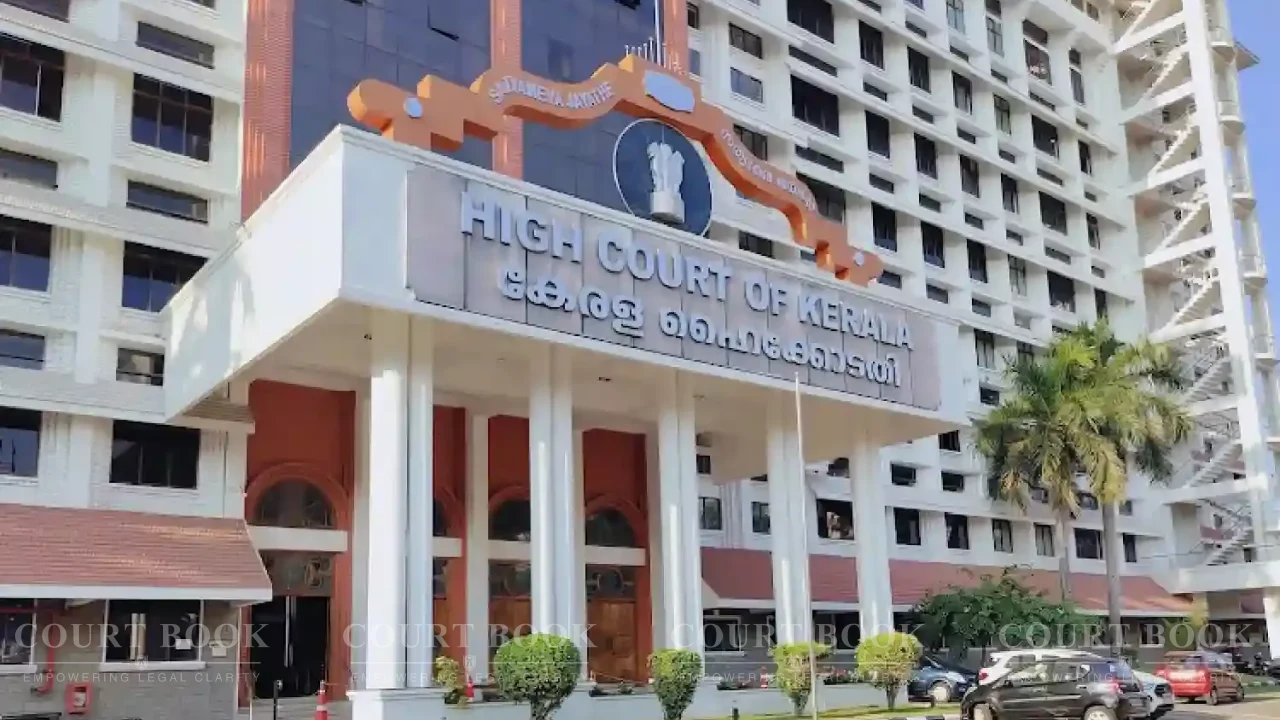
The Kerala High Court has modified a Family Court decree concerning a matrimonial property dispute and declared that the wife had exclusive ownership over a 2.8 Ares property and the residential building standing on it. The Court also directed the husband to vacate the property within three months.
A Division Bench comprising Justice Sathish Ninan and Justice P. Krishna Kumar delivered the judgment on September 26, 2026, in Mat. Appeal Nos. 84 and 581 of 2022.
Background
The wife had approached the Family Court seeking recovery of 80 sovereigns of gold ornaments, money allegedly provided by her father, and past maintenance. She also claimed that a seven-cent property and house had been purchased in the joint names of the spouses using funds provided by her father.
The Family Court rejected her claims concerning the gold, money and maintenance. However, it found that the property had been purchased exclusively with funds raised by her father and awarded her ₹15 lakh towards the husband's half share.
Both parties challenged different portions of that decree before the High Court.
The High Court examined the evidence relating to the disputed property. The wife's father had produced a bank statement showing that ₹25 lakh was debited from his account on the date of the sale deed. On the other hand, the husband claimed that he had provided money from his own funds kept with his brother-in-law abroad, but he neither examined that person nor produced documents establishing the source or transfer of the money.
The Bench also considered the argument based on Section 92 of the Indian Evidence Act. It held that Section 14 of the Family Courts Act permits a Family Court to receive material that may assist in effectively resolving a dispute, even where it might otherwise face restrictions under the Evidence Act. However, the Court stressed that such discretion must be exercised carefully and the reliability of the evidence must still be examined.
The Court observed:
“In the present case, it is proved that the entire consideration was provided by the father of the petitioner in the best interests of his daughter and for her benefit and that it belongs to her.”
The Bench further found that the pleadings already placed the respondent on notice that the wife was asserting a right over the entire property. It therefore held that the relief could be moulded without causing prejudice to him.
The Kerala High Court dismissed Mat. Appeal No. 84 of 2022 and partly allowed Mat. Appeal No. 581 of 2022. It declared the wife's exclusive ownership over the 2.8 Ares land and building and directed the husband to vacate the property within three months.
The earlier award of ₹15 lakh towards the husband's share was modified accordingly, while the remaining part of the Family Court decree was upheld.


