

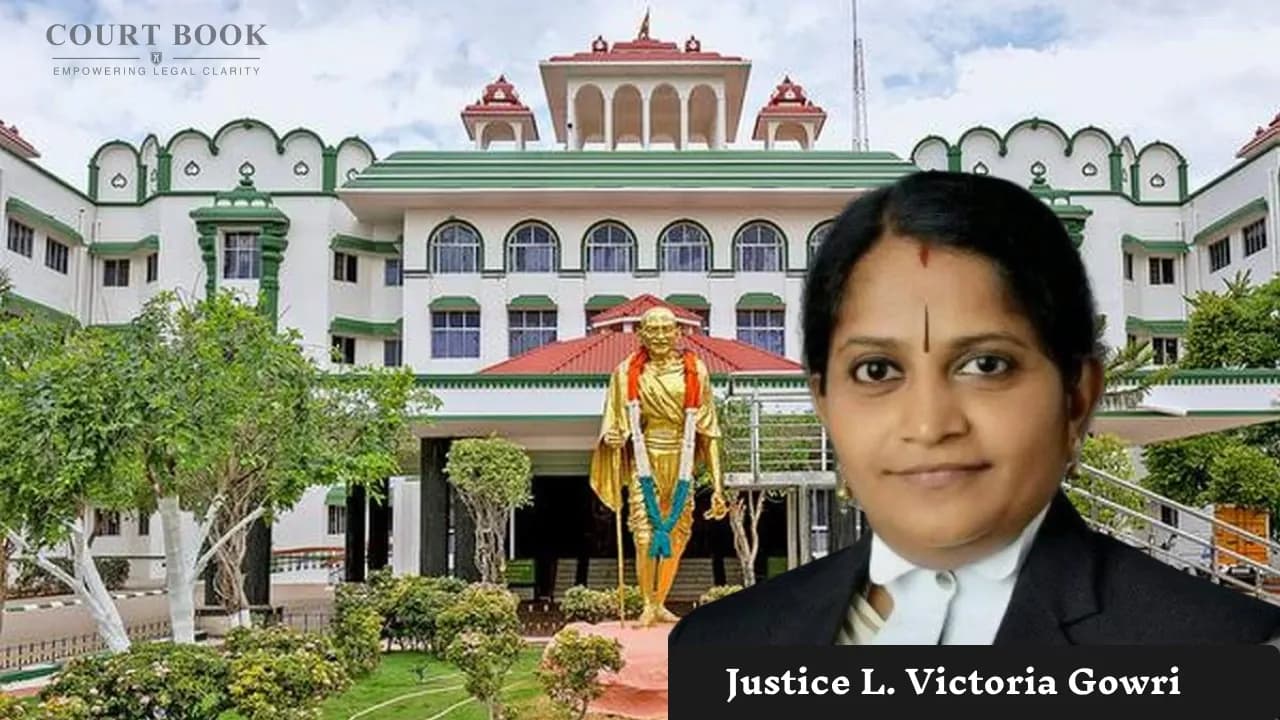
The Madurai Bench of the Madras High Court has strongly criticized the handling of a dowry complaint by an All Women Police Station in Tenkasi, observing that police cannot convert allegations of cognizable offences into private settlements. Justice L. Victoria Gowri held that when a complaint discloses allegations of dowry demand, the police are duty-bound to register an FIR and investigate the matter instead of facilitating monetary settlements.
Background of the Case
The writ petition was filed by the father of a woman whose proposed marriage allegedly collapsed after the groom's family demanded dowry. According to the petitioner, the engagement took place on April 18, 2026, during which he allegedly paid ₹10 lakh in cash. Before the scheduled wedding date of June 8, 2026, additional dowry was allegedly demanded, and when he expressed his inability to meet those demands, the marriage was cancelled.
The petitioner further alleged that when he approached the All Women Police Station, instead of initiating legal proceedings, the police facilitated a settlement under which ₹5 lakh was returned, advised him to wait for the remaining amount, and eventually closed the complaint without registering any criminal case. Dissatisfied with this approach, he approached the High Court seeking appropriate action against the private respondents.
Court's Observations
Justice L. Victoria Gowri devoted significant attention to the purpose behind establishing All Women Police Stations in Tamil Nadu. The Court observed that these police stations were created not merely to counsel parties but to provide women with an accessible and effective mechanism for enforcement of criminal law wherever required.


The Court expressed concern that some police stations had increasingly become venues for negotiated settlements even in cases involving allegations of cognizable offences.
The Court observed:
“Police officers are neither arbitrators nor private mediators when allegations disclose commission of cognizable offences. Their foremost obligation remains faithful compliance with the mandate of criminal law.”
Referring specifically to the allegations before it, the Court noted that if the complaint was accepted at face value, it disclosed allegations warranting registration of an FIR and investigation in accordance with law. It found the alleged approach of facilitating repayment of part of the money and closing the complaint legally unsustainable.
"The duty of the police is to enforce the law, not to negotiate its dilution," the Court remarked.
Subsequent Developments
During the subsequent hearing, the State informed the Court that disciplinary action had already been initiated against the concerned Inspector and Sub-Inspector by placing them under suspension. It was also submitted that an FIR had since been registered on the petitioner's complaint against respondents 4 to 9 and that the investigation had commenced. The matter was also forwarded to the District Dowry Prohibition Officer, Tenkasi, for enquiry in accordance with law.
The Court observed that these developments substantially addressed the petitioner's primary grievance. However, it clarified that the investigation must proceed independently and without being influenced by any observations contained in the order. The private respondents were directed to cooperate with the investigation whenever required.
Court's Decision
While taking note of the unconditional remorse expressed by the two police officers and the suspension already undergone by them, the High Court decided to take a lenient view regarding further disciplinary consequences. At the same time, it held that their failure to register a case despite allegations disclosing cognizable offences had caused hardship to the petitioner.
Accordingly, the Court directed both officers to pay ₹1 lakh each to the petitioner as public law compensation by crediting the amount to his bank account on or before July 24, 2026. The Court also permitted the competent authority to revoke their suspension from July 20, 2026, if it had not already been revoked, and clarified that no further departmental proceedings would be initiated solely on the basis of the present writ petition.
With these directions, the writ petition was disposed of.
Case Details
Case Title: P. P. A. v. State of Tamil Nadu & Others
Case Number: W.P.Crl.(MD) No. 3809 of 2026
Judge: Justice L. Victoria Gowri
Decision Date: 16 July 2026



