

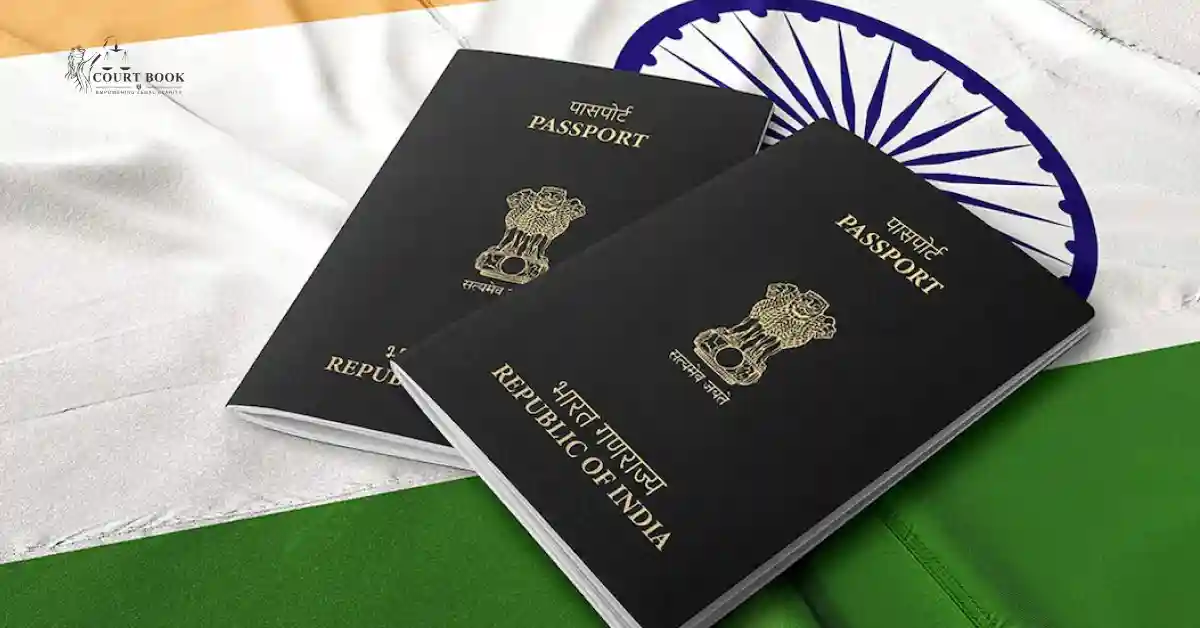
The Andhra Pradesh High Court has held that the mere existence of a criminal case against a person cannot automatically prevent the processing of a passport application. Justice Subba Reddy Satti directed passport authorities to reconsider an applicant's request without relying on a pending crime number, noting that no criminal court had yet taken cognizance of the matter.
The order was passed on 4 June 2026 in a writ petition challenging a communication issued by passport authorities after an adverse police verification report.
Background of the Case
The petitioner had applied for a passport before the Regional Passport Office. During verification, authorities issued a shortfall notice dated 15 May 2026 seeking clarification regarding the applicant's alleged involvement in Crime No. 575 of 2025 registered at Patamata Police Station in Andhra Pradesh.
Before the High Court, the petitioner's counsel argued that the pendency of a criminal case by itself does not prevent the issuance of a passport. The State, on instructions from the police, informed the court that no final report had been filed before the jurisdictional court.
Justice Satti noted that while the criminal case was pending, the jurisdictional court had not taken cognizance of the matter. The court relied on an earlier Division Bench judgment which clarified that proceedings can be considered pending before a criminal court only after cognizance has been taken and judicial proceedings have commenced.
Referring to the earlier ruling, the court quoted:
“Proceedings would be said to have been pending only if cognizance had been taken by the Court and steps had been taken by the Court under Chapter XVI of the Code of Criminal Procedure.”
The judge further observed that every accused person is presumed innocent until proven guilty. The order stated,
“Unless the guilt is proved, an accused is presumed to be innocent and mere pendency of a criminal case is not a bar for renewing the passport, and the right to travel abroad is a personal liberty of a person.”
The court also referred to decisions of the Supreme Court recognizing the right to travel abroad as a component of personal liberty protected under Article 21 of the Constitution.
Disposing of the writ petition at the admission stage, the Andhra Pradesh High Court directed the Regional Passport Officer to consider the petitioner's passport application strictly in accordance with the Passports Act, 1967 and the Passport Rules, 1980, without reference to the crime number cited in the police verification report.
The court instructed that the exercise be completed as expeditiously as possible. No costs were awarded.


