

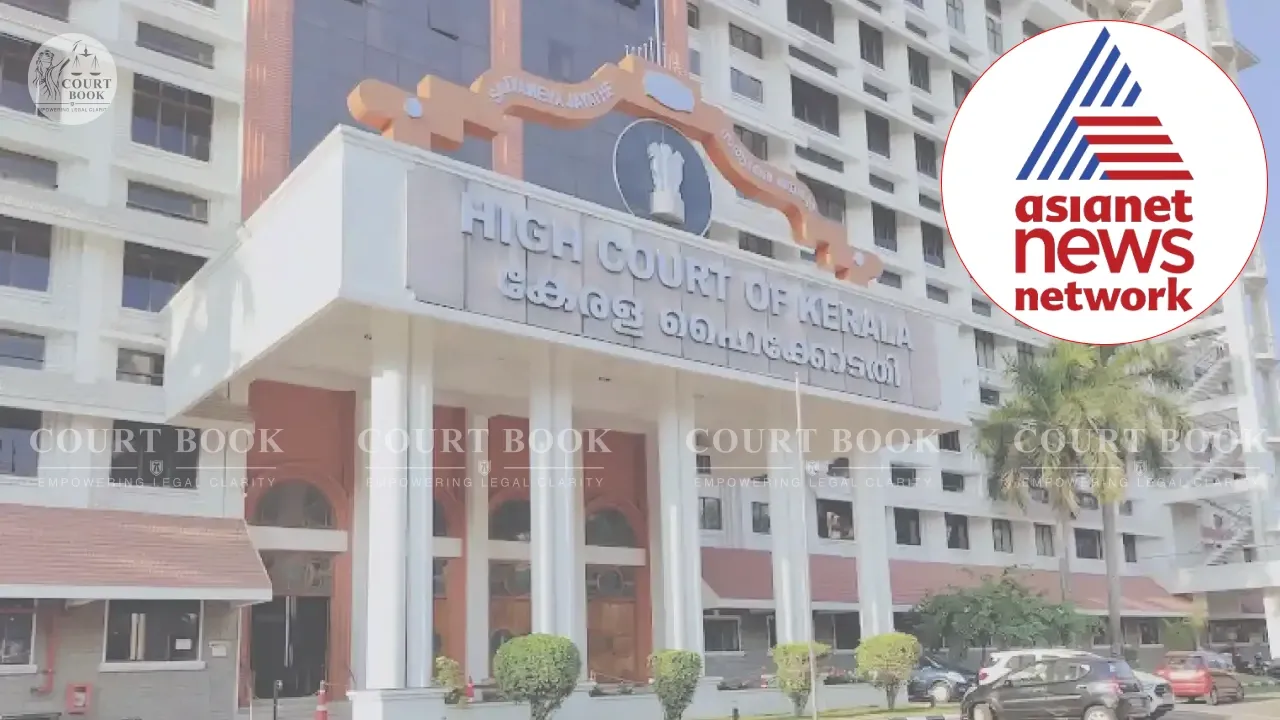
The Kerala High Court has quashed criminal defamation proceedings against Asianet News Network Pvt. Ltd., its Bureau Chief and its Editor, holding that merely telecasting a press conference does not automatically make a news broadcaster criminally liable for defamation. The Court found that the complaint failed to show that the channel or its officials had independently made any defamatory statement or possessed the intention required to prosecute them for criminal defamation.
Background of the Case
The case arose from a private complaint alleging offences under Sections 500 and 501 of the Indian Penal Code. The complainant claimed that his reputation was damaged after a press conference, allegedly containing defamatory allegations against him, was broadcast by Asianet News in October 2012.
According to the complaint, the telecast displayed his photographs and carried allegations that harmed his reputation. Criminal proceedings were subsequently initiated before the Judicial First Class Magistrate Court, Ernakulam. Challenging those proceedings, the media organisation, its Bureau Chief and its Editor approached the Kerala High Court seeking to quash the complaint.
Court's Observations
Justice C.S. Dias noted that the complaint itself attributed the allegedly defamatory statements to another accused who had addressed the press conference. The complaint did not allege that the television channel or its officials authored, spoke or independently published any defamatory imputation.
The Court observed,
“The mere act of telecasting a press conference, without anything more, cannot automatically attract criminal liability for defamation.”
The bench further explained that criminal defamation requires the presence of mens rea, meaning an intention or knowledge that the publication would harm another person's reputation. The complaint, however, did not contain any specific allegations showing such intention on the part of the petitioners.
The Court also pointed out another significant defect. It said the complaint did not reproduce the exact words or statements claimed to be defamatory. Without setting out the alleged defamatory imputation, the accused would be deprived of a fair opportunity to defend themselves.
“The complaint does not attribute any independent defamatory imputation to the petitioners,” the Court observed while concluding that the essential legal ingredients of criminal defamation were missing.
Court's Decision
Holding that continuing the prosecution would amount to an abuse of the legal process, the Kerala High Court exercised its inherent powers under Section 482 of the Code of Criminal Procedure and quashed the criminal complaint and all consequential proceedings against the petitioners.
The order, however, was confined to the petitioners before the High Court.
Case Details
Case Title: M/s Asianet News Network Pvt. Ltd. & Others v. State of Kerala & Another
Case Number: CRL.MC No. 8901 of 2022
Judge: Justice C.S. Dias
Decision Date: 29 July 2026


