

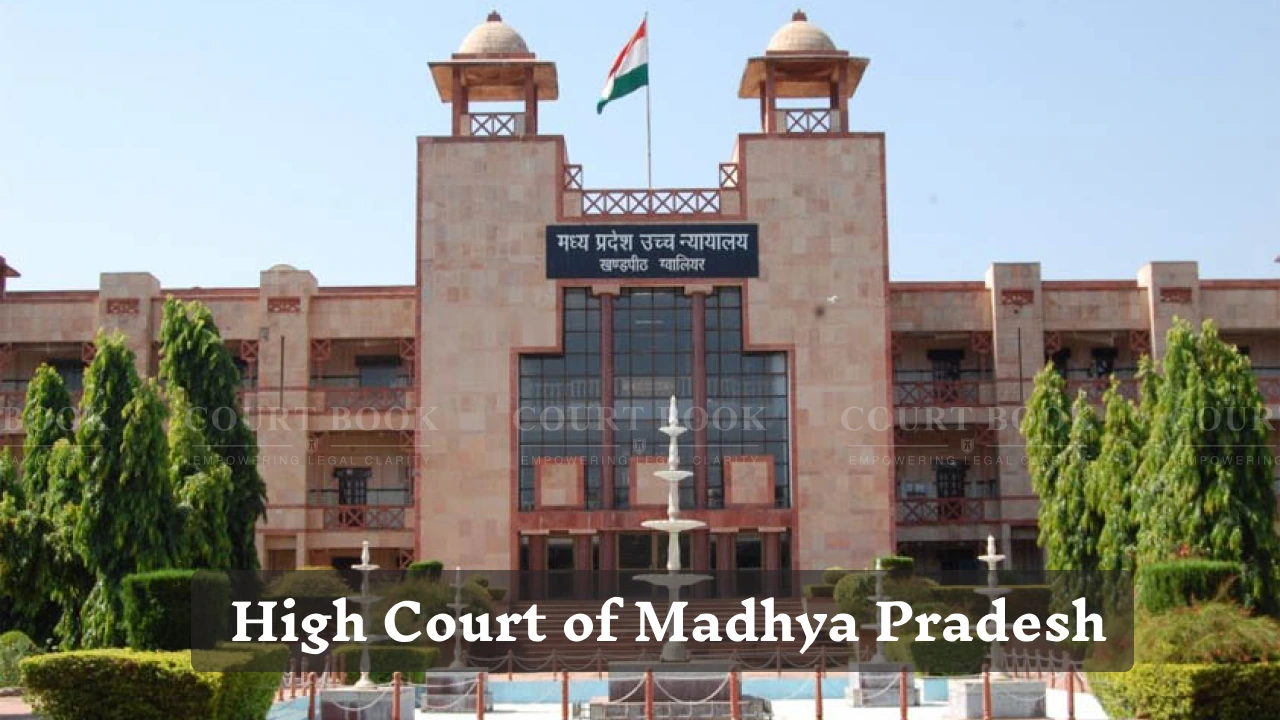
The Madhya Pradesh High Court has refused to grant interim protection to a Bhind farmer who alleged that illegal sand mining activities were being carried out on his agricultural land. The court observed that the dispute primarily involved alleged encroachment by private individuals and was better suited for adjudication before a civil court.
Background of the Case
The petitioner approached the High Court under Article 226 of the Constitution, seeking directions to government authorities to stop alleged illegal sand mining activities near Mehda Ghat in Bhind district. He claimed that mining operations were affecting his agricultural land bearing Survey No. 523 and requested action against those allegedly involved in the activity.
During the hearing, it was argued that certain private individuals had encroached upon the petitioner’s land and were carrying out mining work there. However, the court noted that those persons had not been made parties to the writ petition.
The division bench pointed out that writ proceedings are generally not maintainable against private individuals in disputes concerning private civil rights. The judges observed that the petitioner was essentially alleging infringement of his property rights by private persons and therefore had an effective alternative remedy available through a civil suit.
When the petitioner's counsel submitted that a civil suit would be filed and sought interim protection of possession until then, the court declined the request.
Referring to the Supreme Court's decision in Kalabharati Advertising v. Hemant Vimalnath Narichania, the bench observed that a writ court cannot grant interim relief as the sole or final relief when it has already concluded that the dispute should be decided by another forum.
“The writ jurisdiction cannot be exercised to pass an interim order after relegating a party to another appropriate forum,” the bench observed while discussing the settled legal position.
Rejecting the request for temporary protection, the High Court dismissed the writ petition while granting liberty to the petitioner to institute a civil suit before the competent court.
The bench further clarified that if such a suit is filed, the civil court shall decide the matter strictly on the basis of evidence placed before it and should not be influenced by the High Court's decision not to entertain the writ petition.
Case Details
Case Title: Shyam Sundar Alias Bholaram v. State of Madhya Pradesh and Others
Case Number: Writ Petition No. 19938 of 2026
Judges: Justice G.S. Ahluwalia and Justice Deepak Khot
Decision Date: June 10, 2026


