

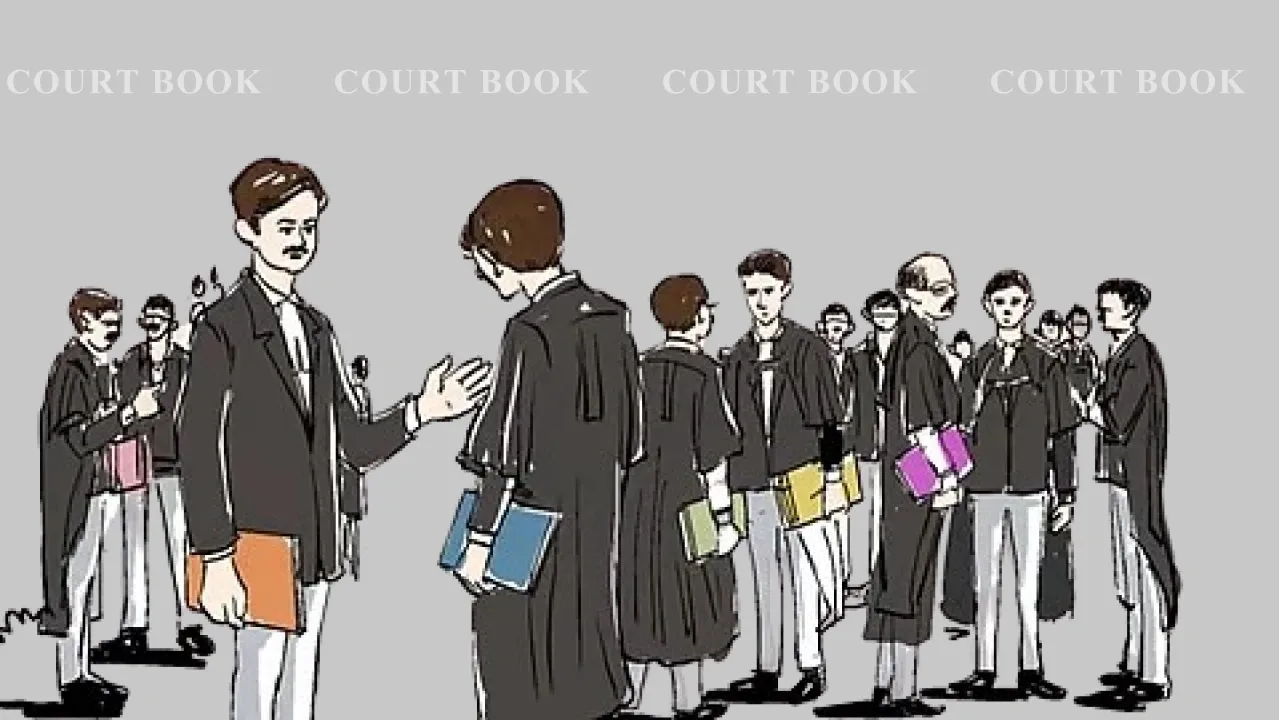
The Telangana High Court has dismissed a contempt petition arising from a one-day boycott call issued by the Metropolitan Criminal Court Bar Association, Nampally, Hyderabad, after an advocate alleged that he was stopped from entering the court premises and assaulted when he attempted to attend his matter.
Background
The contempt petition was filed by Vijay Gopal against N.V. Ramana Goud and other office-bearers of the Bar Association. According to the petitioner, the Association had passed a resolution dated June 16, 2025, calling upon advocates to boycott court work. On the same day, he was required to appear before the XVII Additional Chief Metropolitan Magistrate Court, Nampally.
The petitioner alleged that when he tried to enter the court premises, certain advocates participating in the boycott stopped him. He further alleged that he was threatened, slapped and assaulted, following which he fell down the stairs and suffered injuries. Criminal cases, including FIR Nos.159 and 160 of 2025, were subsequently registered in connection with the incident.
The respondents, however, disputed the allegations and argued that the contempt proceedings could not be used to determine disputed facts already forming part of criminal proceedings. They also contended that the respondents had not been individually arrayed with specific allegations against each office-bearer.
Justice Laxmi Narayana Alishetty noted that the Supreme Court has repeatedly held that advocates have no right to call strikes or boycotts of court work. The Court also referred to the limited exception recognised in Ex-Capt. Harish Uppal v. Union of India, concerning rare situations involving the dignity, integrity or independence of the Bar or Bench.
The High Court observed that the exception could not justify coercion or obstruction against an advocate who chose to attend court. The Court specifically noted that no material showed that the Bar Association’s president had consulted the concerned District Judge before passing the June 16 resolution.
The Court stated:
“Even assuming that the circumstances leading to the resolution could be brought within the limited exception recognised in Ex-Capt. Harish Uppal’s case, such exception would extend only to the limited abstention from Court work contemplated therein and would not extend to any act of coercion, intimidation, obstruction or physical assault upon an advocate who chooses to attend Court.”
The High Court found that contempt liability could not automatically be imposed on all office-bearers merely because of their positions in the Bar Association. Specific material establishing the individual role of each respondent was required.
The Court also noted that the alleged assault and wrongful restraint were already the subject of criminal proceedings involving disputed questions of fact. It held that exercising contempt jurisdiction to conduct a parallel adjudication of those disputed facts would not be justified.
The Court held that there was insufficient material to establish wilful disobedience attributable to the individual respondents. At the same time, it clarified that dismissal of the contempt case did not approve or legitimise assault, intimidation, coercion or obstruction of an advocate attending court despite a boycott call.
The Telangana High Court accordingly dismissed Contempt Case, closed the pending miscellaneous petitions, and made no order as to costs.
Case Details
Case Title: Vijay Gopal v. N.V. Ramana Goud and Others
Case Number: C.C.No.2297 of 2025
Judge: Justice Laxmi Narayana Alishetty
Decision Date: 21 September 2026


