

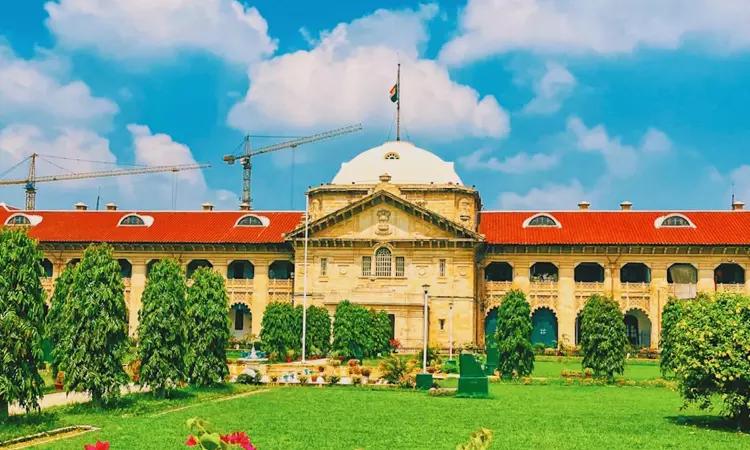
The Allahabad High Court has held that when a tenant dies, it is not legally necessary to make every legal heir a party to an eviction case. The Court clarified that if one legal heir is effectively representing the tenancy and is in possession of the premises, the eviction proceedings can continue validly.
Justice Dr. Yogendra Kumar Srivastava dismissed a petition filed by Ashish Kumar Agrawal, who had challenged earlier orders refusing to implead all legal heirs of the deceased tenant in a pending eviction suit.
Background of the Case
The dispute arose from a Small Causes Suit filed in 2014 by Shri Chitrakoot Ramlila Samiti seeking eviction of tenant Krishna Gopal Gupta, recovery of rent arrears, and damages relating to a non-residential property.
During the pendency of the suit, Gupta died in February 2019. Based on the landlord's substitution application, Ashish Kumar Agrawal was brought on record as the sole legal representative in February 2021.


Later, Agrawal challenged the substitution order, arguing that the widow and daughters of the deceased tenant should also have been made parties to the proceedings because they too had inherited tenancy rights. While the trial court recalled an ex parte order passed against him, it refused to set aside the substitution order. The revisional court upheld that decision, prompting Agrawal to approach the High Court under Article 227 of the Constitution.
Petitioner's Arguments
The petitioner contended that tenancy rights had devolved upon all legal heirs after the tenant's death. Therefore, he argued, every heir was a necessary party to the eviction proceedings.
He also submitted that the widow had become proprietor of the business operating from the disputed premises and held a GST registration, giving her a direct interest in the litigation. According to him, excluding other heirs violated the principles of natural justice because they were denied an opportunity to defend their rights.
Court's Observations
After examining several Supreme Court precedents, Justice Srivastava observed that Indian tenancy law consistently treats tenancy inherited after a tenant's death as a joint and indivisible tenancy in relation to the landlord.
The Court explained that although legal heirs may have separate shares among themselves under succession law, the tenancy itself does not split into different portions as far as the landlord is concerned.
"The requirement in law is one of effective representation and not exhaustive impleadment," the Court observed while discussing the purpose of substitution under Order XXII of the Code of Civil Procedure.
The Court further held that a landlord is not legally obliged to implead every legal heir if one or more heirs are already occupying the premises and effectively representing the tenancy.
"The tenancy devolves upon the heirs as a joint tenancy qua the landlord, and not as separate or fragmented tenancies," the bench observed while relying on settled Supreme Court decisions.
Why the Court Rejected the Petition
Justice Srivastava noted that both the trial court and the revisional court had recorded factual findings that Ashish Kumar Agrawal alone was actively running the business and was in effective possession and control of the tenanted premises.
The High Court found no material showing that the widow or daughters were in possession of the property or independently conducting the business when the substitution order was passed.
The Court also held that the later claim regarding the widow's GST registration could not alter the legal position because it related to subsequent developments and did not establish that she was a necessary party at the relevant stage of the proceedings.
Court Clarifies Rights of Other Heirs
While rejecting the challenge, the Court clarified that the law still permits any co-tenant or legal heir to independently approach the court seeking impleadment if they believe their interests require protection.
However, that right does not create a legal obligation on the landlord or the court to add every heir automatically in every eviction case.
As the Court explained, impleadment by other heirs is permissible when they themselves seek participation, but it is not a mandatory requirement for maintaining eviction proceedings.
Decision
Finding no legal error in the orders passed by the courts below, the Allahabad High Court dismissed Ashish Kumar Agrawal's petition.
The Court upheld the substitution of the petitioner as the sole legal representative for the purpose of the eviction proceedings and held that the non-impleadment of other legal heirs did not invalidate the case.
It also directed the trial court to proceed with the eviction suit expeditiously and endeavour to conclude it within six months, while clarifying that its observations were confined only to the issues raised in the present petition.
Case Details
Case Title: Ashish Kumar Agrawal v. Shri Chitrakoot Ramlila Samiti and 2 Others
Case Number: Matters Under Article 227 No. 1563 of 2026
Judge: Justice Dr. Yogendra Kumar Srivastava
Decision Date: 8 April 2026



