

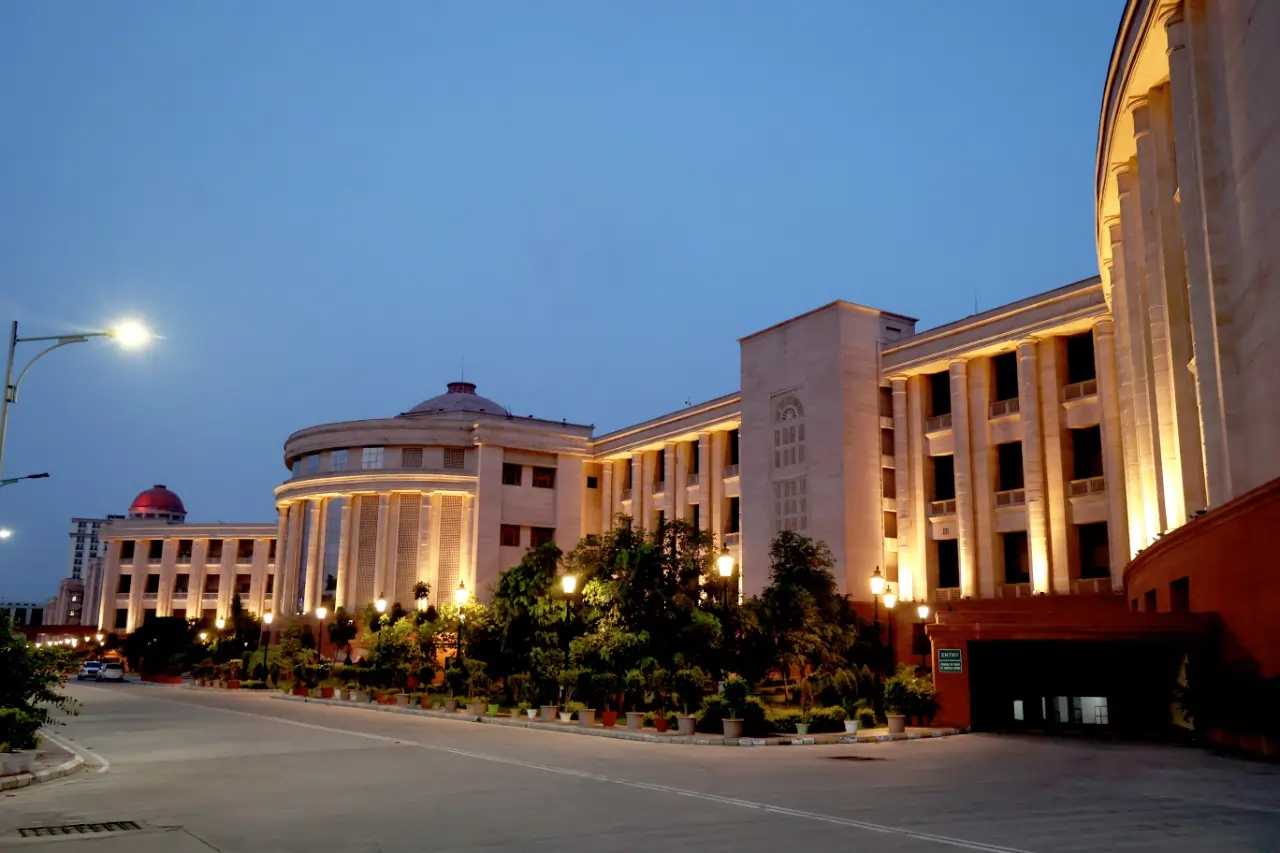
The Lucknow Bench of the Allahabad High Court has dismissed a long-pending writ petition seeking Scheduled Caste status and benefits for members of the Nishad, Mallah, Kewat, Kashyap and Bind communities by treating them as synonymous with the Scheduled Caste "Majhwar."
A division bench comprising Justice Alok Mathur and Justice Amitabh Kumar Rai held that neither courts nor state governments have the authority to include new castes in the Scheduled Castes list. The court ruled that such changes can be made only by Parliament under Article 341 of the Constitution.
Background of the Case
The petition was filed by Chandra Shekhar Nishad in 2012. Initially, the plea sought directions for including Mallah and Majhwar communities in the Scheduled Castes list and extending reservation benefits accordingly. During the hearing, the petitioner argued that the real issue was not inclusion of a new caste but recognition of Nishad, Kashyap, Kewat, Mallah and Bind as synonyms or generic names of the caste Majhwar, which already appears in the Constitution (Scheduled Castes) Order, 1950.
The petitioner relied on census records, dictionaries and earlier judicial precedents to contend that these communities historically belonged to the same boatmen community and therefore deserved identical treatment under reservation laws.
State Opposed the Claim
The State Government and other respondents opposed the petition, arguing that the relief effectively sought amendment of the Scheduled Castes list through judicial intervention.
They relied on constitutional provisions and Supreme Court precedents to submit that courts cannot declare a caste to be a Scheduled Caste or treat an unlisted caste as part of a listed one. According to the respondents, only Parliament can modify the Presidential Orders issued under Article 341 of the Constitution.
Court's Observations
The bench examined Articles 341 and 342 of the Constitution and several Constitution Bench judgments of the Supreme Court, including State of Maharashtra v. Milind.
The court noted that the Constitution (Scheduled Castes) Order, 1950 specifically mentions "Majhwar" but does not mention Nishad, Mallah, Kewat, Kashyap or Bind as its synonyms or sub-castes.
Referring to settled law, the bench observed:
“It is not permissible to hold any inquiry or let in any evidence to decide or declare that any caste or group is included in a Scheduled Caste entry when it is not specifically mentioned in the Presidential Order.”
The court further held that Scheduled Castes Orders must be read exactly as they exist and cannot be expanded through interpretation, evidence, gazetteers or historical materials.
Communities Recognised as OBCs
The bench also pointed out that Nishad, Mallah, Kewat and Bind are presently recognised as Other Backward Classes (OBCs) in Uttar Pradesh.
The court noted that a 2005 state notification that had attempted to extend Scheduled Caste benefits to certain communities was subsequently withdrawn in 2007. The judges observed that the petitioner had filed the case relying on the earlier notification without disclosing that it had already been rescinded.
Decision
Rejecting all arguments advanced by the petitioner, the court concluded that Nishad, Kashyap, Kewat, Mallah and Bind cannot be treated as Scheduled Castes by being regarded as sub-castes, synonyms or generic names of Majhwar.
The bench held:
“The castes Kahar, Kashyap, Mallah, Nishad and Bind are recognized in the State of U.P. as Other Backward Classes and as such, cannot be included in the Constitution (Scheduled Castes) Order, 1950 along with the caste Majhwar except by a law made by Parliament.”
Accordingly, the writ petition was dismissed for lack of merit, with no order as to costs.
Case Details:
Case Title: Chandra Shekhar Nishad v. Union of India Through Cabinet Secretary, Central Secretariat, New Delhi & Others
Case Number: Writ - C No. 4422 of 2012
Judges: Justice Alok Mathur and Justice Amitabh Kumar Rai
Decision Date: 22 June 2026


