

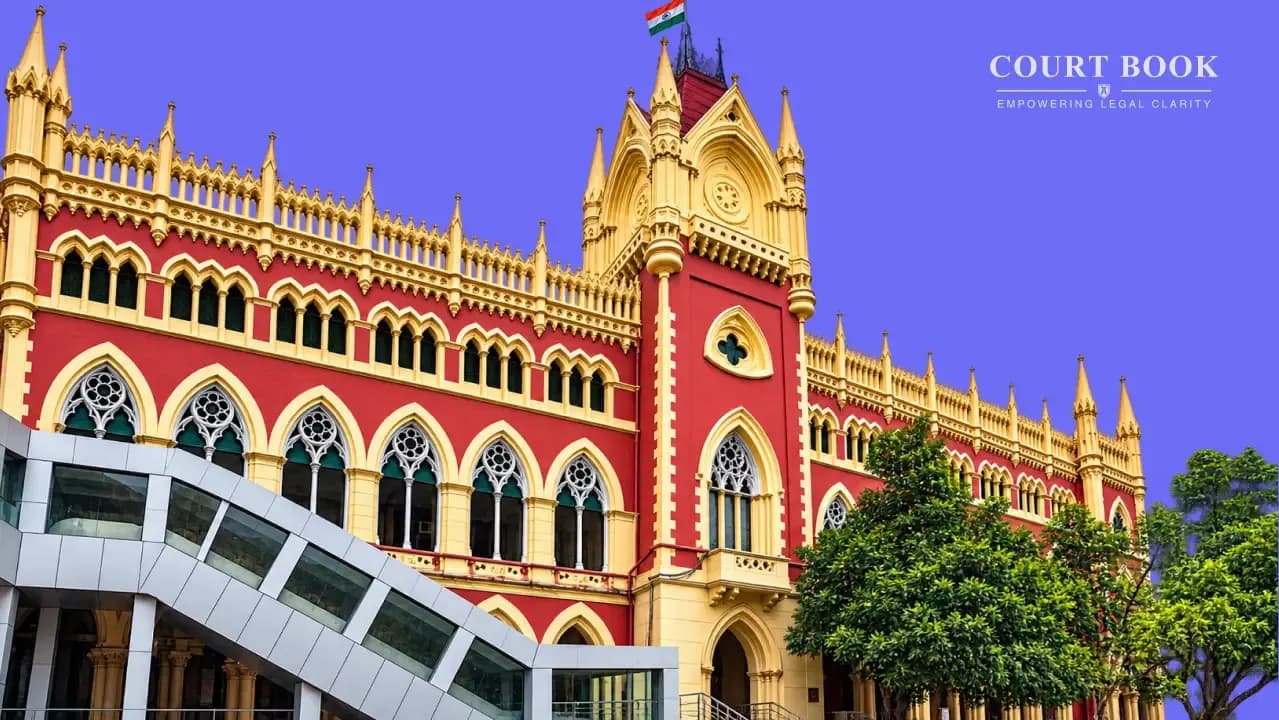
The Calcutta High Court has dismissed an appeal seeking specific performance of a property sale agreement, holding that a plaintiff must establish continuous readiness and willingness to fulfil contractual obligations. A power of attorney holder cannot replace the plaintiff’s testimony on matters that require the plaintiff’s personal knowledge.
A Division Bench of Justice Ravi Krishan Kapur and Justice Atarup Banerjee delivered the judgment on October 14, 2026, affirming the trial court’s dismissal of the suit.
Background
The appeal, Sri Manoj Kumar Agarwala v. Sri Omprakash Brajabasi & Another, arose from a dispute over a 1,223-square-foot property in Bankura, West Bengal. According to the plaintiff, an agreement dated March 17, 2004, had been executed for the sale of the property for ₹5 lakh. He claimed to have paid ₹1 lakh when the agreement was registered.
The agreement also addressed a rented shop on the premises. The parties had allegedly agreed that the shop would be vacated before registration of the sale, failing which the consideration would be reduced to ₹3.75 lakh. The plaintiff further claimed that the defendants received ₹60,000 on different dates.


The Civil Judge (Senior Division), Bankura, dismissed the suit in 2012 because the plaintiff had not entered the witness box to establish his readiness and willingness to perform the agreement. Challenging that decision, the plaintiff argued that his brother, who testified as his power of attorney holder, was competent to provide evidence.
The High Court examined Section 16(c) of the Specific Relief Act, 1963, which requires a party seeking specific performance to establish that they have performed, or have always been ready and willing to perform, the essential terms of the contract.
Referring to the Supreme Court’s decision in R. Shama Naik v. Srinivasiah, the Bench explained the distinction between financial capacity and conduct:
“There is a fine distinction between readiness and willingness to perform the contract. Both the ingredients are necessary for the relief of specific performance.”
The Court also relied on Janki Vashdeo Bhojwani v. IndusInd Bank Ltd., explaining that a power of attorney holder’s authority to represent a party does not automatically permit them to testify about matters within the principal’s personal knowledge.
The Bench observed:
“The term ‘acts’ would not include deposing in place and instead of the principal.”
It further clarified that an attorney holder may testify about acts personally performed under the authority granted but cannot substitute for the principal regarding matters only the principal personally knows.
After examining the oral and documentary evidence, the Court found that the plaintiff had failed to establish continuous readiness and willingness to perform his contractual obligations.
The Division Bench found no legal infirmity or perversity in the trial court’s judgment. It accordingly affirmed the dismissal of Title Suit No. 55 of 2007 and dismissed the appeal, FA 262 of 2012.
The Court also directed the Registry to return the trial court records and made no order as to costs.
Case Details
- Case Title: Sri Manoj Kumar Agarwala v. Sri Omprakash Brajabasi & Another
- Case Number: FA 262 of 2012
- Judges: Justice Ravi Krishan Kapur and Justice Atarup Banerjee
- Decision Date: October 14, 2026




