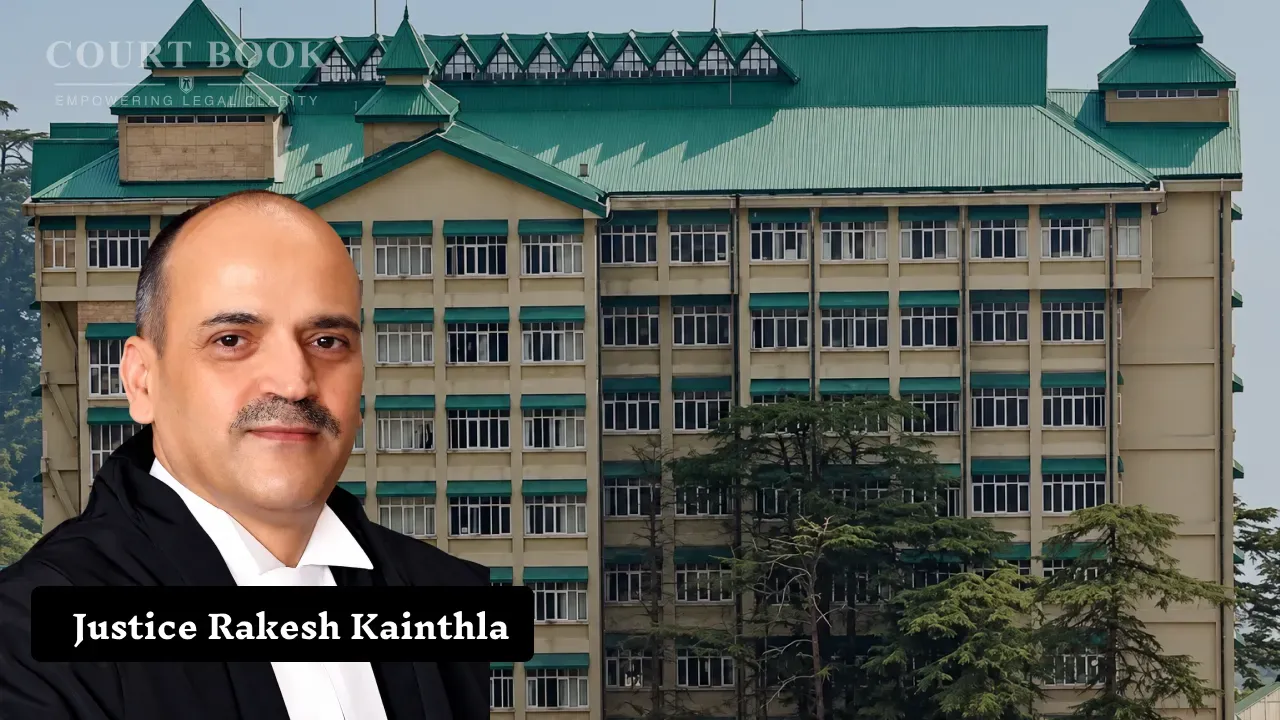
The Himachal Pradesh High Court has dismissed a second appeal filed by Tara Chand concerning a claimed right to use a pathway through land belonging to the respondents. The Court held that the pleadings and evidence were insufficient to establish the alleged pathway or a prescriptive easement.
Justice Rakesh Kainthla delivered the judgment in Tara Chand v. Devinder (deceased) through LRs & Ors. on September 1, 2026.
Background
Tara Chand had approached the Civil Court seeking a declaration that he was entitled to use a pathway passing through the disputed land. He also sought an injunction restraining the defendants from blocking the pathway by carrying out construction.
He claimed that the pathway had been used by his ancestors and him for several years and that he had acquired a right to use it through prescription, meaning a legal right claimed from long and uninterrupted use.
The Trial Court accepted his case and found that the pathway had been used for about 20–25 years. However, the First Appellate Court reversed that decision, observing that the pathway was not reflected in the revenue record and that an alternative passage was available.
Before the High Court, Tara Chand argued that the First Appellate Court had wrongly interfered with the Trial Court's findings. The respondents maintained that the essential requirements for establishing a prescriptive right had not been proved.
Justice Rakesh Kainthla noted that the pleadings did not clearly identify the alleged pathway. The Court also considered admissions made by the plaintiff's witnesses regarding the existence of a public path near the disputed land and the availability of a motorable road.
The Court further found that the tatima relied upon by the plaintiff could not be sufficiently authenticated because the person who prepared it had died, while the witness examined regarding it was not aware of the spot position. The alleged pathway was also absent from the revenue record despite settlement proceedings in the area.
The Court observed,
“the learned First Appellate Court was justified in holding that the plaintiff’s pleadings and evidence were not sufficient to establish the path.”
The High Court also held that the First Appellate Court had jurisdiction to reverse the Trial Court's decree even though one of the parties had not filed an appeal, relying upon Order XLI Rule 4 of the Code of Civil Procedure.
Finding no illegality or infirmity in the First Appellate Court's judgment, the High Court dismissed the second appeal.
Pending applications, if any, were also disposed of, and the records were directed to be sent back to the courts below.
Case Details:
Case Title: Tara Chand v. Devinder (deceased) through LRs & Ors.
Case Number: RSA No. 590 of 2008
Judge: Justice Rakesh Kainthla
Decision Date: September 1, 2026







-300x169.webp)