

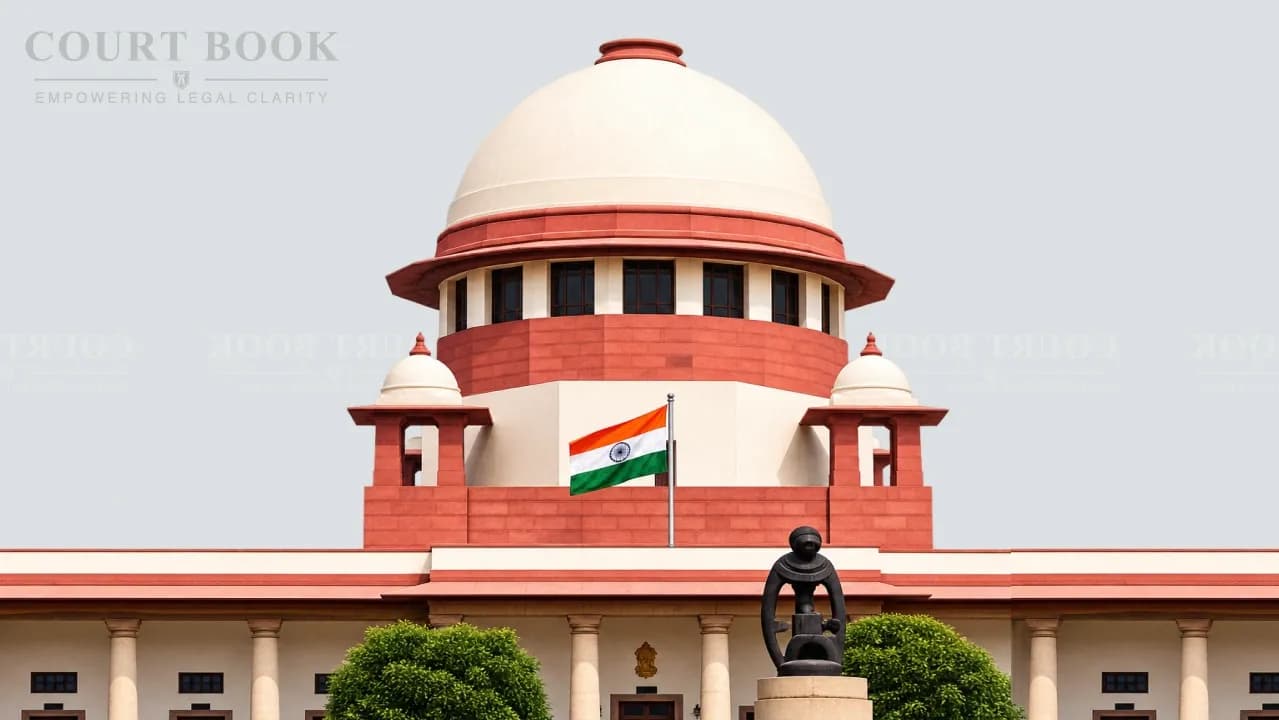
The Supreme Court has held that allegations of preparing forged documents and manipulating property records cannot be treated as acts performed in the discharge of official duties merely because the accused is a public servant. The Court ruled that such allegations do not attract the protection of Section 197 of the Code of Criminal Procedure (CrPC), which generally requires prior government sanction before prosecuting certain public servants for acts connected with their official duties.
A Bench of Justice K.V. Viswanathan and Justice Alok Aradhe set aside the Bombay High Court's order quashing criminal proceedings against a public servant accused of allegedly manipulating land records and facilitating fraudulent property mutations. The Court directed that the criminal cases be restored before the Chief Judicial Magistrate, Dhule, and proceed in accordance with law.
Background
The dispute arose from allegations concerning land records in Dhule, Maharashtra. Ashok, acting as a trustee of Priyadarshini Charitable Trust and secretary of Shri Swami Samarth Cooperative Housing Society Limited, alleged that certain individuals had improperly secured mutation entries in their favour by relying on altered applications and documents.
According to the complaints, the property belonging to the Trust and the Society was different from the land involved in an earlier civil court decree. However, Mutation Entry No. 7062 was allegedly approved on November 16, 2018, removing the Trust's name and recording the names of 19 individuals.


The complainant also alleged that the original mutation application had been altered through erasures, overwriting and the subsequent addition of documents. The District Superintendent of Land Records cancelled the disputed mutation entry on November 30, 2019.
Two criminal cases followed, resulting in FIR Nos. 79 of 2020 and 62 of 2021. Chargesheets were subsequently filed under various provisions of the IPC, including Sections 465, 468, 471, 420 and 120B.
Mahesh, a public servant working as a City Survey Officer, approached the Bombay High Court seeking quashing of the criminal proceedings.
The High Court accepted his argument that prior sanction under Section 197 CrPC, read with the Maharashtra amendment to Section 156(3), was necessary before ordering an investigation against him.
It also held that the applications seeking sanction had been submitted to an authority that was not competent to grant it. Consequently, the High Court quashed the proceedings.
Ashok challenged this decision before the Supreme Court.
The Supreme Court examined whether the alleged acts had any reasonable connection with the discharge of the public servant's official duties. It referred to its earlier decision in Om Prakash Yadav v. Niranjan Kumar Upadhyay, which explained the limits of protection available under Section 197 CrPC.
The Bench emphasised that the nature of the alleged act, rather than merely the official position of the accused, must be examined.
The Court observed:
"The provision must not be abused by public servants to camouflage the commission of a crime under the supposed color of public office."
It further clarified that the protection cannot extend to officials who misuse their authority to undertake acts that are otherwise impermissible under law.
Applying these principles, the Bench noted that the allegations against the respondent concerned a conspiracy to prepare forged documents, present them as genuine and manipulate property records to facilitate the transfer of property.
The Court held:
"We are inclined to hold that the acts complained of were not in discharge of or in purported discharge of official duty."
It consequently concluded that Section 197 CrPC and the Maharashtra amendment to Section 156(3) were not attracted in the present case.
Allowing the appeals, the Supreme Court set aside the Bombay High Court's order dated November 27, 2024.
The Bench directed that RCC Nos. 1020 of 2023 and 119 of 2024 be restored to the file of the Chief Judicial Magistrate, Dhule, and proceeded with in accordance with law.
The Court also clarified that its observations were limited to the question of sanction for prosecution and that the trial and other proceedings would be decided independently on their own merits.



