

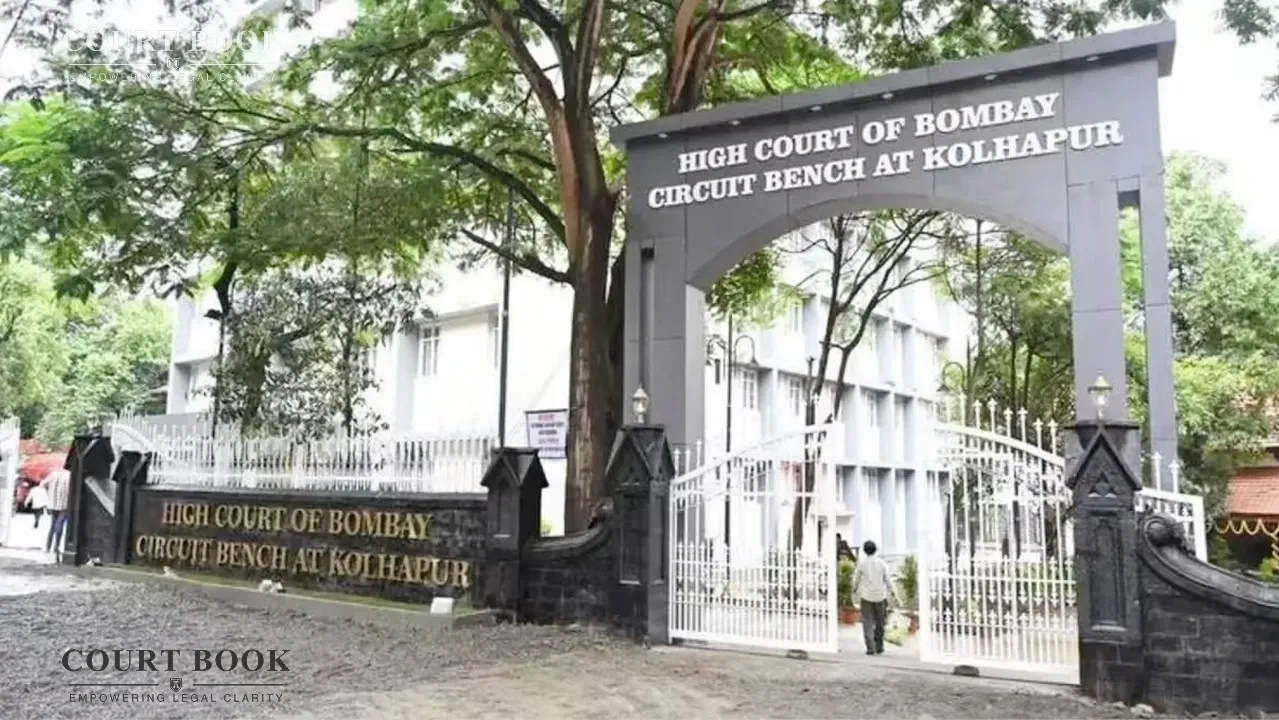
The Bombay High Court has dismissed a criminal writ petition filed by businessman Yogesh Shantinath Ghaste, holding that an accused cannot claim an arrest is illegal merely because copies of an earlier charge sheet filed against co-accused were not supplied at the time of arrest. The Court clarified that the obligation to provide charge sheet documents arises only after an accused is chargesheeted and not at the stage of arrest.
Background of the Case
Yogesh Shantinath Ghaste had originally approached the police as the complainant, leading to the registration of an FIR in 2022. During further investigation, however, the police allegedly found material implicating him and arrested him on 15 April 2025.
Before the High Court, the petitioner did not dispute that he had been informed of the grounds of arrest under Section 50 of the Code of Criminal Procedure. His grievance was that he had not been supplied with copies of the earlier charge sheet, witness statements and related documents filed against other accused under Section 207 of the Code. He argued that without those documents, he could not fully understand the basis of his arrest, making the arrest unlawful.
The petitioner relied on Supreme Court decisions, including Prabir Purkayastha v. State (NCT of Delhi) and Mihir Rajesh Shah v. State of Maharashtra, to support his plea.
Court's Observation
A Division Bench of Justice Sandesh D. Patil and Justice Vrushali V. Joshi rejected the argument, explaining that Sections 50 and 207 of the Code operate at different stages of criminal proceedings.
The Bench observed,
"Section 50 of the Code talks about arrest of persons, whereas Section 207 comes into operation after a charge sheet is filed before the Magistrate."
The Court held that Section 207 casts a duty on the Magistrate to supply copies of the police report and accompanying documents only to a chargesheeted accused. It cannot be interpreted to require the police to hand over an earlier charge sheet filed against co-accused at the time of arrest.
Referring to the Supreme Court's decision in State of Karnataka v. Sai Darshan, the Bench also noted that the essential legal requirement is communication of the grounds of arrest so that the arrested person understands why he has been taken into custody and can exercise available legal remedies.
The judges further observed that extending the scope of Section 207 into Section 50 was
"totally preposterous, uncalled for and contrary to the settled law."
Decision
Finding no merit in the petitioner's challenge, the High Court dismissed the writ petition. It clarified that it had expressed no opinion on the merits of the criminal case and left all contentions open for consideration during the petitioner's bail proceedings.
Case Details:
Case Title: Yogesh Shantinath Ghaste v. State of Maharashtra
Case Number: Criminal Writ Petition No. 4786 of 2025
Judge: Justice Sandesh D. Patil and Justice Vrushali V. Joshi
Decision Date: 24 June 2026


