

The Supreme Court has ruled that an employee who voluntarily resigns, accepts all benefits arising from that resignation, and secures another job on that basis cannot later seek reinstatement by pointing to a technical defect in how the resignation was accepted. Delivering a significant judgment on resignation and ratification in service law, the Court held that a subsequent approval by the competent authority can validate an earlier unauthorized acceptance of resignation if the act was otherwise capable of being lawfully performed.
The ruling came in a batch of matters involving Delhi Technological University (DTU) and the National Institute of Technology (NIT), Calicut.
Background of the Case
The dispute began after B.S. Rawat, who was serving as Assistant Registrar (Legal) at Delhi Technological University, submitted his resignation in May 2016. Although he initially proposed a future effective date, he later requested that the notice period be waived and sought immediate acceptance of his resignation.
An officer holding additional charge as Vice-Chancellor accepted the resignation, following which Rawat was relieved from service. He accepted his no-dues certificate, last pay certificate and experience certificate before later joining NIT Calicut as Deputy Registrar.
Nearly four months after leaving DTU, Rawat sought to withdraw his resignation, arguing that the acceptance had not been approved by the competent authority, namely the University's Board of Management (BOM). However, the Board subsequently ratified the acceptance and rejected his request for withdrawal. The Delhi High Court had ordered his reinstatement, prompting DTU to approach the Supreme Court.
A connected matter arose from Rawat's later resignation from NIT Calicut, where he similarly attempted to withdraw his resignation after its acceptance.
Court's Observations
The Bench explained that the Board of Management was indeed the competent authority to accept the resignation under the governing statute. However, it clarified that this did not end the matter because the Board had later ratified the earlier acceptance.
Explaining the doctrine of ratification, the Court observed:
“Ratification means making a previously invalid act valid. It is the subsequent approval of an act that was initially done without authority.”
The Bench held that once the competent authority ratifies an earlier unauthorized act, the approval relates back to the original date of the act, making it legally effective from the beginning.
The Court also noted that the respondent himself had requested an early acceptance of his resignation, accepted all consequential benefits, and used the experience certificate issued by DTU to secure another appointment.
“The resignation thus stood consummated by the conduct of the parties,” the Bench observed, adding that an employee cannot later challenge a resignation after having treated it as final and acted upon it.
Regarding the NIT Calicut dispute, the Court held that under the applicable statutory rules, a resignation became effective on the date it was accepted by the appointing authority, and communication of acceptance was not necessary for it to take legal effect. Since the resignation had already become effective, the later request to withdraw it could validly be rejected.
Supreme Court's Decision
Allowing DTU's appeal, the Supreme Court set aside the Delhi High Court's direction ordering reinstatement of B.S. Rawat and dismissed his writ petition. It also dismissed Rawat's separate appeal seeking back wages and rejected his challenge against the Kerala High Court judgment concerning his resignation from NIT Calicut.
The Court concluded that the subsequent ratification by the competent authority validated the earlier acceptance of resignation and that, after accepting the benefits of resignation and moving to another employment, the employee could not legally withdraw it.
No order as to costs was passed.
Case Details
Case Title: Delhi Technological University v. B.S. Rawat (with connected matters)
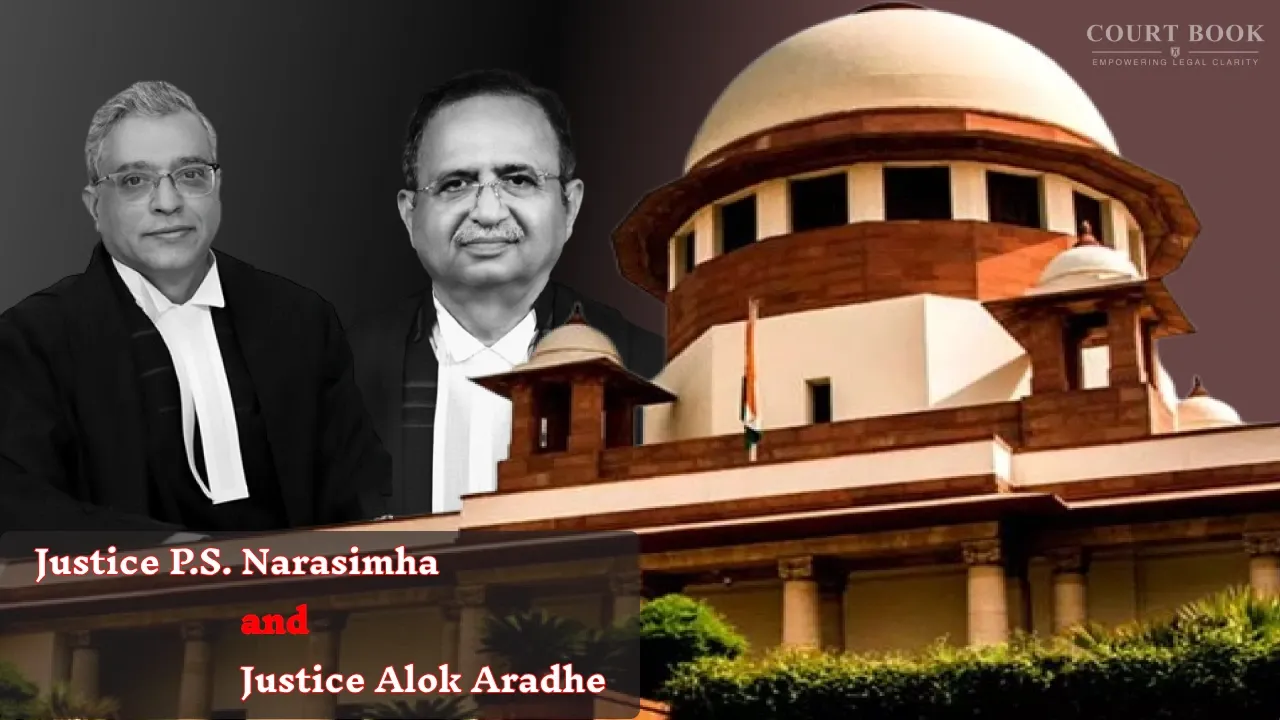
Judges: Justice Pamidighantam Sri Narasimha and Justice Alok Aradhe
Decision Date: August 4, 2026


