

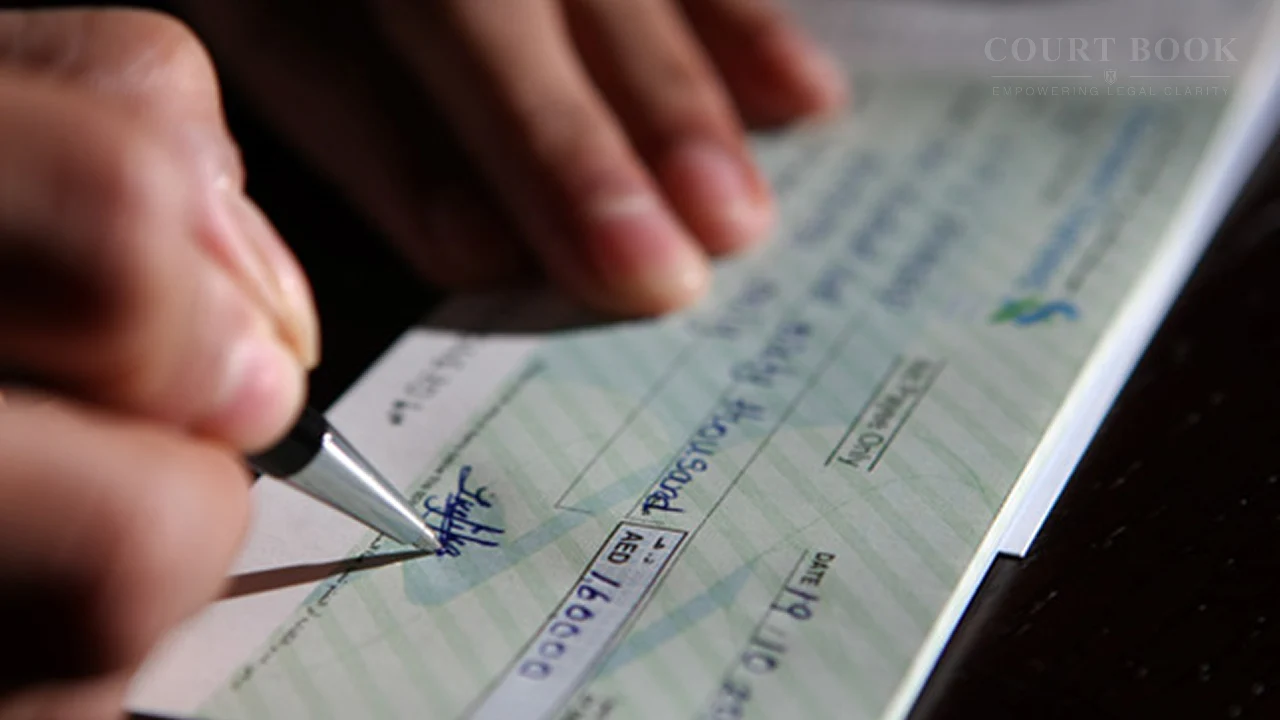
The Calcutta High Court has quashed criminal proceedings against a man who was prosecuted in a cheque dishonour case solely because he was alleged to be a "partner" in a family business. Holding that a sole proprietorship cannot be treated as a partnership for the purpose of criminal liability under the Negotiable Instruments Act, the Court ruled that a family relationship alone cannot justify prosecution under Section 141 of the Act.
Justice Uday Kumar delivered the judgment on July 29, 2026, allowing the criminal revision filed by Prakash Sharma and setting aside the order of the Metropolitan Magistrate that had refused to remove him from the list of accused.
Background of the Case
The dispute arose from a complaint filed by M/s Vision Cell (Pvt.) Ltd., which alleged that M/s S.R. Telematics had failed to clear dues relating to the supply of mobile handsets. According to the complaint, two cheques issued towards part payment were dishonoured with the bank's endorsement stating "Account Closed."
The complainant alleged that Ram Ratan Sharma and Prakash Sharma were partners managing the business and therefore liable under Sections 138 and 141 of the Negotiable Instruments Act. After the trial court refused Prakash Sharma's request to drop his name from the proceedings, he approached the High Court seeking quashing of the case.
Petitioner's Stand
Before the High Court, the petitioner relied on official records to argue that M/s S.R. Telematics was not a partnership firm but a sole proprietorship owned by his mother. He also produced the death certificate of his father, Ram Ratan Sharma, showing that he had passed away in November 2017, several years before the cheques were dated.
The petitioner contended that he was neither the proprietor of the business nor the signatory of the disputed cheques. He argued that Section 141 of the Negotiable Instruments Act, which creates vicarious liability, does not extend to family members of a sole proprietor.
Court's Observations
Justice Uday Kumar examined whether criminal liability under Section 141 could be imposed on a family member of a sole proprietorship concern.
The Court observed that a sole proprietorship has no legal identity separate from its owner and therefore cannot be treated like a company or partnership for the purpose of Section 141.
"The statutory fiction of vicarious liability... cannot be stretched to cover a sole proprietorship concern," the Court observed. It further noted that a close family relationship cannot legally substitute for a registered partnership.
The Court also held that liability under Section 138 is "author-centric," meaning that prosecution ordinarily lies against the person who drew and signed the cheque. Since the petitioner neither signed the cheques nor maintained the relevant bank account, the essential ingredients of the offence, as against him, were absent.
Addressing the allegation that the petitioner had handed over cheques signed by his deceased father, the Court clarified that even if such allegations were accepted, they would not automatically attract liability under the Negotiable Instruments Act.
"The remedy, if any, lies under the general penal provisions for cheating or forgery, not by expanding the scope of the cheque dishonour law," the bench observed.
Decision
After examining the statutory scheme and the facts on record, the High Court concluded that the prosecution against Prakash Sharma lacked the basic legal ingredients required under Sections 138 and 141 of the Negotiable Instruments Act.
Accordingly, the Court allowed the criminal revision, set aside the Magistrate's order dated December 17, 2021, and quashed the criminal proceedings against Prakash Sharma in Complaint Case No. CN/533 of 2020.
The Court also discharged him from his bail bonds and vacated all interim orders passed against him.
Case Details
Case Title: Prakash Sharma v. M/s Vision Cell (Pvt.) Ltd.
Case Number: CRR 3433 of 2022
Judge: Justice Uday Kumar
Decision Date: 29 July 2026


