

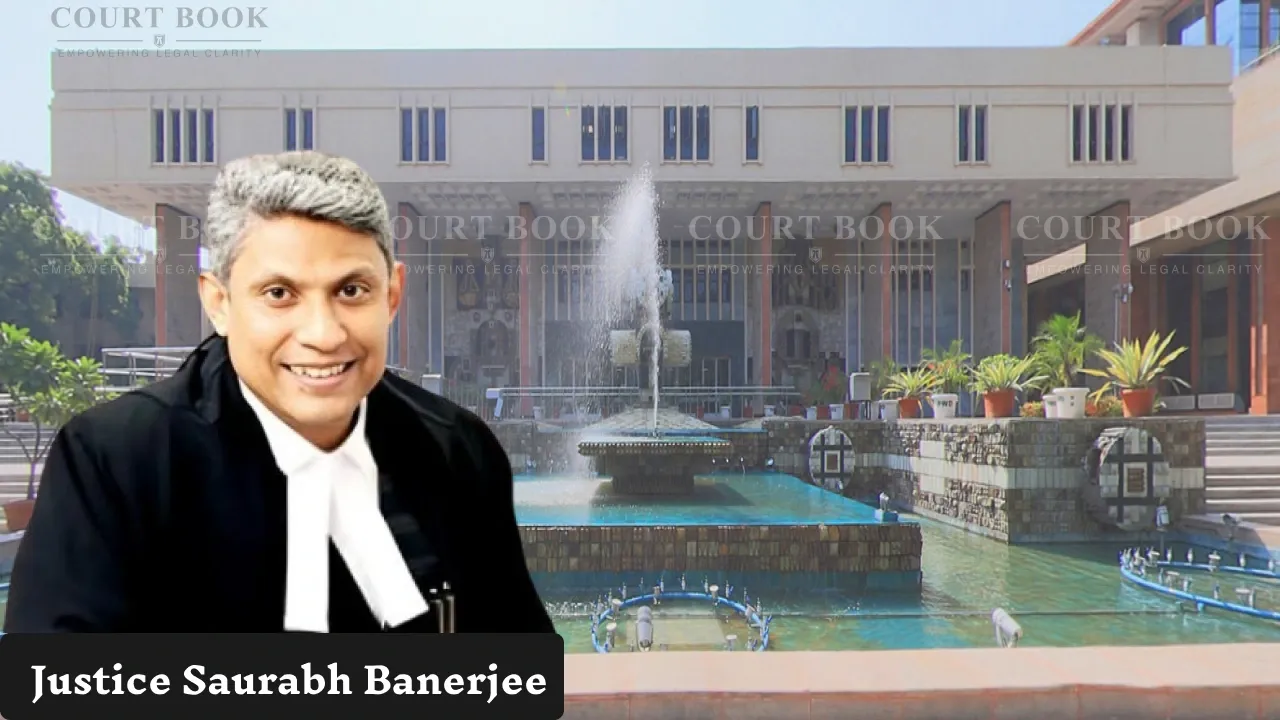
The Delhi High Court has discharged a man facing trial for abetment of suicide, holding that the material placed before the court did not disclose any specific act of instigation or intentional conduct that could justify framing charges under Section 306 of the Indian Penal Code (IPC).
Justice Saurabh Banerjee ruled that vague allegations and the contents of a suicide note, without evidence of a direct or proximate act leading to the suicide, were insufficient to compel a criminal trial.
Background of the Case
The revision petition was filed by Gulshan Kumar, challenging a September 11, 2024 order of a Delhi trial court that had framed charges against him under Sections 306 and 34 IPC in connection with FIR No. 463/2011 registered at Police Station K.N. Katju Marg. The prosecution case stemmed from the death of a man whose body was found in July 2011. During the investigation, a suicide note surfaced alleging that Gulshan Kumar and another person had threatened the deceased over repayment of a loan and had allegedly pressured him in relation to a land transaction.
The petitioner argued that he was not named in the original complaint, the FIR, or the initial charge sheet. His name appeared only in the supplementary charge sheet as a suspect, and there was no independent material establishing his involvement in abetting the suicide.
Court's Observations
Justice Banerjee reiterated that an offence under Section 306 IPC requires clear material showing instigation, intentional aid, or active participation in the commission of suicide. The Court observed that the law demands a specific act coupled with the necessary mental intent, and that mere allegations or ordinary disputes cannot automatically amount to abetment.
The Bench observed,
“Mere allegations without any specific, direct or indirect act(s) coupled with clear mens rea may itself not be enough.”
Examining the facts, the Court noted that the petitioner had not been named in the initial complaint, no prior complaint had been lodged against him by the deceased or his family, and the only material linking him to the case was the suicide note received after the recovery of the deceased's body. The judgment further recorded that there was no evidence of any direct or proximate conduct demonstrating intentional provocation or encouragement to commit suicide.
Decision
Allowing the revision petition, the Delhi High Court set aside the trial court's order framing charges against Gulshan Kumar.
The Court held that there were no sufficient grounds to proceed with charges under Sections 306/34 IPC and consequently discharged the petitioner from the case.
Case Details
Case Title: Gulshan Kumar v. The State (Govt. of NCT of Delhi)
Case Number: CRL.REV.P. 1268/2024
Judge: Justice Saurabh Banerjee
Decision Date: July 22, 2026


