

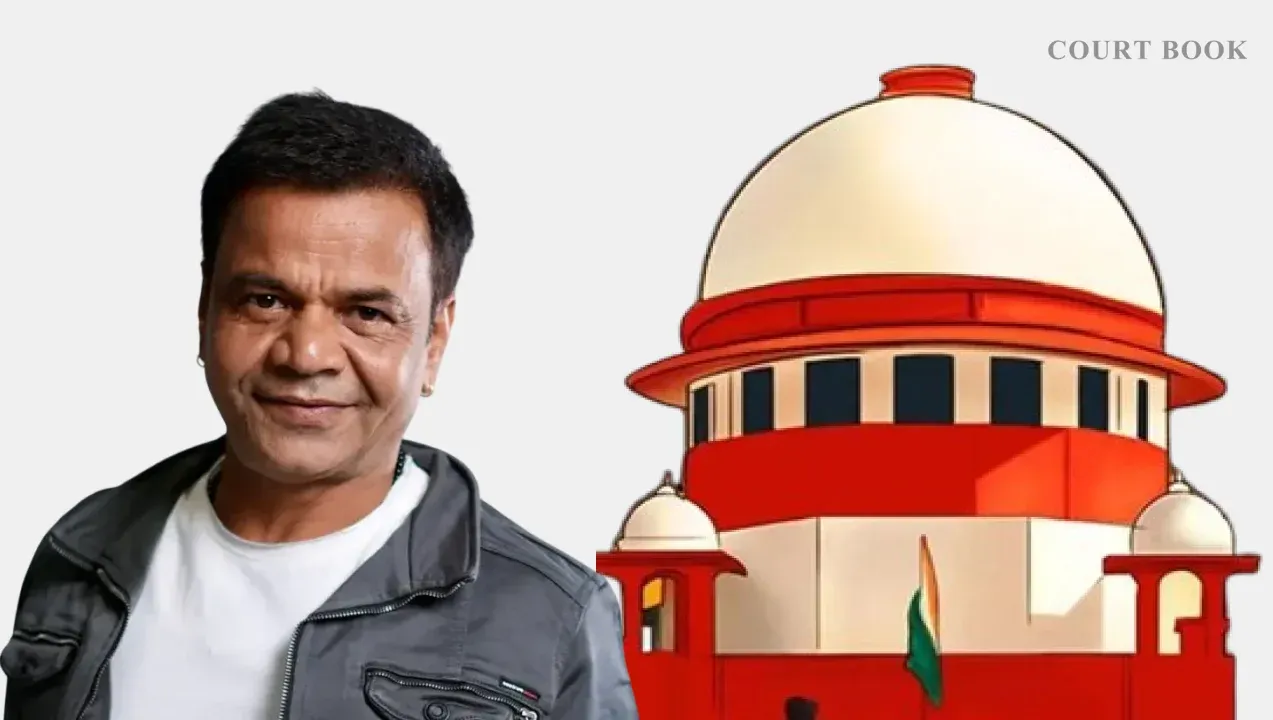
The Supreme Court on October 7 accepted actor Rajpal Yadav’s proposal to raise money by selling his ancestral property to clear outstanding dues arising from a long-running cheque dishonour dispute connected with his 2012 film Ata Pata Laapata. The Court also took note of arrangements made for an immediate payment of ₹2 crore.
A Bench comprising Chief Justice of India Surya Kant and Justices Joymalya Bagchi and V. Mohana considered the proposal after Yadav’s counsel informed the Court that ₹1.15 crore was ready through a demand draft and that a prospective buyer of the ancestral property was willing to provide another ₹85 lakh.
Background
The dispute relates to money received by Yadav and his wife from Murli Projects in connection with the production of the film. Following a series of agreements, security cheques were issued and several were later dishonoured, leading to complaints under the Negotiable Instruments Act.
The Delhi High Court, in July 2026, upheld the convictions in the seven cheque cases and modified the sentence imposed on Yadav to three months’ simple imprisonment, along with a fine in each case. The substantive sentences were directed to run concurrently.
The Supreme Court had subsequently granted Yadav limited relief subject to payment conditions. On October 5, the Bench had expressed strong displeasure after the promised payment was not made within the stipulated period.
During Wednesday’s hearing, Yadav’s counsel said that ₹1.15 crore was immediately available and that a buyer of the ancestral property, stated to be worth more than ₹30 crore, was present in Court and willing to provide ₹85 lakh as an advance.
The Court questioned whether the proposed property transaction could cover the larger outstanding liability. The complainant’s counsel agreed to the immediate ₹2 crore payment and sought three months’ time for Yadav to arrange the remaining amount.
The Bench recorded the proposed arrangement. The order stated:
“The petitioner has finally brought demand drafts in the sum of ₹1.15 crore, which shall be deposited with the Registry during the course of the day. As regards ₹85 lakh, the petitioner claims that the prospective buyer of his property is present in Court.”
The Court further indicated that a payment schedule would be laid down for the remaining liability.
Justice Joymalya Bagchi expressed dissatisfaction with Yadav’s previous conduct and made it clear that the accommodation being considered was aimed at securing payment to the complainant.
“We are not satisfied with this. This conduct does not satisfy us...consider that we are neither impressed by your bona fides nor the merits of the case. We are only giving the accommodation in order to give equitable relief to the complainant.”
The Court thereafter accepted the immediate payment proposal and directed that the matter be taken up again after two days for further consideration of the payment arrangement.


