

The Supreme Court has allowed a batch of appeals filed by candidates seeking appointment as Instructors in Uttar Pradesh Industrial Training Institutes (ITIs), holding that the State authorities acted arbitrarily by introducing qualifying cut-off marks that were not part of the recruitment rules. The Court directed the State to reconsider the eligible candidates for appointment against existing vacancies and, where necessary, create supernumerary posts.
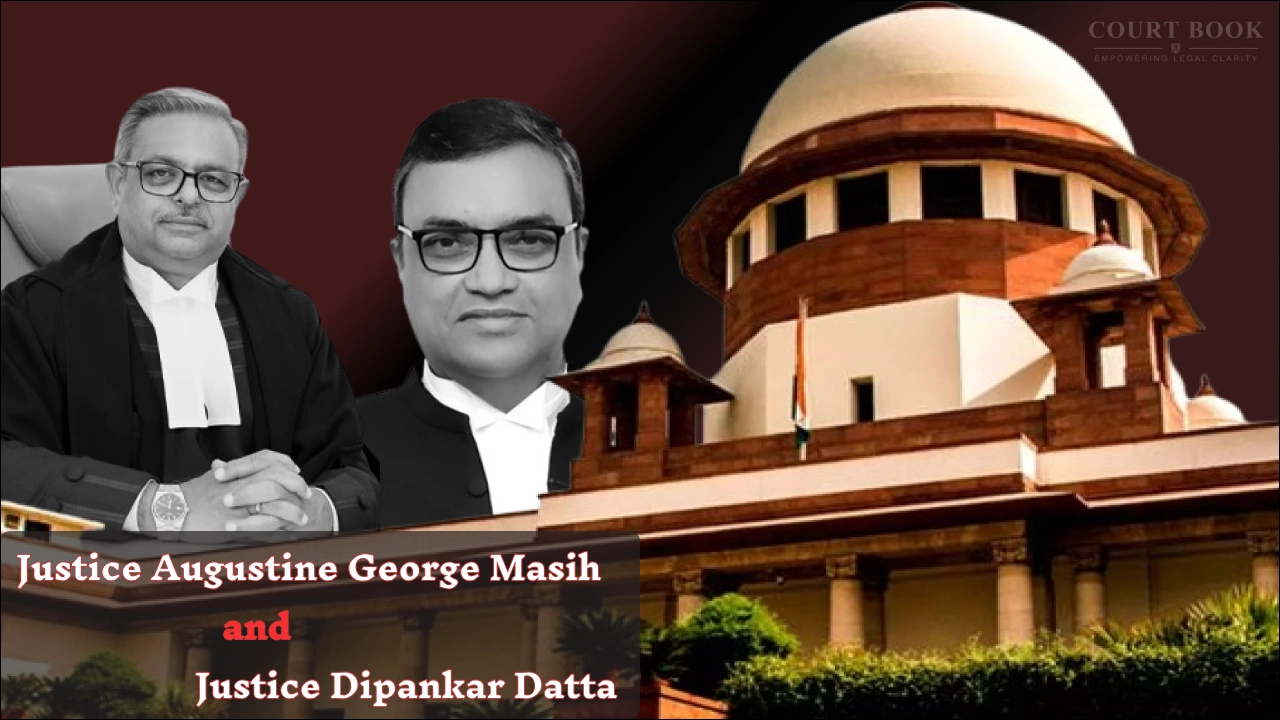
The judgment was delivered on July 24, 2026, by a Bench of Justice Dipankar Datta and Justice Augustine George Masih in a group of civil appeals arising from recruitment conducted under the Uttar Pradesh Industrial Training Institutes (Instructors) Service Rules, 2014.
Background of the Case
The dispute arose from recruitment advertisements issued in 2014 and 2015 for Instructor posts in Uttar Pradesh ITIs. The appellants, many of whom possessed Craft Instructor Training Scheme (CITS) certificates, challenged the 2014 recruitment rules after the State treated the CITS qualification as a preferential qualification instead of an essential one. They argued that this diluted an earlier policy framed on the basis of Central Government directions and allowed candidates without CITS certificates to compete for the posts.
Their writ petitions were dismissed by the Allahabad High Court in January 2023, prompting them to approach the Supreme Court.
Court's Observation
The Supreme Court first noted that the candidates had participated in the recruitment process without challenging the rules beforehand. Ordinarily, such participation would prevent a candidate from later questioning the selection process.
However, the Bench clarified that this principle does not apply where the selection itself is affected by illegality or arbitrariness.
The Court observed:
“The rules of the game, mid-way, could not have been changed by the Selection Committee/SoUP to the detriment of a number of candidates.”
Examining the recruitment process, the Bench found that the 2014 Rules permitted shortlisting only when applications were received in very large numbers, and even then only by limiting interview calls to four times the number of vacancies. The Rules did not authorize the Selection Committee to prescribe independent qualifying or cut-off marks before interviews.
Instead, the authorities introduced such cut-off marks, resulting in many candidates being excluded from interviews even though hundreds of advertised vacancies remained unfilled.
According to the Court, this additional eligibility requirement had no support under the statutory rules.
“The fixation of qualifying or cut-off marks,” the Bench observed, “has to be characterised as arbitrary and contrary to the recruitment procedure prescribed by the 2014 Rules.”
Vacancies Still Available
During the hearing, the Court sought updated information regarding vacant Instructor posts.
The material placed before the Bench showed that out of 7,768 sanctioned Instructor posts, thousands continued to remain vacant. The State's written submissions also indicated that only 5,507 posts were occupied, leaving substantial vacancies available.
Although more than a decade had passed since the recruitment process began, the Court held that the passage of time alone could not deprive the appellants of relief after they had been subjected to an arbitrary selection process.
Supreme Court's Decision
Allowing the appeals, the Supreme Court directed the appellants and similarly placed candidates to approach the appointing authority within two weeks with a copy of the judgment. Their cases are to be considered against existing vacancies in the relevant trades.
The Court further directed that if the number of eligible candidates exceeds the available vacancies, supernumerary posts should be created. Fresh interviews must be conducted for candidates who were earlier excluded, and appointments should be completed within four months after they approach the authorities, subject to verification of eligibility and antecedents.
The Bench also clarified that successful candidates would receive service benefits prospectively but would not be entitled to back wages, seniority or promotional benefits for the past period.
Pension and gratuity would be governed by the applicable service rules after appointment.
Case Details
Case Title: Arvind Kumar & Ors. v. State of U.P. & Ors. (Connected Appeals)
Case Number: Civil Appeal Nos. 8257–8259 of 2026 (Arising out of SLP (Civil) Nos. 4012–4014 of 2023) with connected Appeal.
Judge: Justice Dipankar Datta and Justice Augustine George Masih
Decision Date: July 24, 2026


