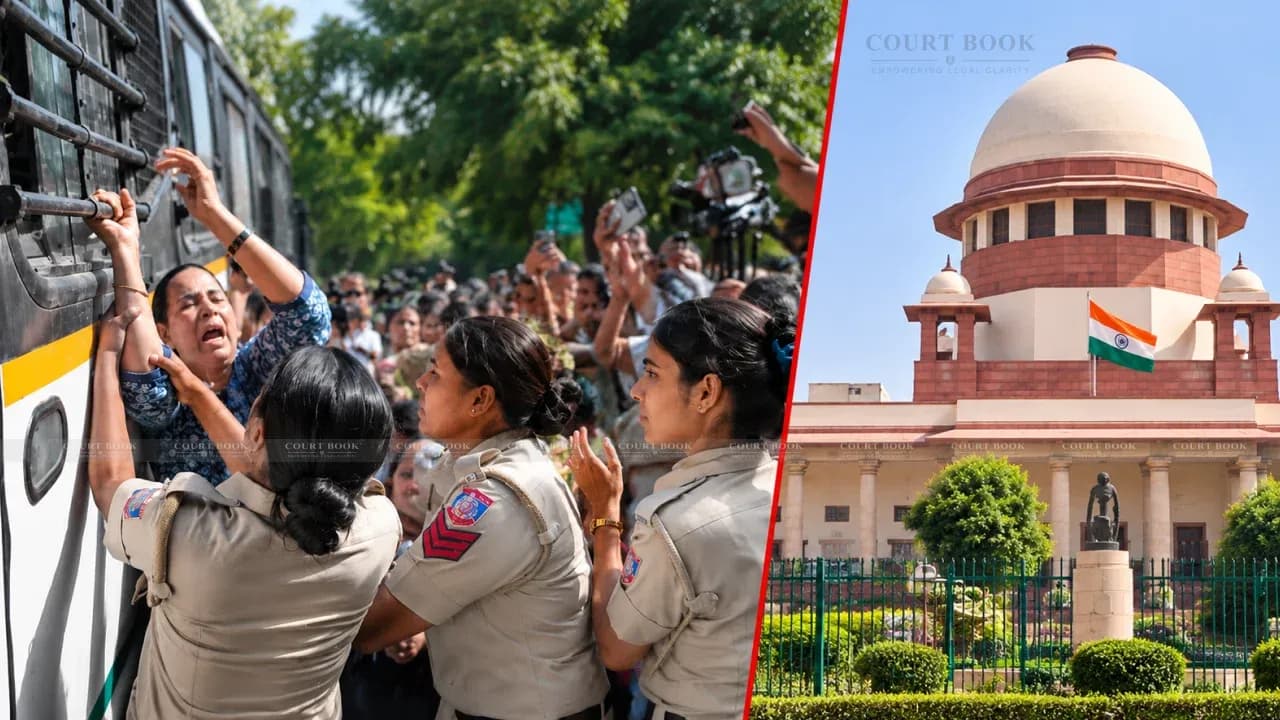
The Supreme Court has granted interim protection to a woman journalist facing a case under the Scheduled Castes and Scheduled Tribes (Prevention of Atrocities) Act following allegations of casteist remarks against Delhi Police ACP Vivek Bhagat. The development came after the journalist allegedly accused the police officer of sexual harassment while covering protests in Delhi.
A Bench comprising Chief Justice of India Surya Kant and Justice Joymalya Bagchi directed that no coercive action be taken against the journalist in the specific case brought before it.
During the hearing of petitions concerning the treatment of journalists covering the protests, Senior Advocate Indira Jaising, appearing for the journalist, alleged that her client's complaint concerning sexual harassment had not resulted in the registration of an FIR. She argued that the subsequent case against the journalist raised concerns about the handling of her allegations.
Jaising urged the Court to ensure that women journalists could report incidents of sexual harassment without fear of retaliatory criminal proceedings.
Chief Justice Surya Kant directed the authorities to protect the journalist from coercive action while the matter remained under consideration. The Bench, however, declined to extend the protection through a blanket order covering every woman journalist at the protest sites.
Justice Bagchi clarified the scope of the direction, observing,
"It will be restricted to the specific instance you have given in the petition, and also the names of the persons you are giving in the enclosed material."
Solicitor General Tushar Mehta opposed a broader direction, cautioning that it would be difficult to define who qualified as a journalist in the digital era. He nevertheless submitted that no woman should be treated inappropriately.
The Supreme Court granted interim protection to the journalist in the specific SC/ST Act case and directed that no coercive action be taken against her.
The Bench limited its protection to the instance and persons identified in the material placed before it.