

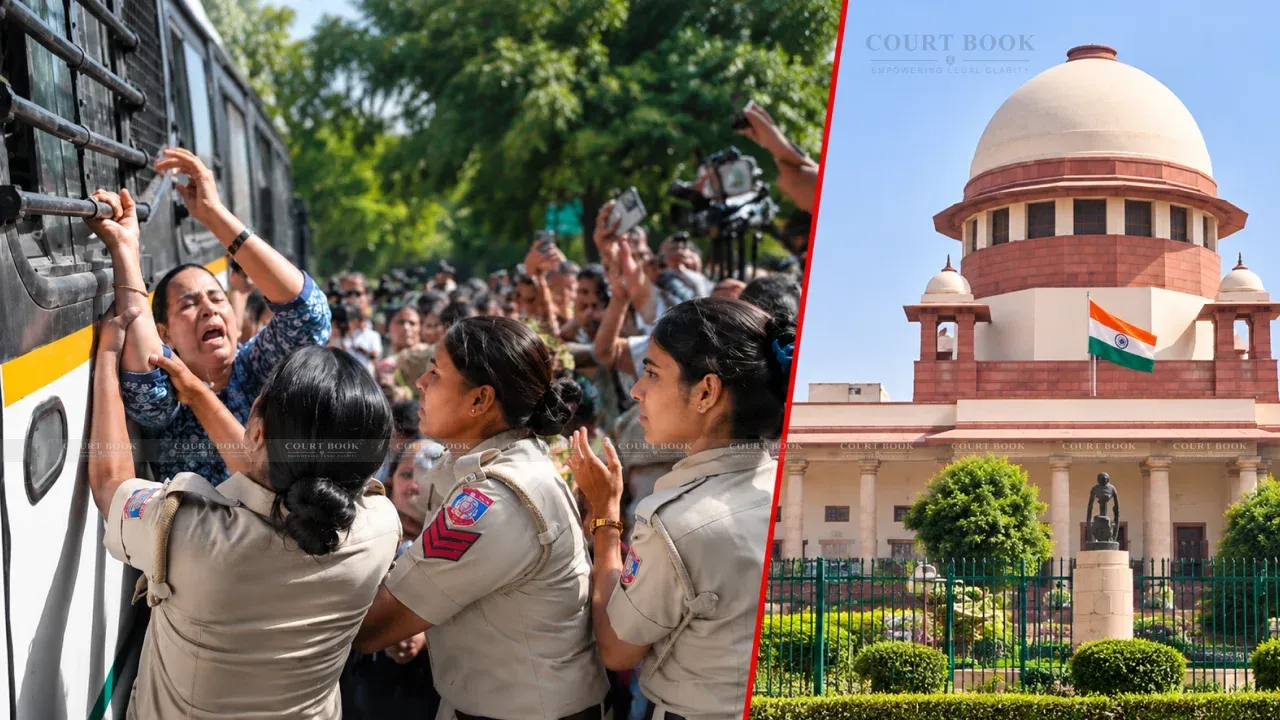
The Supreme Court has sought the presence of a senior Delhi Police officer to explain allegations that women journalists were manhandled and harassed while covering protests in the national capital. The matter concerns the safety of media professionals reporting from protest sites and the need for safeguards against alleged police excesses.
The development followed a petition filed by the Network of Women in Media, India (NWMI), seeking directions to protect journalists, particularly women, while performing their professional duties.
Senior Advocate Indira Jaising mentioned the petition before a Bench comprising Chief Justice of India Surya Kant, Justice Joymalya Bagchi and Justice V. Mohana. She informed the Court that advance notice had been given to the Solicitor General.
The petition relates to protests against the Special Intensive Revision (SIR) of electoral rolls in Delhi. Women journalists covering the demonstrations alleged that they were manhandled, detained and prevented from reporting despite identifying themselves as members of the press.
The plea also refers to an incident on October 3, when three women journalists allegedly faced sexual harassment during their detention near Jantar Mantar. Delhi Police subsequently transferred the complaints to its Crime Branch for inquiry, while the National Human Rights Commission took suo motu cognisance of the reported incident.
During the hearing, Chief Justice Surya Kant indicated that the police would have to explain the allegations and asked for a senior officer to remain present before the Court.
“We'd like some senior officer to remain present here and explain,” the Chief Justice said, emphasising the need for an explanation from the police authorities.
The Court agreed to list the petition on Thursday, October 15, along with connected matters arising from the protests.
Senior Advocate Gopal Sankaranarayanan also mentioned a contempt petition filed by the Free Speech Collective, alleging that journalists had been assaulted despite the Supreme Court’s earlier directions protecting their professional activities. Senior Advocate Chander Uday Singh referred to a similar petition.
The connected proceedings concern allegations that police action interfered with journalists’ ability to document protests and report on events of public importance.
The NWMI petition seeks enforceable guidelines governing police interaction with journalists during protests, public assemblies and crowd-control operations. It asks the authorities to ensure that women journalists engaged in genuine reporting are not subjected to physical handling, intimidation, arbitrary detention or forcible removal merely because they are present near a demonstration.
The organisation has also sought an independent inquiry into the alleged incidents and appropriate action against personnel found responsible. It argues that existing inquiries into alleged police excesses do not adequately address journalists’ access to protest sites, their treatment during detention and the safeguards necessary for independent newsgathering.
The petition places particular emphasis on protecting journalists’ safety and dignity while allowing them to carry out their professional responsibilities.
The Supreme Court agreed to list the NWMI petition along with connected matters on October 15. The Chief Justice also sought the presence of a senior Delhi Police officer to explain the allegations concerning the treatment of women journalists during the protests.


