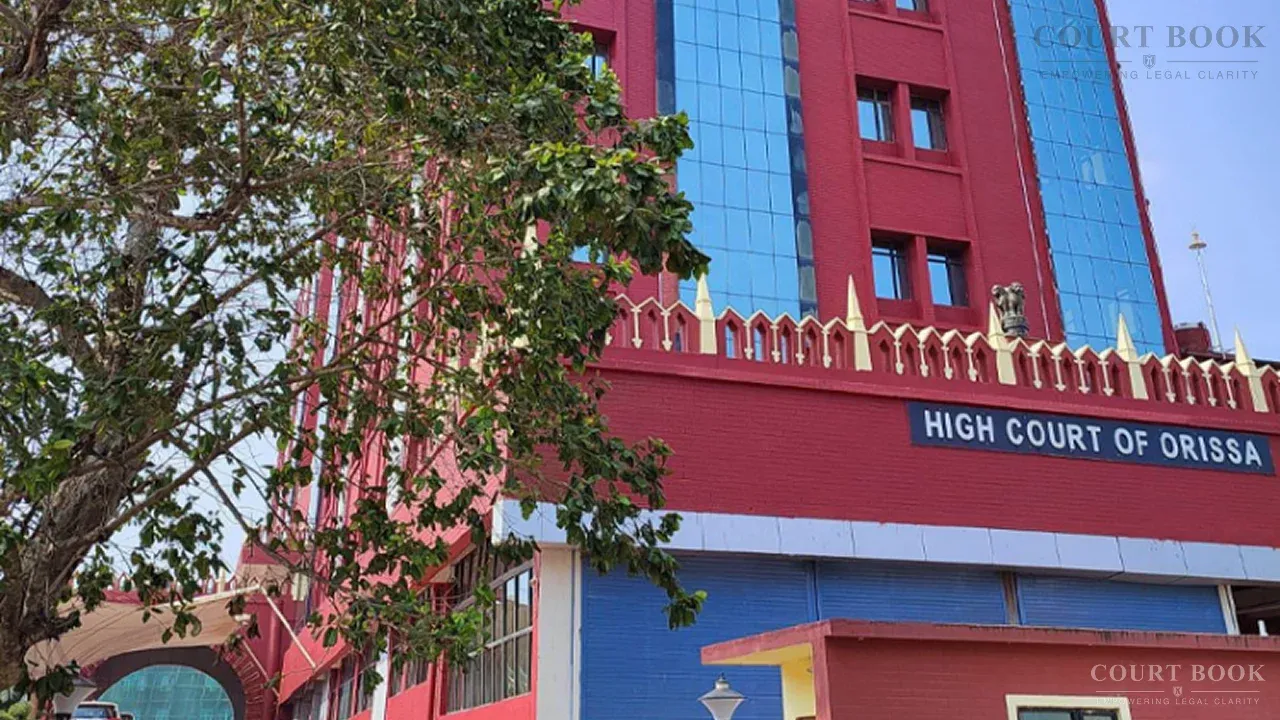
The Orissa High Court has refused to permit a victim-informant to introduce a pen drive as additional evidence in the middle of a criminal trial, holding that the material was not part of the investigation or charge-sheet and that the procedure protecting the accused’s fair-trial rights could not be overlooked.
Justice V. Narasingh delivered the judgment on September 19, 2026, in a criminal revision petition filed by Shashmita Nayak against the State of Odisha and Surendra Kumar Gantayat @ Suresh Kumar Gantayat.
Background
The proceedings arose from S.T. Case No. 35 of 2022 before the 1st Additional Sessions Judge, Cuttack. The accused had been charge-sheeted under Sections 354, 354-A, 376(2)(n), 294 and 506 of the IPC.
During the trial, the informant sought permission to introduce a pen drive containing recordings stated to be between her and the accused. She claimed that the recordings had a direct bearing on the case and that excluding them would prejudice her.
The Trial Court rejected the request. The matter reached the High Court earlier, which directed reconsideration of the application on merits. After reconsideration, the Sessions Court again rejected the prayer, leading to the present revision petition.
The High Court noted that the pen drive had not been collected during the investigation and did not form part of the materials submitted before the Trial Court. The petitioner relied on Supreme Court decisions concerning electronic evidence and Section 65-B of the Indian Evidence Act.
However, the Court observed that the issue was not merely whether an electronic record could ultimately be admissible. The larger question was whether material not collected during investigation could be introduced by the informant-victim in the midst of the trial.
The Court also considered the role of the prosecution in a criminal trial and the importance of protecting the accused’s right to know the material relied upon against them before the trial begins.
Justice V. Narasingh stressed that while procedural technicalities should not defeat justice, the Court could not disregard the procedural safeguards available to an accused.
"Though it is trite that technicality ought not to defeat justice, at the same time, this Court cannot lose sight of the rights of an accused sanctified and circumscribed by the procedure as laid down in the Cr.P.C./BNSS."
The Court further noted that the petitioner could not point to any provision under the Cr.P.C. or the Bharatiya Nagarik Suraksha Sanhita that permitted the victim to place on record material that was not part of the charge-sheet during the ongoing trial.
After examining the material and the submissions, the High Court found no infirmity in the Trial Court’s decision refusing to introduce the pen drive during the trial.
"This Court, on a perspicuous analysis of the materials on record, is of the considered view that there is no infirmity in the order rejecting the prayer of the Petitioner-victim for introducing the pen drive in the midst of trial."
The Court consequently dismissed the criminal revision petition, vacated the interim order and left the question of maintainability open.
It also directed the Trial Court to proceed with the matter with the required expediency.
Case Details:
Case Title: Shashmita Nayak v. State of Odisha & Anr.
Case Number: CRLREV No. 997 of 2025
Judge: Justice V. Narasingh
Decision Date: September 19, 2026












-300x169.webp)